
Classroom lesson ยท Wildlife ยท ๐Ÿ‡ฆ๐Ÿ‡ฌ Antigua and Barbuda

Hawksbill Turtle

An ancient ocean traveller that nests on Antigua's beaches

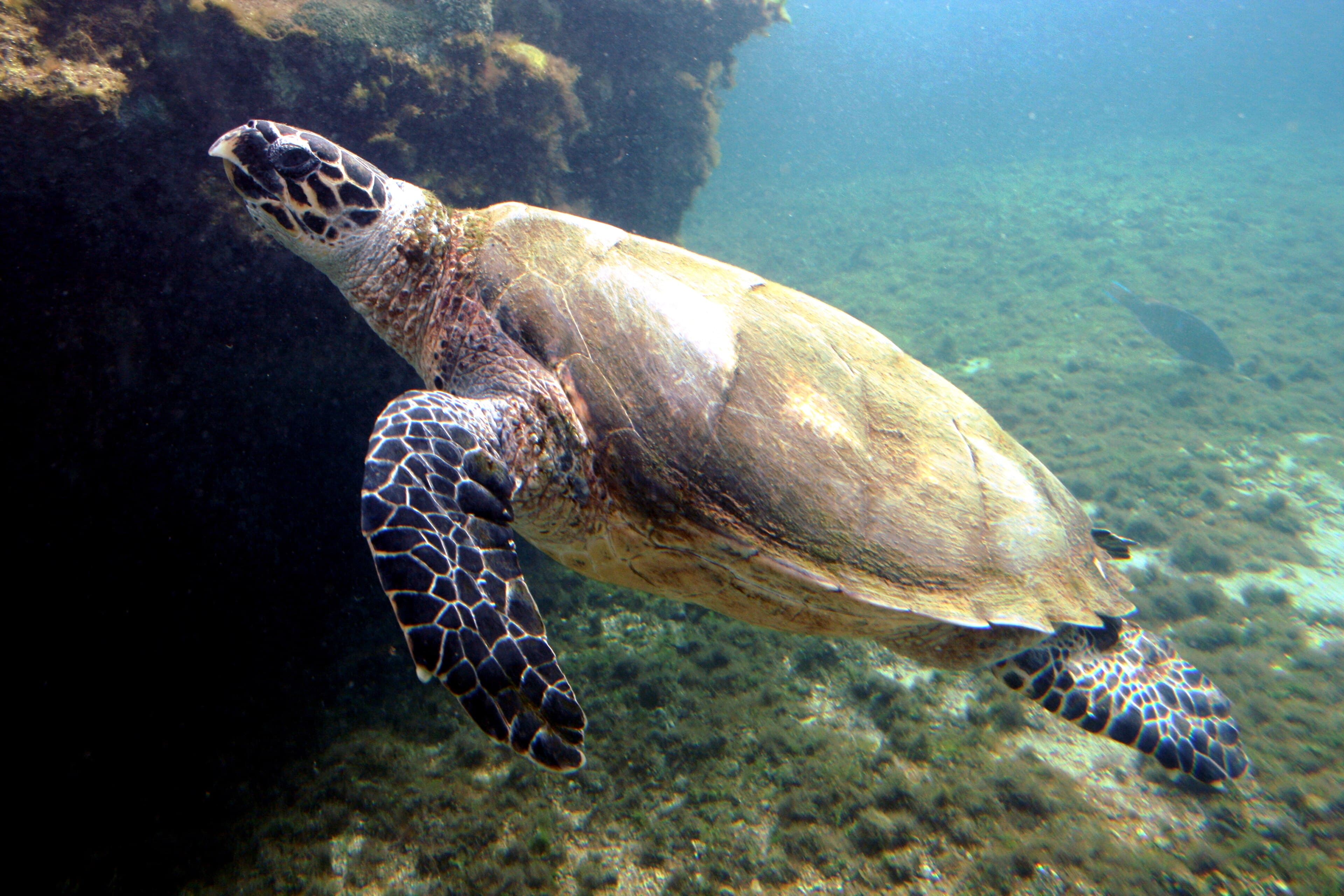
A hawksbill turtle swimming above a coral reef

Photo ยท Wikimedia Commons

What is it?

The hawksbill turtle is a beautiful sea turtle with a narrow, pointed beak that looks a little like a hawk's bill โ€” which is exactly how it got its name. Hawksbill turtles travel enormous distances across the ocean but return to the beaches of Antigua year after year to lay their eggs in the warm sand.

Tell me more

Hawksbill turtles are important for coral reefs because they eat sponges that would otherwise grow too large and smother the coral. One turtle can eat hundreds of kilograms of sponge each year, keeping the reef healthy and balanced. Without turtles, Caribbean reefs would look very different.

Female hawksbills return to the exact beach where they were born to lay their own eggs โ€” sometimes after travelling thousands of kilometres across the ocean. Scientists think they find their way back using the Earth's magnetic field as a kind of invisible map. Nobody is completely sure how, but they do it reliably every time.

On nesting beaches in Antigua, conservation volunteers patrol at night during the nesting season, counting and protecting nests. The turtles come ashore after dark and dig a hole in the sand to bury their clutch of around 130 eggs. After about two months, the babies hatch and make their way to the sea under the cover of darkness.

Hawksbill turtles can live for more than 50 years. They are considered critically endangered globally, which means their numbers have fallen a lot. Antigua takes their protection seriously โ€” harming a turtle or its nest is against the law, and many local schools take part in beach-monitoring programmes.

In the classroom

Walk your class through this in 15 minutes.

Talk together

Discussion prompts

  1. 01How do you think a turtle finds its way back to the same beach after swimming thousands of kilometres? What kind of clues might it use?
  2. 02The turtle helps the coral reef by eating sponges. Can you think of other animals that help keep a habitat healthy just by doing what they naturally do?
  3. 03If you were a conservation volunteer patrolling the beach at night, what would you be looking for and how would you protect a nest?
Try this

Classroom activity

On a world map, draw a dotted line showing a possible journey of a hawksbill turtle from Antigua, across the Atlantic, and back again. Mark the start and end point and estimate the distance using the map scale. Then write three 'diary entries' from the turtle's point of view describing what she sees on the way.