
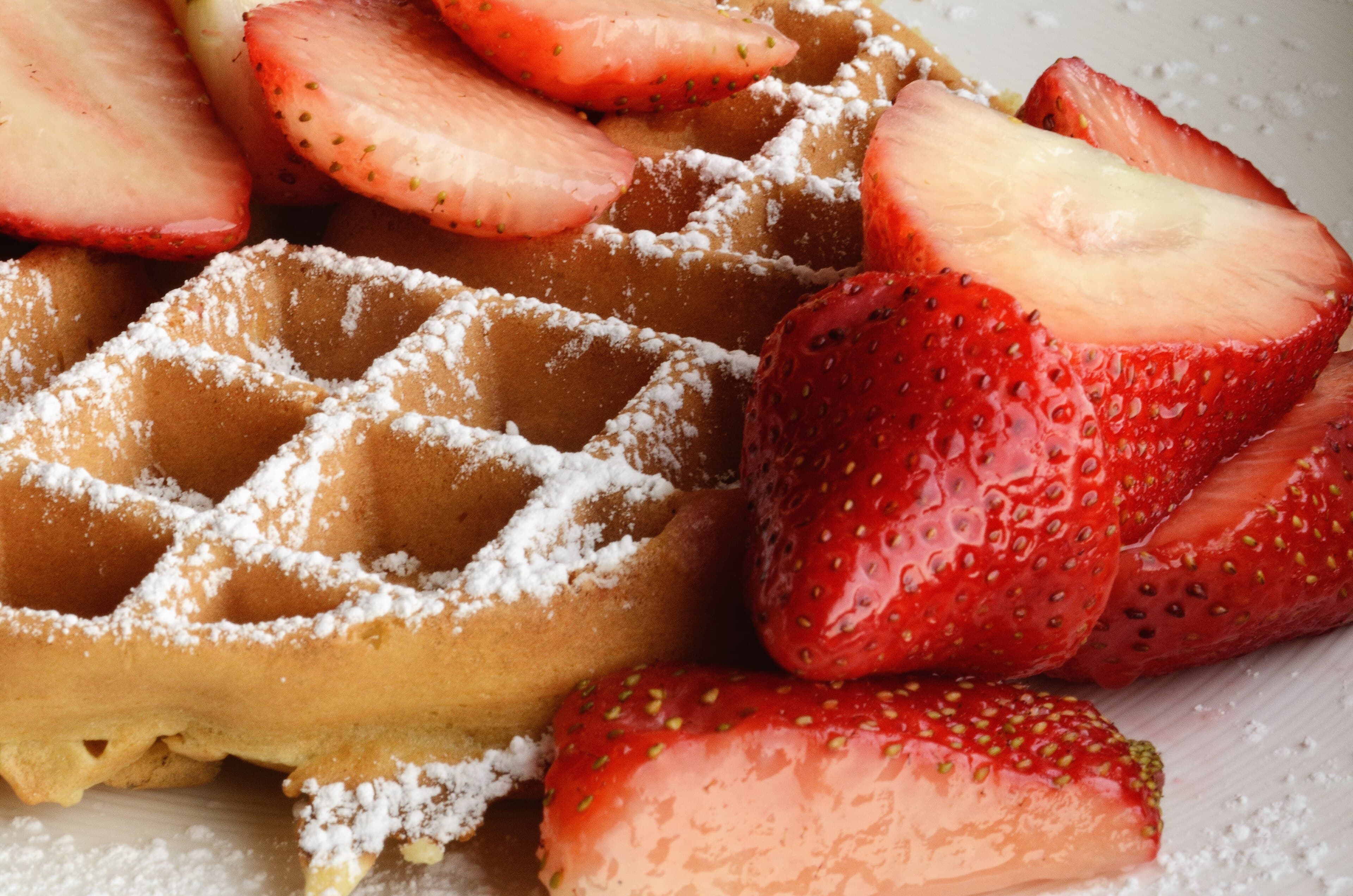
The Brussels waffle is the light, rectangular one you are most likely to see sold from street stalls. It is made with a yeast batter that makes it airy and crispy on the outside. Toppings can include strawberries and cream, banana and chocolate sauce, or plain icing sugar - locals often keep it simple.
The Liège waffle is smaller, rounder, and chewier. It contains chunks of pearl sugar that caramelise in the waffle iron, creating little pockets of sweet crunchiness. Liège waffles are eaten warm, straight from the iron, without any topping at all because they are already delicious on their own.
Waffles have been made in Belgium for hundreds of years. The distinctive grid pattern comes from the two-sided iron pressed together over a heat source. The deep pockets are perfect for catching toppings - early waffle-sellers realised this was part of the appeal, as every bite could be a little different.
You can buy waffles from street stalls throughout Belgium at almost any time of day. Belgians eat them as a snack, not usually as a sit-down meal. The smell of fresh waffles cooking on the iron is one of the most recognised smells in any Belgian town centre, especially on a cold winter morning.