
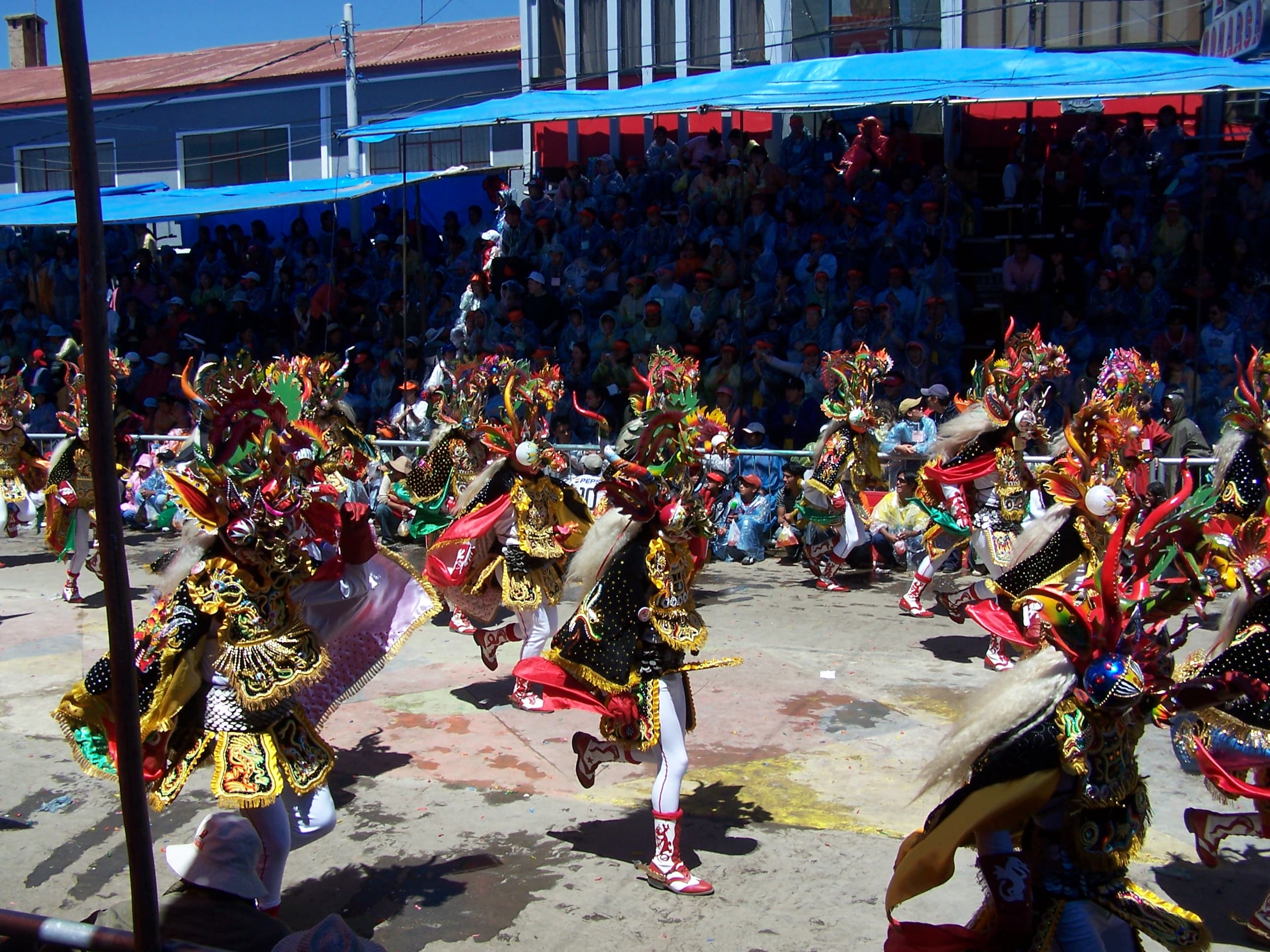
The Diablada features dancers dressed as devil characters with enormous, colourful masks topped with snakes, dragons and other wild creatures. The masks can weigh several kilograms and take skilled craftspeople many months to make by hand. Each mask is a unique work of art, covered in sequins, jewels and intricate painted details.
Despite the devil costumes, the Oruro Carnival is actually a deeply religious festival honouring the Virgin of Candelaria, patron of the miners of Oruro. Long ago, miners in Bolivia worked in very difficult conditions underground, and the carnival was their celebration and prayer. The devil characters are figures being defeated by good - so the dance is about triumph, not fear.
More than 28,000 dancers and 10,000 musicians participate in the main carnival parade, which goes on for 20 hours without stopping. Dancers practice their roles for an entire year. Families pass down their costumes and roles from grandparents to parents to children. Being part of the Oruro Carnival is a matter of enormous family pride.
The streets of Oruro fill with music from brass bands, charangos, zampoñas and drums. Visitors come from all over the world. The costumes of every dance group - not just the Diablada but also the morenada, the caporales and many more - are each more spectacular than the last. It is a festival of colour, sound and community.