
Classroom lesson · Music · 🇧🇴 Bolivia

Panpipes (Zampoña)

Ancient wind instrument made of reeds — the sound of the Andes

Photo · Wikimedia Commons

What is it?

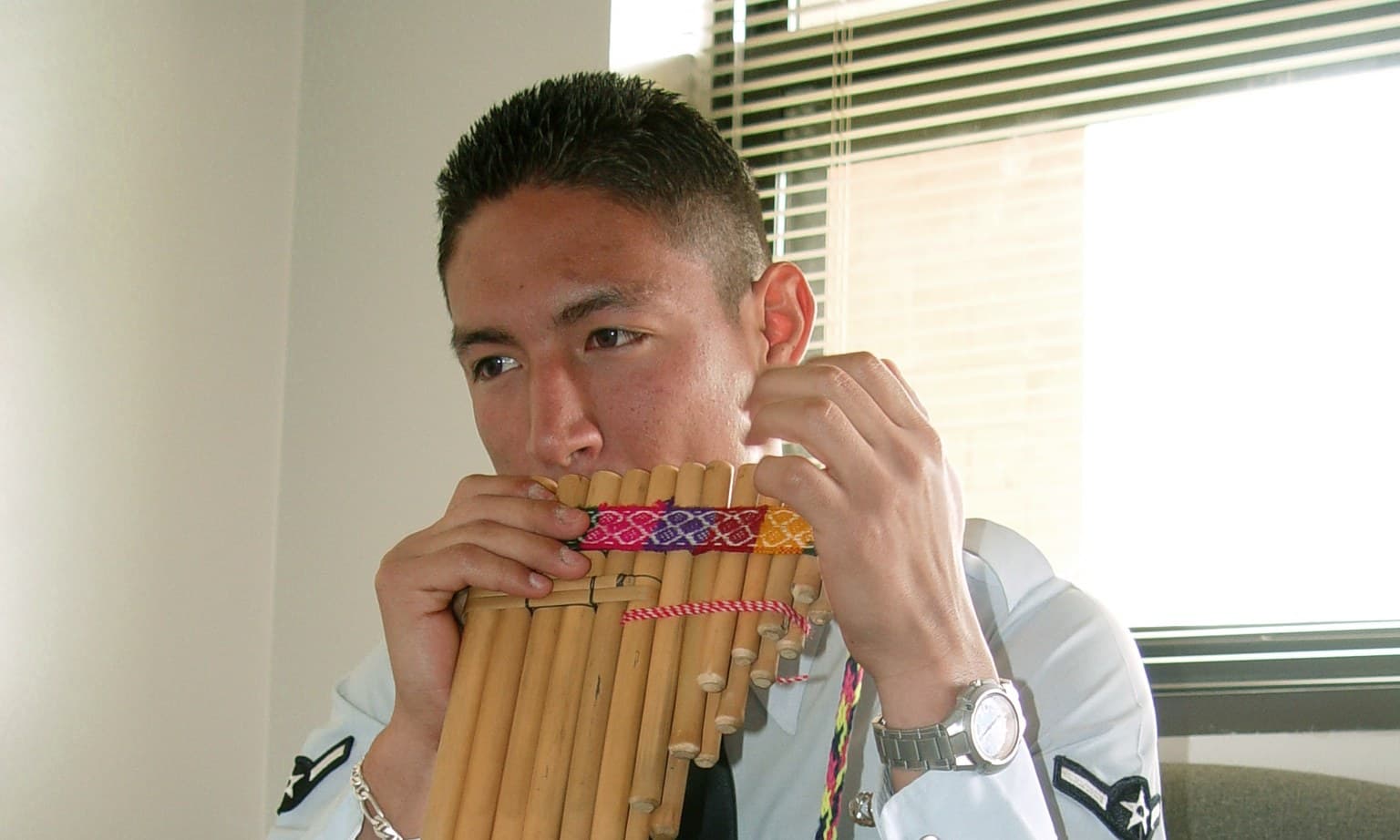
The zampoña is a traditional panpipe instrument made from rows of hollow reeds or bamboo tubes tied together. Each tube makes a different note when you blow across the top. The haunting, breathy sound of the zampoña is one of the most recognisable sounds of Andean music and has been played in the Andes for thousands of years.

Tell me more

Zampoñas are usually played in pairs — one player holds a set with lower notes and another player holds a set with higher notes, and they alternate notes to create the melody together. This style of playing, where two people share one musical line, requires them to listen very carefully to each other. It is called 'interlocking', and it means the music is a true partnership.

The tubes of a zampoña are different lengths — longer tubes make lower sounds, shorter tubes make higher sounds. This is the same principle as a pipe organ in a cathedral, or a set of wine glasses filled to different levels with water. The physics of sound is the same no matter where in the world you are.

The zampoña has been played in the Andes for over 2,000 years. Ancient panpipes have been found in archaeological sites across Bolivia, Peru and Chile. Today they are still made in the same basic way: hollow tubes, tied together, blown across the top. Some are made from bamboo, some from cane, and some from clay.

At festivals across Bolivia, groups of musicians play zampoñas together in large ensembles. The combined sound of many panpipes is powerful and ancient-feeling. Andean communities feel a deep connection to this instrument — it is one of the sounds that most strongly links them to their ancestors.

In the classroom

Walk your class through this in 15 minutes.

Talk together

Discussion prompts

  1. 01The zampoña is played by two people sharing one melody. What other things in music, sport or work are better when done in pairs?
  2. 02Longer tubes make lower sounds. Why do you think the length of the tube changes the sound?
  3. 03The same instrument has been played for 2,000 years. What does it feel like to do something that your ancestors did thousands of years ago?
Try this

Classroom activity

Make panpipes! Cut straws to different lengths (6 different sizes, from about 4 cm to 14 cm). Tape them side by side in a row from shortest to longest. Blow gently across the top of each one and listen to the different notes. Try to play a simple tune by blowing across different straws in order.