
Classroom lesson · Kravica Waterfalls · 🇧🇦 Bosnia and Herzegovina

Kravica Waterfalls

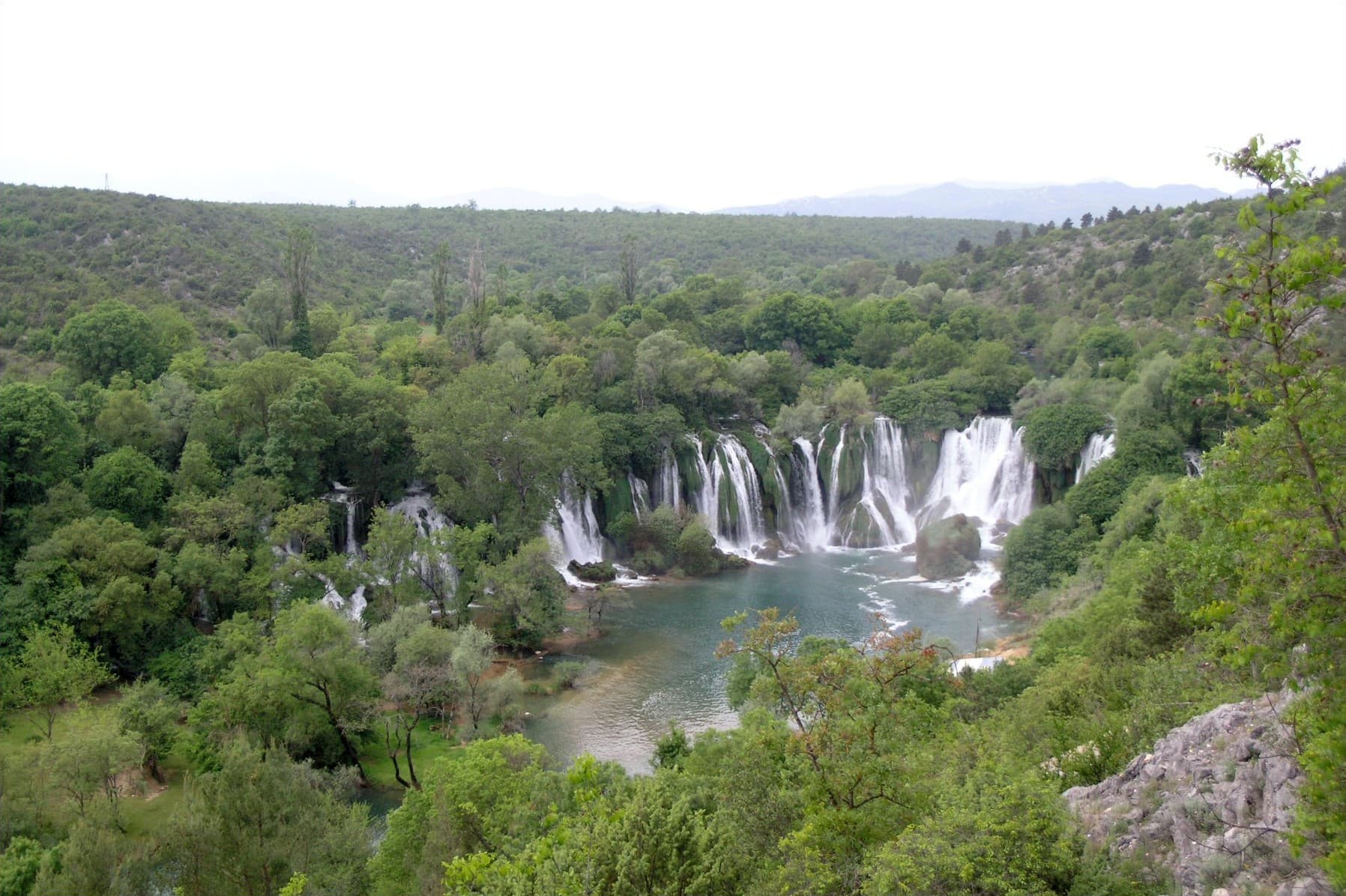
A horseshoe of natural travertine waterfalls on the Trebižat River

Photo · Wikimedia Commons

What is it?

Kravica Waterfalls form a wide horseshoe shape where the Trebižat River tumbles over a natural ledge about 26 metres high into a beautiful turquoise-blue pool. The rock the water flows over is called travertine — a special type of rock that builds up slowly over hundreds of years as minerals in the water harden layer by layer.

Tell me more

Travertine rock is created by the minerals in the river water. As the water flows over the rock, it leaves behind tiny amounts of calcium carbonate — the same material as chalk and seashells — which slowly builds up into new rock. This means Kravica's waterfall ledge is actually getting a tiny bit bigger every single year, even though you would never notice the difference in your lifetime.

The pool at the base of the falls is a brilliant blue-green colour because the water is very clean and the white travertine rock at the bottom reflects the sunlight. In summer, local families come to swim in the pool, which is refreshingly cool even on the hottest days. Swifts and swallows zoom back and forth catching insects in the spray.

The horseshoe shape of the falls means that if you stand in the right spot, you can see water falling all around you in a wide arc. Ferns, mosses, and wildflowers cling to every damp ledge and crack in the rock, making the whole canyon glow with different shades of green.

The Trebižat is one of the cleanest rivers in Europe, which is why the water at Kravica stays such a beautiful colour. Local people are very proud of this and work hard to keep the river and its banks tidy and unpolluted.

In the classroom

Walk your class through this in 15 minutes.

Talk together

Discussion prompts

  1. 01Travertine rock grows slowly from minerals in the water. Can you think of other things that grow very, very slowly — so slowly you cannot see them growing?
  2. 02Why is it important to keep rivers clean? What could happen to the waterfall if pollution entered the river upstream?
  3. 03If you could design a nature swimming pool anywhere in the world, what would it look like?
Try this

Classroom activity

Grow your own mini 'stalagmite' at home or in class: suspend a piece of wool between two jars of saturated salt water so it hangs in the middle over a plate. Over a week, observe the salt crystals growing on the wool as water drips and evaporates. Draw and date your observations each day.