
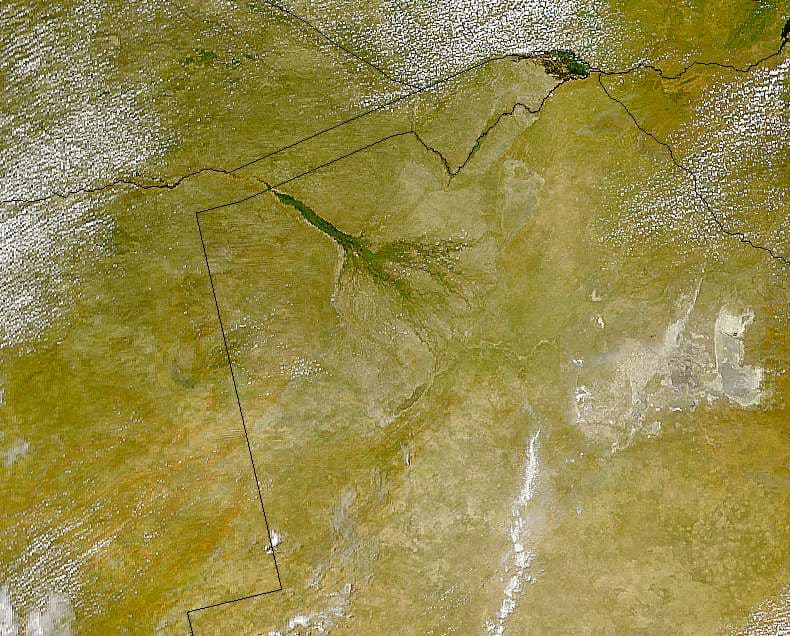
Standing in the middle of Makgadikgadi feels like being on another planet. The ground is perfectly flat and white as far as you can see in every direction. The surface crunches under your feet like a thin layer of ice, but it is salt - billions and billions of salt crystals left behind when the water evaporated thousands of years ago.
During the dry season the pans are almost empty of life, shimmering in the heat. But when the rains come between November and March, shallow pools of water form across the salt. This is when something magical happens: tens of thousands of flamingos arrive to feed and nest. The pans turn pink with their feathers, and the sound of their calling fills the air.
During the wet season, zebras and wildebeest arrive in huge groups - one of the largest animal migrations in southern Africa. They come to graze on the new grass that springs up around the edges of the pans after the rain. Lions, cheetahs and hyenas follow behind. It is a mini version of the Great Migration in Tanzania.
On nights with no moon, the salt pans become a giant natural mirror reflecting the stars. Astronomers love visiting because the darkness and the reflected sky make it feel like you are floating in space. Some visitors sleep right out on the flat surface of the pans to experience this extraordinary feeling.