
Classroom lesson ยท Tonle Sap Floating Villages ยท ๐Ÿ‡ฐ๐Ÿ‡ญ Cambodia

Tonle Sap Floating Villages

Whole communities that live on the water

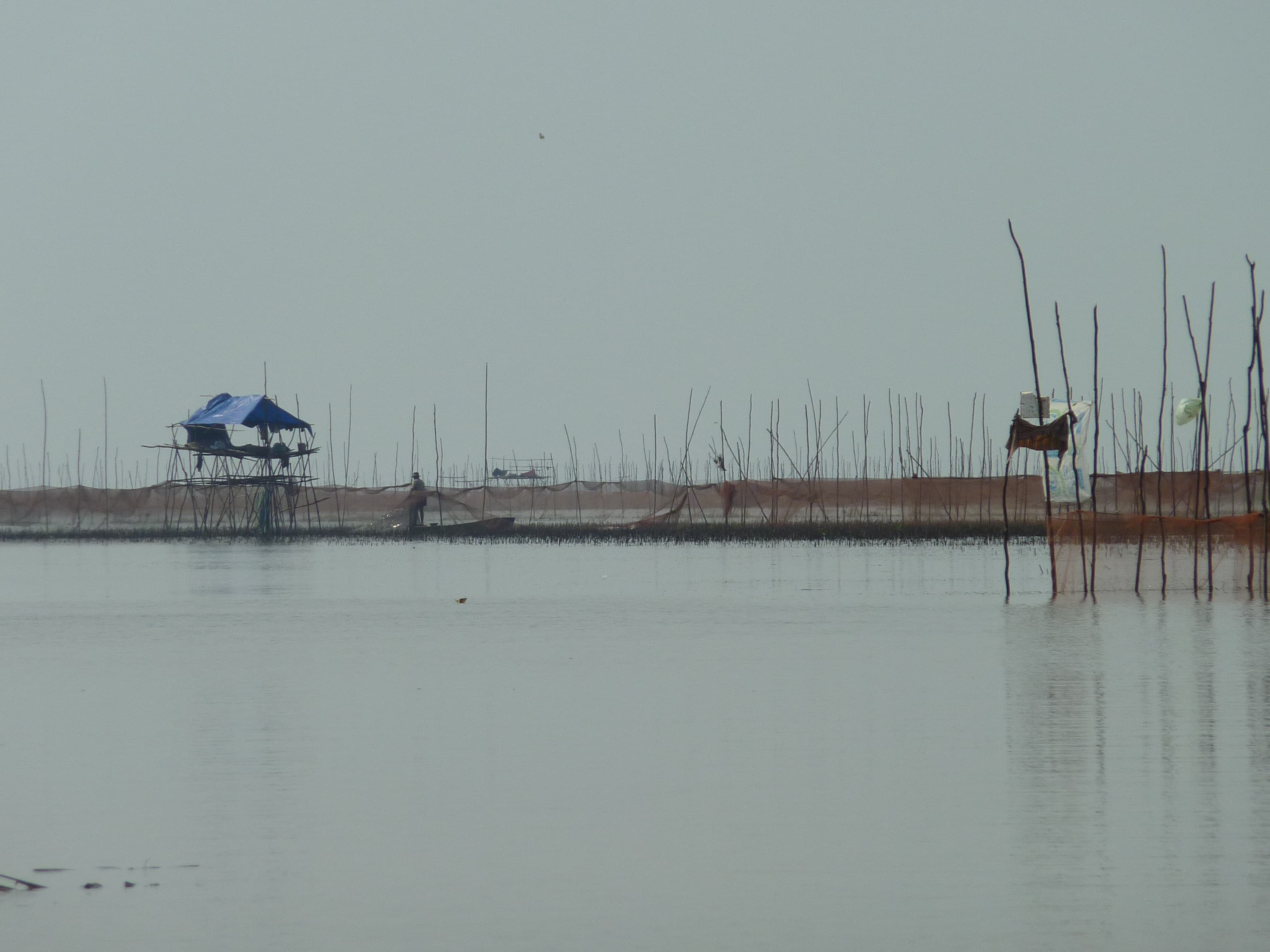
Photo ยท Wikimedia Commons

What is it?

Tonle Sap is the largest freshwater lake in Southeast Asia. On its shores and on the water itself, thousands of families live in floating villages โ€” communities where the houses, schools, shops and even the football pitches float on the lake.

Tell me more

The Tonle Sap lake does something remarkable every year. In the wet season (around June to October), the Mekong River fills up with so much water that it actually pushes backwards into the Tonle Sap, making the lake grow to five times its dry-season size. Then in the dry season, the water flows back out and the lake shrinks again.

The floating villages move with the water. When the lake rises, the whole village drifts outward. When it falls, the village drifts back in closer to the shore. Everything floats โ€” the school building, the temple, the market stalls and the petrol station.

Children in the floating villages travel to school by small boat. In the dry season, the lake is so shallow in places that you can wade across parts of it. In the wet season, the same places might be three or four metres deep. The children know the lake in a way that land children never could.

The lake is extraordinarily rich in fish. Around a million people near Tonle Sap work in fishing. The fish they catch โ€” and preserve, and dry, and ferment โ€” are eaten all over Cambodia and are the source of much of the country's food.

In the classroom

Walk your class through this in 15 minutes.

Talk together

Discussion prompts

  1. 01How might everyday life โ€” waking up, going to school, playing โ€” feel different if your house floated on water?
  2. 02Tonle Sap grows to five times its normal size every year. How might you plan a village that needs to move with the water?
  3. 03What skills might children who grow up on water have that land children don't โ€” and what might it be the other way around?
Try this

Classroom activity

On a large piece of paper, design a floating village. Include: homes, a school, a market, a place of worship, and a football pitch โ€” all on floats. Then compare: what stays the same as a land village, and what is totally different?