
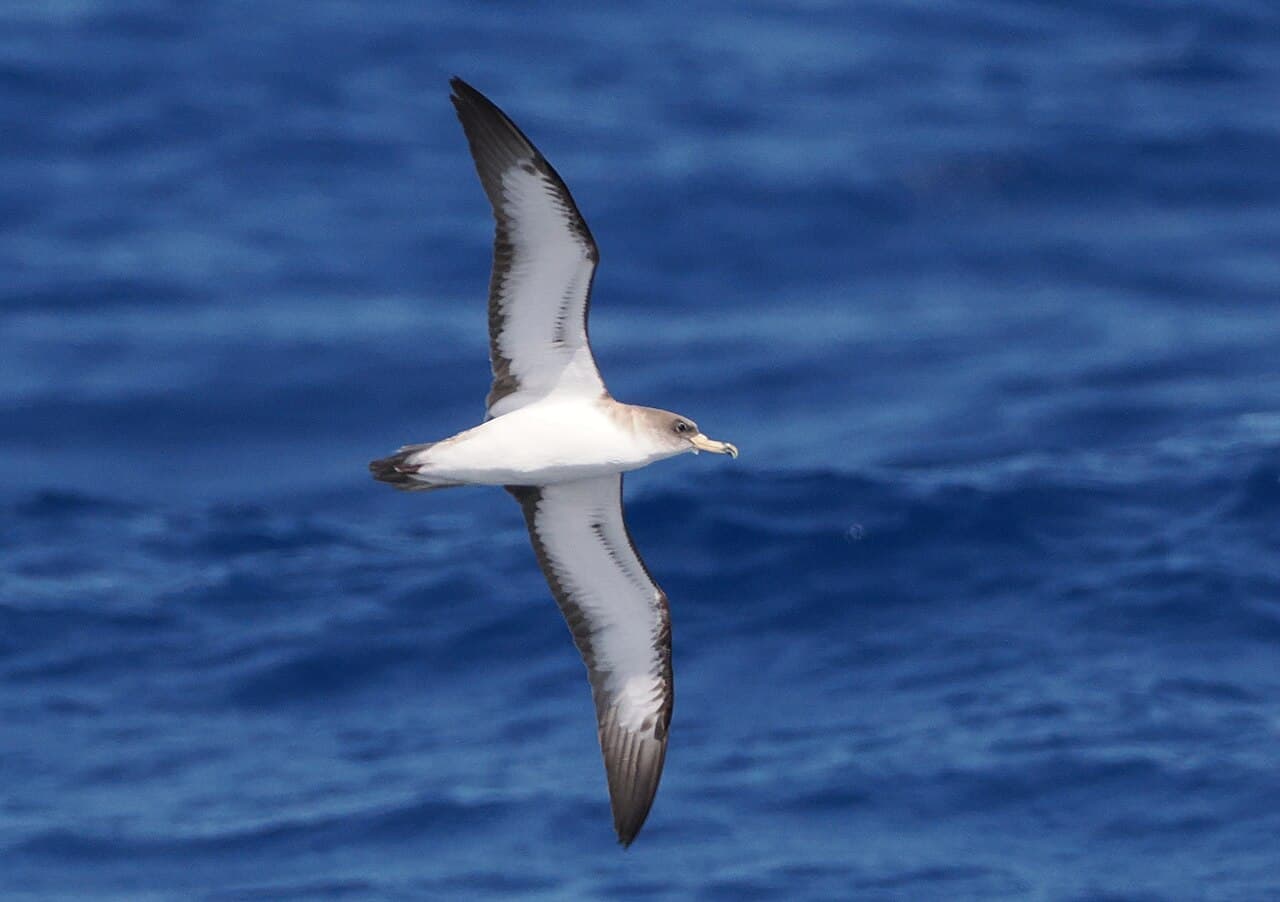
Shearwaters are masters of the ocean wind. They fly by 'shearing' - tilting their wings at an angle and using the wind above the waves to glide long distances without flapping. A shearwater can travel hundreds of kilometres in a day on very little energy. Watching one skim the surface of the sea is like watching a paper plane that never quite lands.
Cape Verdean shearwaters nest in burrows and crevices on rocky cliffs and offshore islets, mostly at night to avoid predators. They lay just one egg per year and both parents take turns keeping it warm. The chick grows slowly and is fed regurgitated fish and squid by its parents.
Because the species breeds only in Cape Verde, protecting its nesting sites is very important. Conservation groups work with local communities to guard the nesting cliffs and reduce disturbance. Rats and cats can be a problem for the nests, so conservationists sometimes set up protected zones.
Shearwaters are known for their eerie, wailing calls at night near the nesting colonies. Sailors once thought these sounds were made by ghosts or sea spirits. Today, hearing a shearwater calling over the cliffs on a Cape Verde island at night is considered one of the most atmospheric wildlife experiences in the Atlantic.