
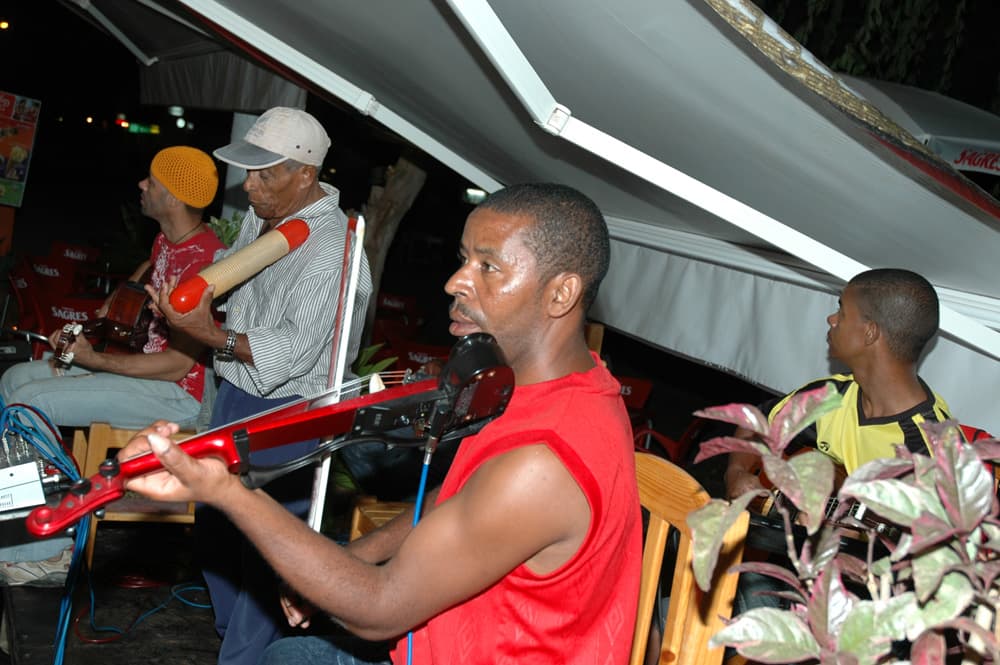
Morna grew up in Cape Verde over hundreds of years as a way to express saudade - a Portuguese word for a deep, sweet longing or nostalgia. Cape Verde's islands were small and far from everywhere, and many Cape Verdeans left to work abroad. Morna captured the feeling of missing home, missing loved ones, and missing the sea. But it is not sad in a heavy way - it is bittersweet, like thinking fondly of something you love.
The music uses guitar, violin, cavaquinho (a small four-stringed guitar like a ukulele), and sometimes bass guitar. The rhythm is gentle and slow, almost like a lullaby. The singer moves very little on stage - the emotion comes entirely through the voice. You can close your eyes and let the music carry you somewhere far away.
Cesária Évora was born in Mindelo in 1941 and grew up singing morna in bars. She famously performed barefoot to show solidarity with the poor people of her country. In the 1990s she became an international star, bringing Cape Verdean music to concert halls across Europe, America, and the world. Her most famous song, 'Sodade', is one of the most recognised pieces of African music globally.
Since Cesária Évora, a new generation of Cape Verdean musicians has taken morna to fresh audiences. Young singers blend it with modern sounds while keeping its emotional heart. In 2019, morna was officially added to UNESCO's list of the world's most important living cultural traditions.