
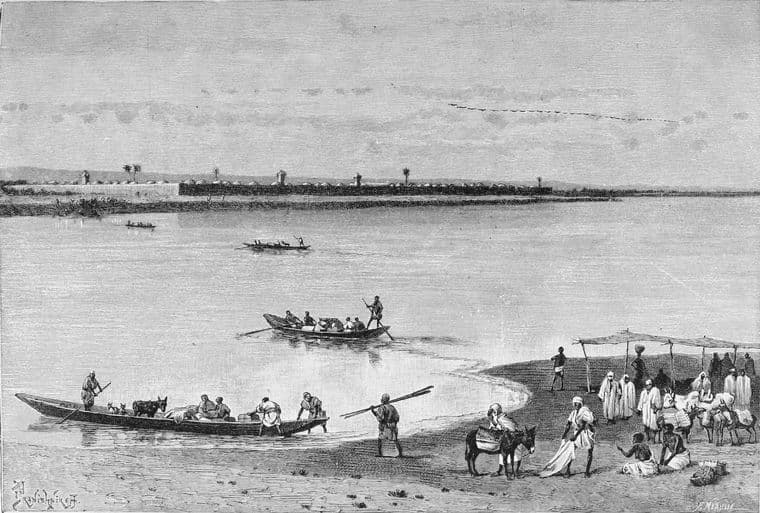
The Logone River forms a natural border between Chad and Cameroon for much of its length. Families on both banks speak to each other, trade goods, and sometimes even share festivals across the water. The river is so much a part of daily life that local children often learn to swim and fish in it before they start school.
The wet season transforms the rivers. Between July and September, rainfall far to the south sends a huge pulse of water surging northward. The rivers overflow their banks and flood wide plains, creating temporary lakes and wetlands that fill with fish, frogs and waterbirds. Then, as the dry season returns, the floods retreat and leave behind rich soil perfect for growing crops like sorghum and millet.
Hippopotamuses live in the calmer stretches of both rivers, spending most of the day half-submerged to keep cool, and coming ashore at dusk to graze on riverside grass. Nile crocodiles bask on sandbars in the morning sunshine, and river otters play in the shallower, faster sections. The rivers are highways for wildlife as much as for people.