
Classroom lesson · Food · 🇹🇩 Chad

Daraba Okra Stew

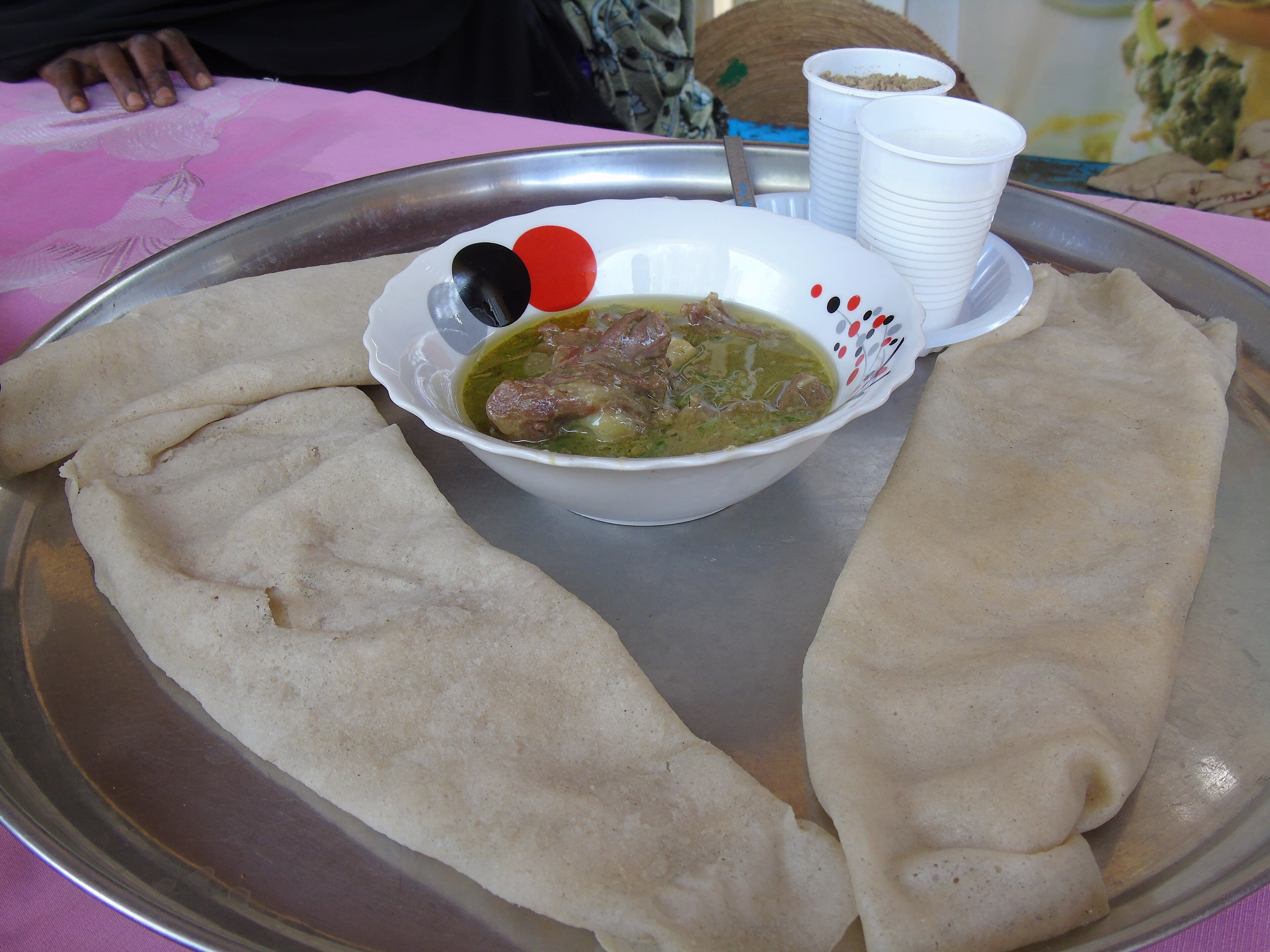
A rich, warming stew with peanuts, okra and leafy greens

Photo · Wikimedia Commons

What is it?

Daraba is one of Chad's most popular sauces and stews, made with okra, peanut paste, leafy greens and sometimes dried fish or meat. It is thick, rich and slightly sticky because of the okra, and it is almost always eaten by scooping it up with pieces of boule. The combination of peanut and okra gives it a unique, nutty, earthy flavour.

Tell me more

Okra is a vegetable with a long green pod, and when it is cut and cooked it releases a sticky, silky liquid that makes stews thick and smooth. People either love or find surprising this texture, but in Chad it is completely normal and very much enjoyed. Okra has been grown in Africa for thousands of years and is an important source of vitamins.

Peanuts — also called groundnuts — are another key ingredient in Chadian cooking. Unlike most nuts, peanuts actually grow underground, inside little papery shells attached to the roots of the plant. To make peanut paste for daraba, the peanuts are roasted, then ground into a smooth paste that dissolves into the cooking liquid and thickens the stew.

Every family has their own version of daraba. Some add dried baobab leaves for extra thickness; others use local greens like sorrel or spinach. In the south of Chad where food is more plentiful, meat or dried fish is added. In all versions, the stew is cooked slowly over a wood fire, and the smell of it cooking is something Chadians living abroad say they miss most.

In the classroom

Walk your class through this in 15 minutes.

Talk together

Discussion prompts

  1. 01Peanuts grow underground — does that surprise you? What other foods grow in unexpected places?
  2. 02Every family has their own version of daraba. Does your family have a dish that is slightly different from anyone else's version?
  3. 03Chadians abroad say they miss the smell of daraba cooking. What smell would you miss most if you moved far from home?
Try this

Classroom activity

Do a 'recipe investigation': pick one dish your family makes and interview a family member about where the recipe comes from, whether anything has changed over the years, and what the key secret ingredient is. Write up your findings as a short recipe card with an illustration.