
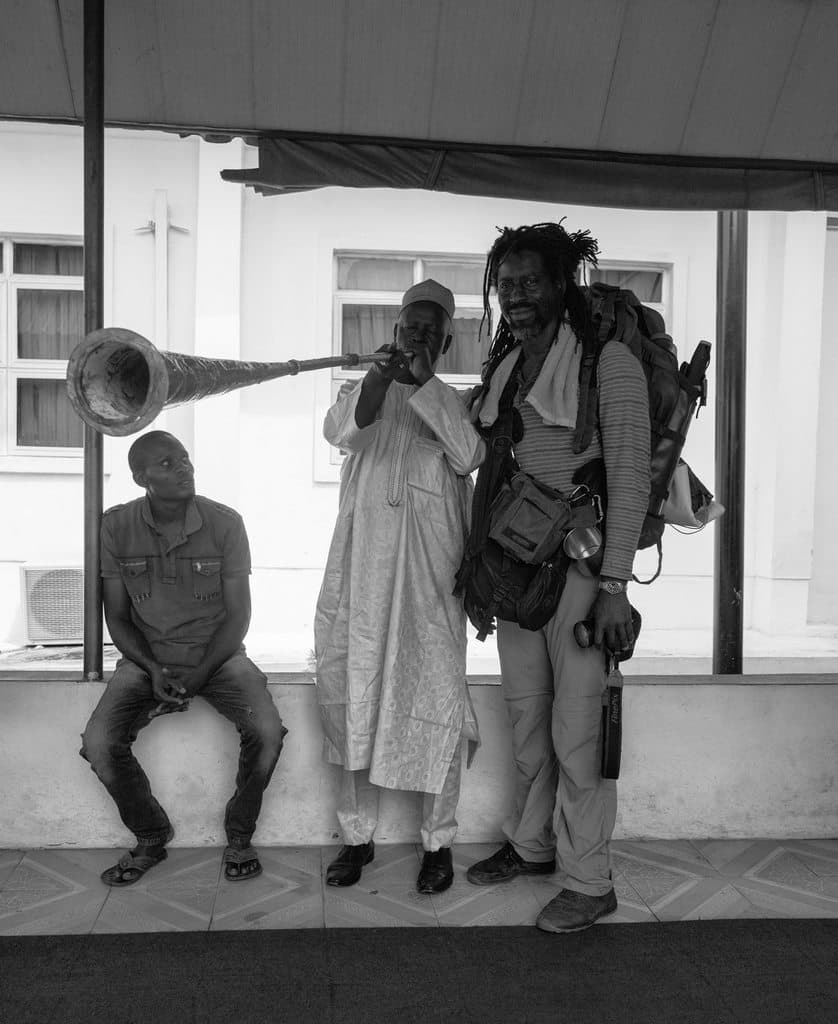
A kakaki is made from sheets of beaten metal - often tin or brass - rolled into a tube that tapers from a wide bell at one end to a small mouthpiece at the other. Because it is so long, a player usually needs a helper: one person holds up the far end of the trumpet while the other blows into the mouthpiece and controls the sound. It is truly a team instrument.
The sound a kakaki makes is decided entirely by how the player shapes their lips and controls their breath - there are no keys or valves to press, unlike a modern brass instrument. This means that becoming a skilled kakaki player takes years of practice to master the different pitches. The repertoire of melodies played on kakaki has been passed down by ear from teacher to student for many generations.
Kakaki are traditionally played at royal courts and important celebrations - to welcome honoured guests, to mark the start of a great festival, or to open an important gathering. Hearing the long, resonant notes of the kakaki signals that something significant is about to happen. The sound is so distinctive that it immediately creates a sense of occasion, like a fanfare.