
The word 'atol' comes from the Nahuatl language, spoken by indigenous peoples of Central America long before Spanish colonisers arrived. Corn-based drinks have been prepared in El Salvador and across Mesoamerica for thousands of years - the ancestors of the Aztec and Maya civilisations considered corn sacred and used it in drinks, foods, and religious ceremonies.
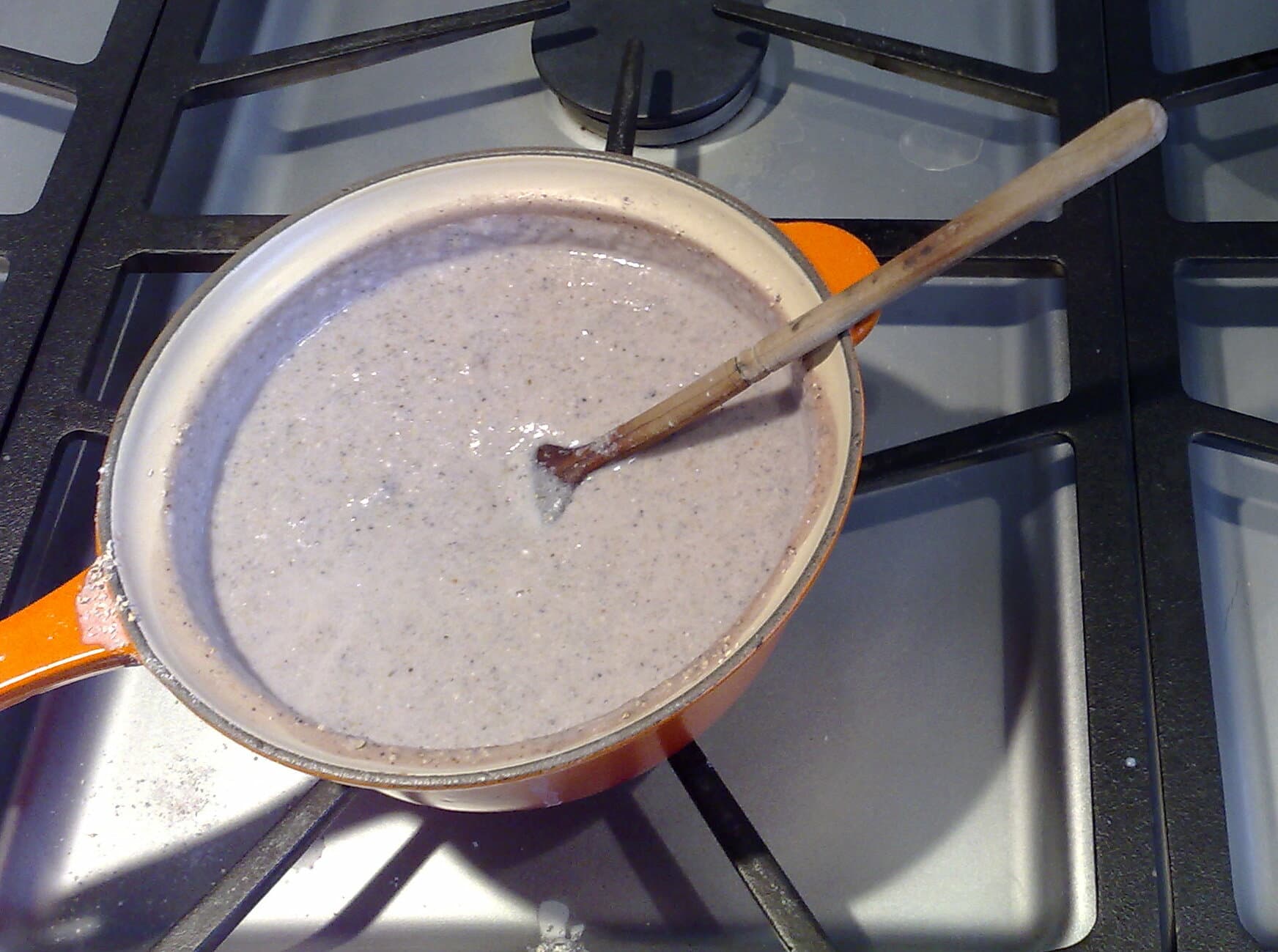
To make atol de elote, fresh corn kernels are blended with water until smooth, then strained to remove the fibres. The resulting liquid is cooked with milk, sugar, and a cinnamon stick until it thickens into a velvety, warm drink. Vendors at markets and festivals often ladle it from large clay pots called comales, and the sweet cinnamon smell drifts far down the street.
El Salvador has a long tradition of atoles - warm drinks made from ground grains. Another favourite is atol shuco (made from purple corn and a fermented corn base), which has a tangy, slightly sour taste. There is also pinol (made from toasted corn), and horchata (made from rice and spices). Each one tells you something about the deep relationship between Salvadoran culture and corn.
For many Salvadorans, the smell and taste of atol de elote brings strong feelings of home and comfort. It is often the drink that grandmothers make for grandchildren on rainy days or during fiestas. Food like this carries memory and tradition inside every cup.