
Classroom lesson · Music · 🇸🇻 El Salvador

Marimba Music

El Salvador's traditional wooden xylophone that fills every fiesta

Photo · Wikimedia Commons

What is it?

The marimba is a large wooden percussion instrument — like a giant xylophone — played with soft mallets. It produces a warm, resonant sound that carries outdoors and fills public squares, wedding celebrations, and fiestas. The marimba has deep roots in both African and indigenous American musical traditions, and it is considered one of the most important traditional instruments in Central America.

Tell me more

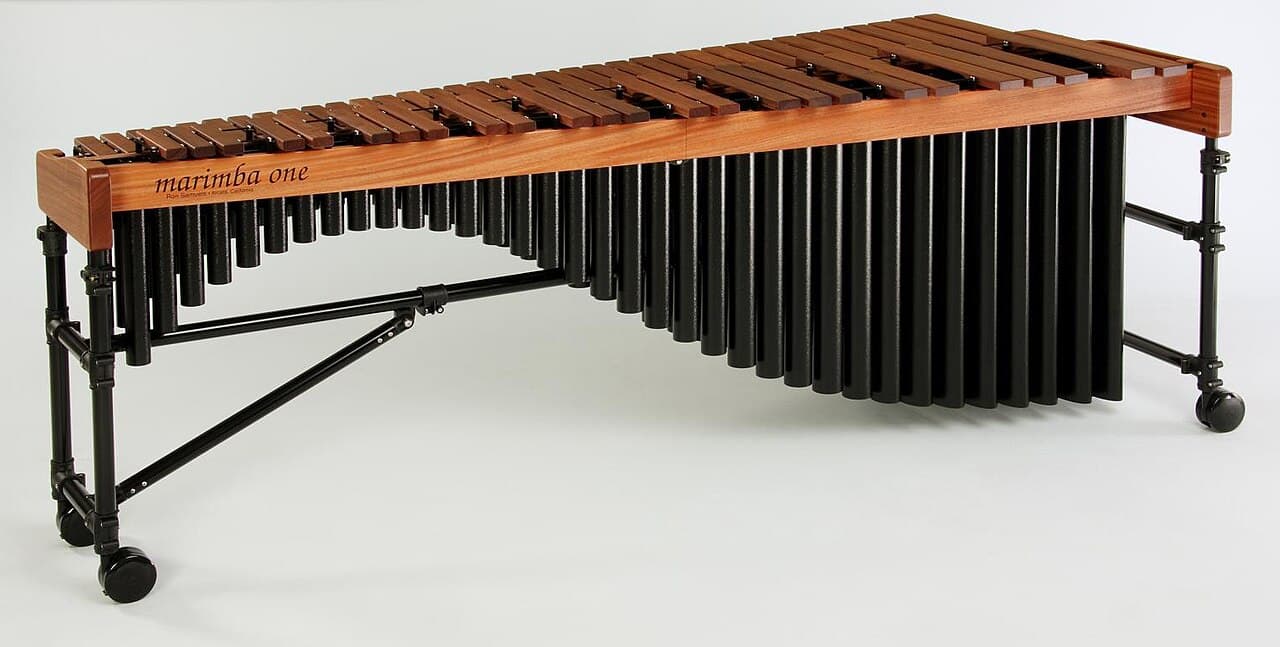
A marimba looks like a very wide xylophone with wooden bars of different lengths arranged like a keyboard. Under each bar hangs a hollow resonating tube (usually made from metal or gourd) that amplifies the sound when the bar is struck. Larger marimbas need three or four players standing side by side, each with two or three mallets, playing together in perfect coordination — a team effort!

The marimba's origins are fascinating. Instruments very similar to the marimba were played in Africa for hundreds of years. When enslaved Africans were brought to the Americas by European colonisers, they brought their musical traditions with them. These blended with the instruments and music of indigenous peoples already living in Central America, creating the marimba as it is known today.

In El Salvador, you will hear marimbas playing at local festivals, school celebrations, traditional ceremonies, and restaurants. Some pieces are lively and quick, making people want to dance; others are slower and more melodic, played as background music for meals or ceremonies. Professional marimba players often start learning as young children and spend years perfecting their technique.

UNESCO has recognised the marimba as an Intangible Cultural Heritage — meaning it is not just an object but a living tradition of knowledge, skill, and community that needs protecting. Across Central America, marimba schools and cultural programmes work to pass this beautiful art form on to the next generation.

In the classroom

Walk your class through this in 15 minutes.

Talk together

Discussion prompts

  1. 01The marimba blends African and indigenous American musical traditions. Can you think of other music styles that have been created by blending traditions from different cultures?
  2. 02Large marimbas require three or four players to cooperate perfectly. What other musical situations require a team working closely together?
  3. 03UNESCO protects the marimba as a 'living tradition'. What does it mean for a tradition to be 'living', and why might it need protection?
Try this

Classroom activity

Make a simple classroom marimba using wooden rulers or pencils of different lengths laid across two pencil cases (to raise them off the desk). Tap each one gently and notice how the length changes the pitch. Arrange them from shortest (highest pitch) to longest (lowest pitch). Can you play a simple tune?