
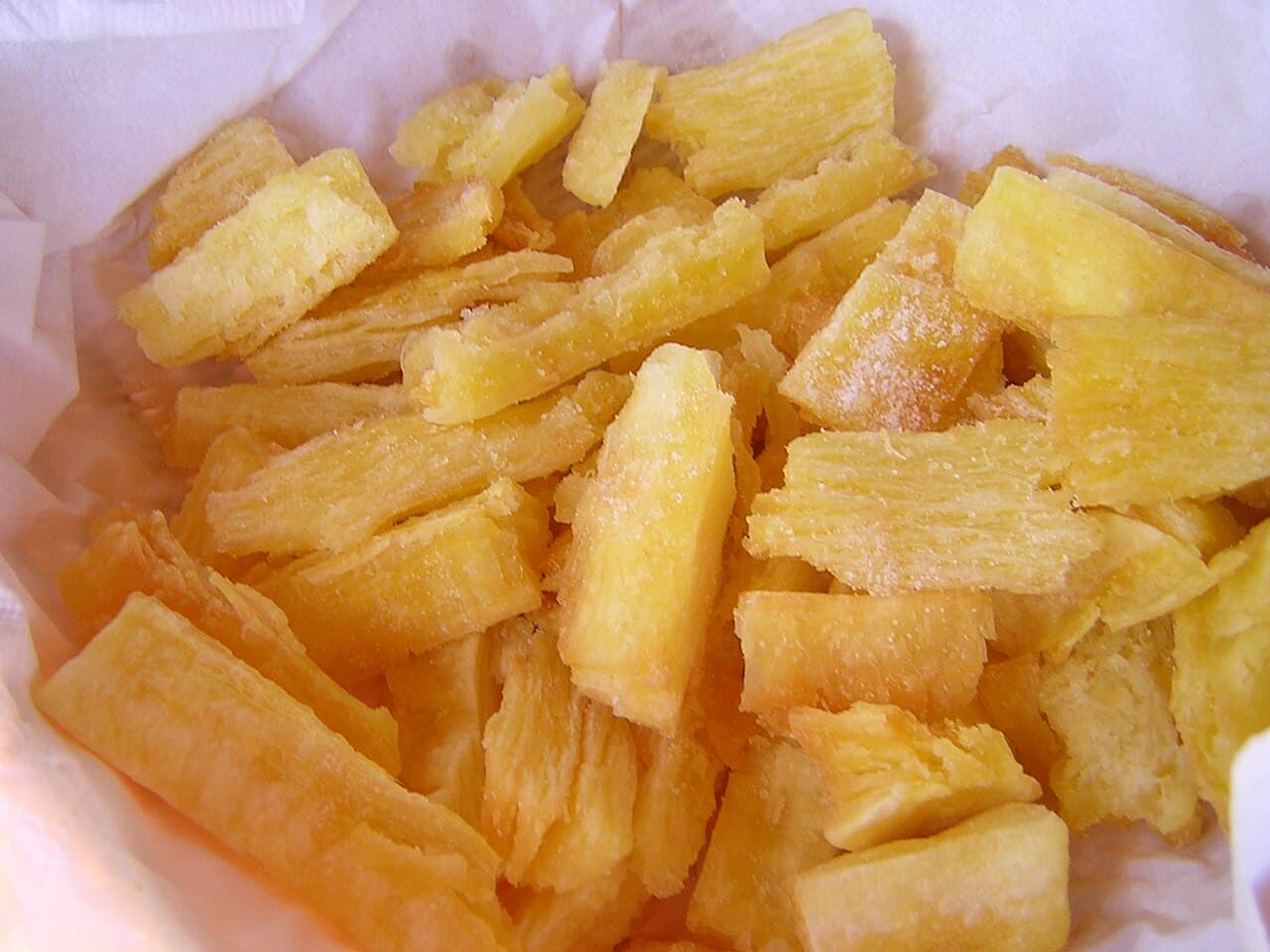
Cassava is one of the most important food crops in the world, grown across tropical regions of Africa, Asia, and the Americas. It looks a little like a thick, brown, bark-covered stick when raw, but inside it is white and starchy - similar in texture to potato. In El Salvador, yuca has been grown and eaten for thousands of years, long before Spanish colonisation.
To make yuca frita, the cassava is first peeled and boiled until soft and cooked through. Then the cooked pieces are dropped into very hot oil and fried until the outside becomes golden and crispy while the inside stays soft and fluffy. The contrast between the crispy skin and the pillowy inside is what makes yuca frita so irresistible.
In El Salvador, yuca frita is almost always served with curtido (the same tangy cabbage coleslaw that accompanies pupusas) and chicharrón - crispy fried pork skin. The combination of textures and flavours - crunchy, soft, tangy, salty, savoury - is a favourite at family gatherings, festivals, and roadside stalls throughout the country.
Cassava is also made into many other foods around the world: tapioca pearls (used in bubble tea), cassava flour (used for flatbreads and cakes in Africa and South America), and a fermented drink called chicha in some parts of Latin America. It is one of the most versatile and important crops that the Americas gave to the rest of the world.