
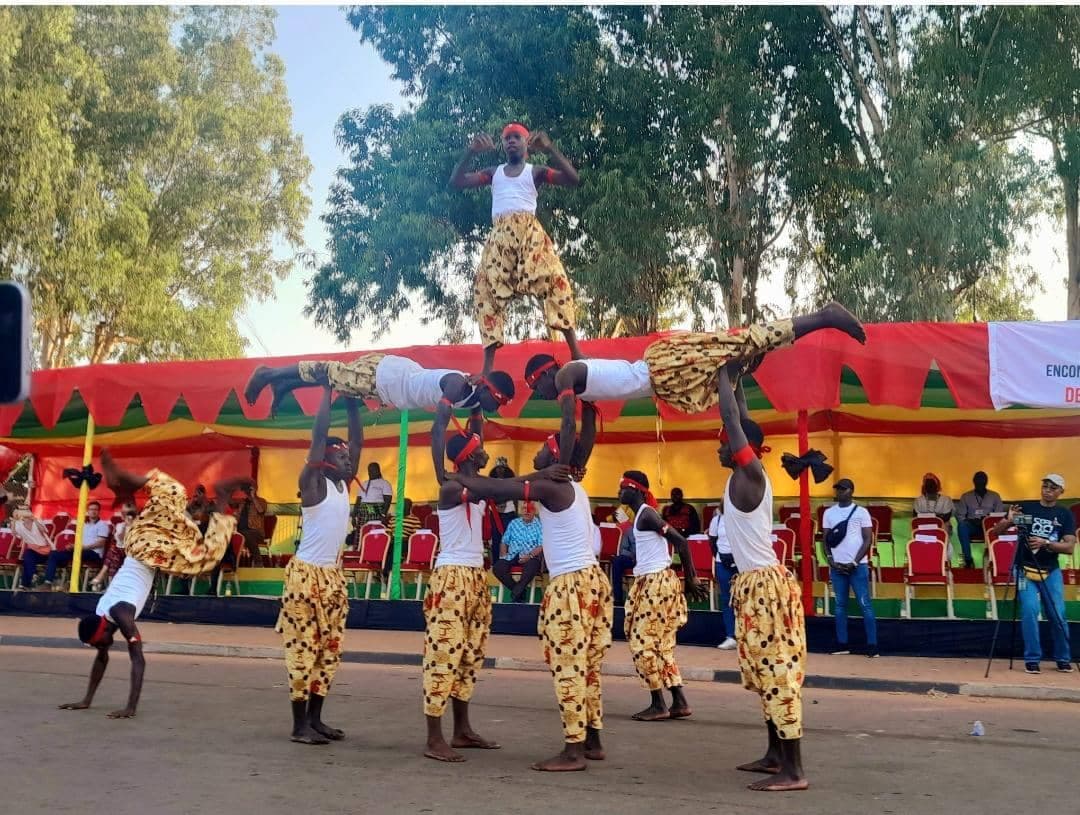
Carnival in Bissau is a time when the whole city comes together to celebrate. Schools, neighbourhoods, and community groups each form their own comparsa - a team of dancers, musicians, and costume-makers who work together to create their performance. Being part of a comparsa means months of meetings, practice sessions, and late-night sewing.
The costumes are extraordinary - made from feathers, sequins, mirrors, fabric scraps, palm fronds, and whatever materials the team can find. Some costumes are huge, with headdresses towering above the dancer's head or enormous wings that spread out on either side. Making them is an art in itself.
On Carnival day, the comparsas parade through the streets as crowds line the pavements to cheer. Drummers provide a constant, driving rhythm, and the dancers move in choreographed routines that have been rehearsed for weeks. Judges award prizes for the best costume, the best music, and the best dancing.
Carnival in Guinea-Bissau has its roots in celebrations brought to the region during the time when Portuguese explorers arrived. Over the centuries, local traditions, music, and creativity transformed it into something entirely unique - a festival that belongs completely to Guinea-Bissau.