
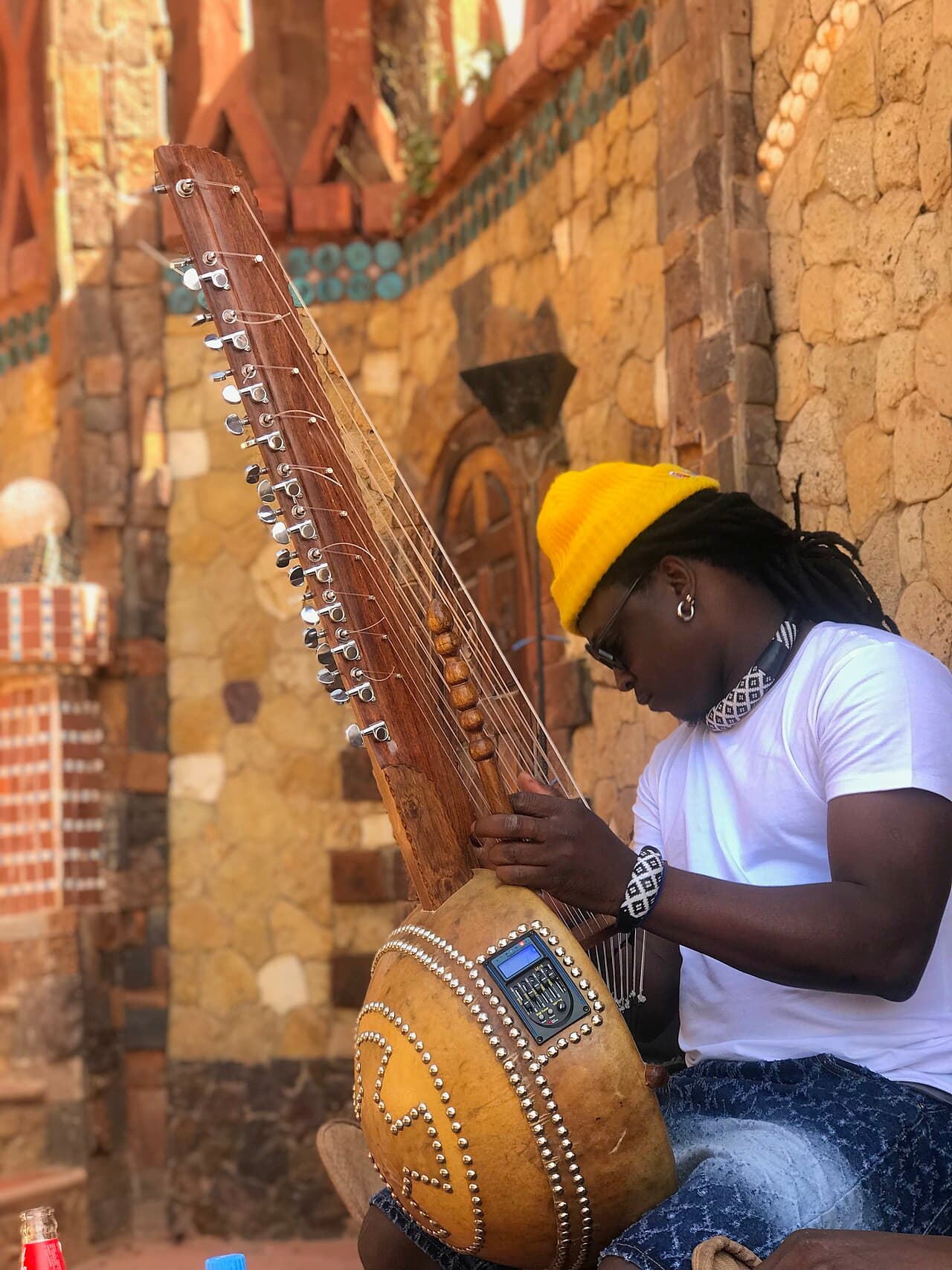
The kora is played by a special group of musicians called griots (say it: GREE-oh). Griots are storytellers, historians, and musicians all at once. They memorise the history, legends, and family stories of their communities and pass them on through their music. A griot can tell you the names of your great-great-grandparents and the stories of what they did - all through song.
A kora player holds the instrument vertically in front of them, with both thumbs plucking the strings from either side of a notched bridge. The two hands play different parts - one keeps the rhythm while the other plays the melody. The combined sound is so rich that it is hard to believe only one person is playing.
Learning to play the kora takes years of practice, and traditionally the knowledge passed from parent to child within griot families. The instrument itself is often handmade, with the gourd dried and hollowed out, the cowhide stretched tight over the opening, and the strings made from fishing line. Every kora has its own slightly different sound depending on the gourd's shape.
The kora is now celebrated around the world. Modern kora players have performed with jazz musicians, classical orchestras, and pop artists from many countries. But at its heart the kora remains a community instrument - best heard at a gathering where the music connects people to their shared past.