
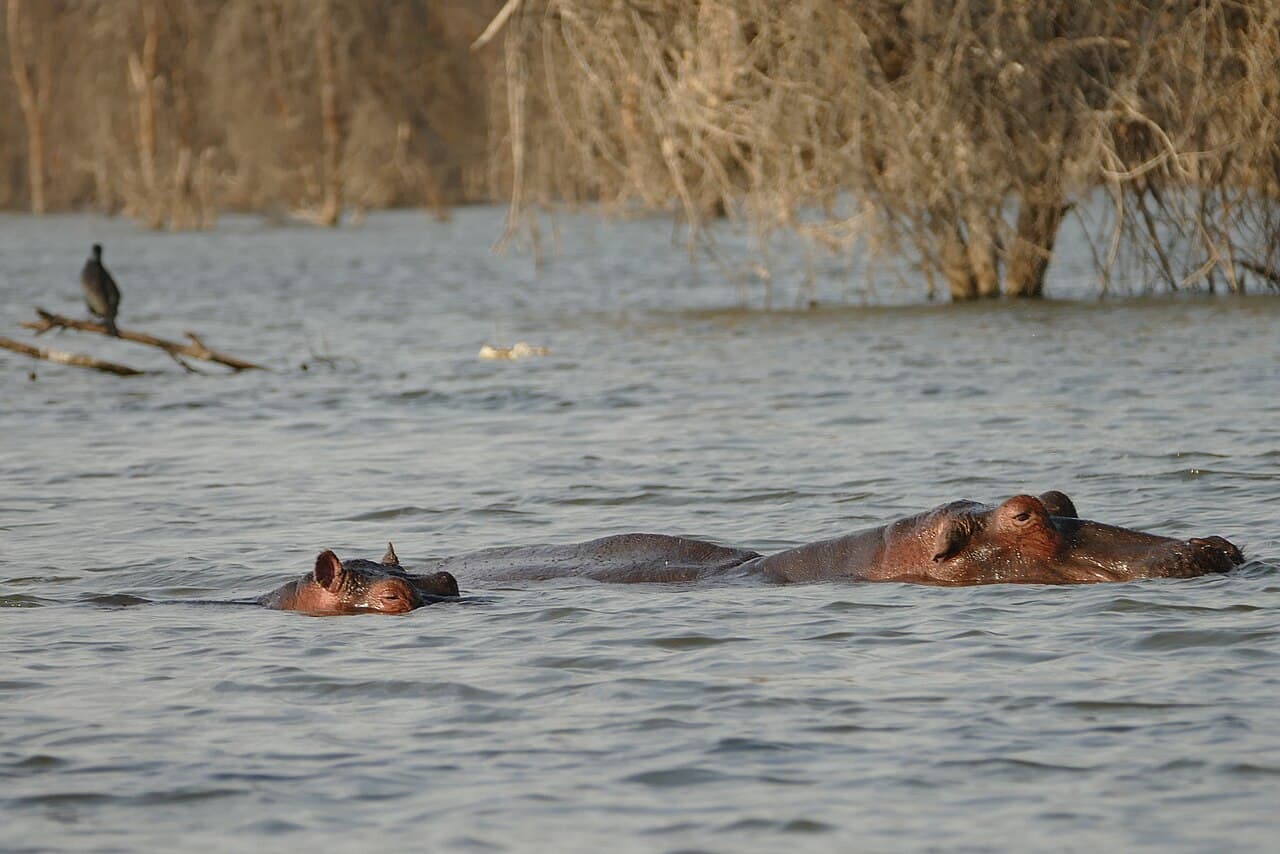
Hippopotamuses are huge - an adult can weigh as much as three small cars. Despite their size they are surprisingly graceful in the water, where they spend most of the day keeping cool. Their skin produces a natural pinkish liquid that acts like a sunscreen and keeps bacteria away - scientists sometimes call it 'blood sweat', though it is neither blood nor sweat.
The Bijagós hippos are unusual because they regularly enter and swim in the sea. Most hippos would not survive salty water for long, but these animals have adapted over many generations. They swim between islands at night and can cover several kilometres through open water. Nobody is entirely sure how they navigate, but they always find their way.
Hippos are herbivores - they eat only plants. At night they come ashore to graze on grasses and other vegetation, walking surprisingly far inland in a single night. In the morning they return to the water, sometimes with mud coating their backs where they wallowed.
The saltwater hippos of the Bijagós are considered a very special population by conservationists. Their numbers are small, which makes each individual animal important. The Bijagó people who share the islands with them have lived alongside hippos for centuries and have their own deep knowledge of the animals' habits and movements.