
Classroom lesson · Wildlife · 🇭🇰 Hong Kong

Chinese white dolphin

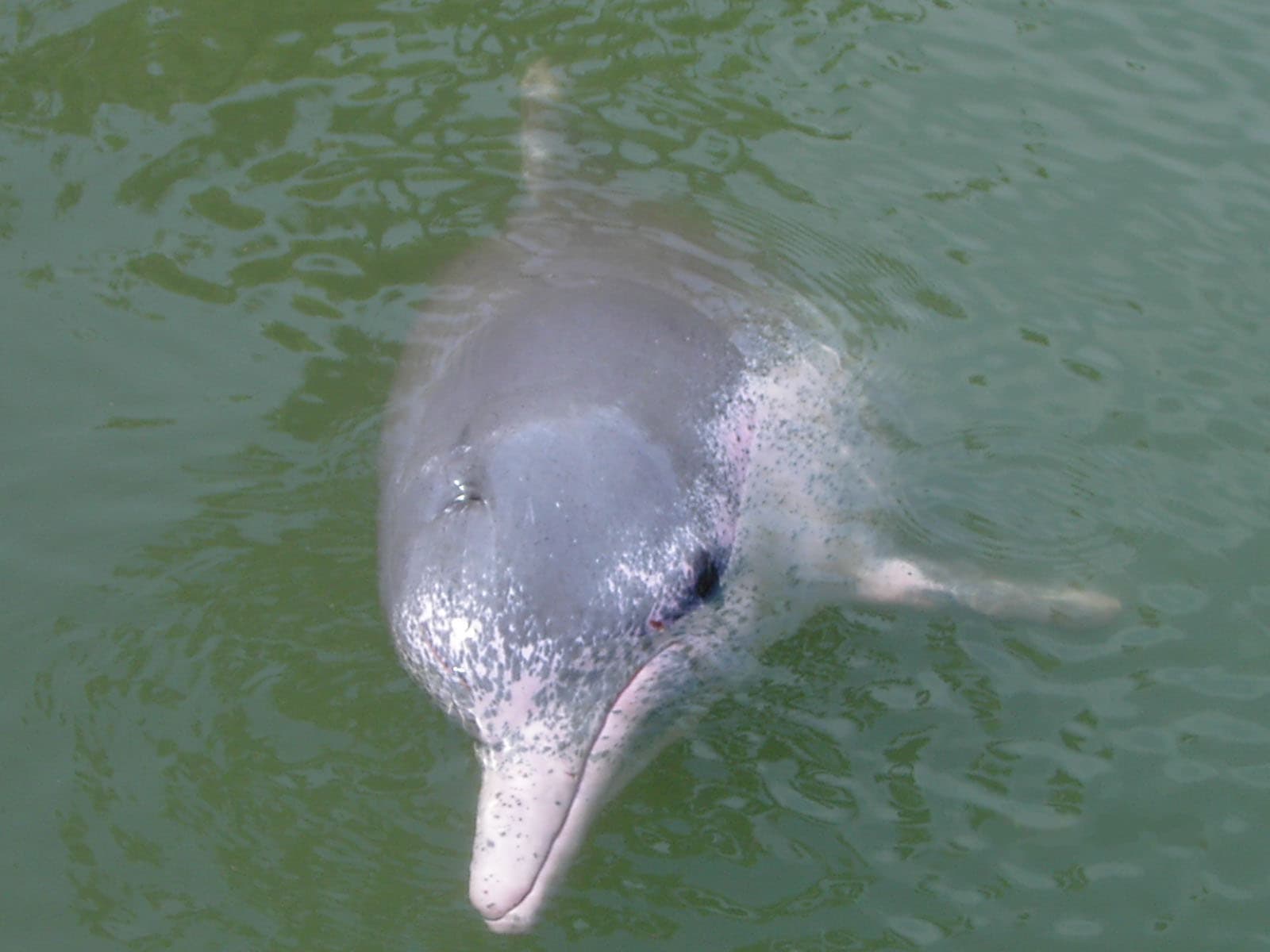
A dolphin that is pink - and swims in the waters near Hong Kong

Photo · Wikimedia Commons

What is it?

The Chinese white dolphin (also called the Indo-Pacific humpback dolphin) is famous for its bright pink colour. Young ones are grey, but as they grow up their skin turns whiter, and the blood vessels beneath show through - giving them a rosy pink glow. They live in the shallow waters around the Pearl River Delta near Hong Kong.

Tell me more

The pink colour comes from the blood vessels under the dolphin's skin. These dolphins do not have blubber (a thick fat layer) to keep them warm the way most ocean dolphins do. Instead, lots of blood vessels close to the skin help them manage their temperature - and when the blood flows strongly, the pink shows through.

Hong Kong has even made the Chinese white dolphin one of its official animal symbols. You can see it on signs and logos around the city. Conservationists work hard to protect these dolphins because they live in busy, shallow waters close to ports and airports.

The dolphins live in family groups and communicate by clicking and whistling, just like other dolphins. Young calves stay close to their mothers for the first few years of life, learning what to eat and where to swim.

Dolphin-watching boat trips run from Hong Kong, heading out to the quieter waters near Lantau Island where the dolphins are most often seen. Spotting a pink dolphin leaping from the water is considered a lucky and joyful sight.

In the classroom

Walk your class through this in 15 minutes.

Talk together

Discussion prompts

  1. 01Why might a dolphin living close to a busy city need extra protection?
  2. 02The dolphins start grey and turn pink. What other animals change colour as they grow up?
  3. 03Why might a city choose a wild animal as one of its symbols?
Try this

Classroom activity

Draw a baby Chinese white dolphin (grey) next to an adult (pink). Label both and write one sentence each explaining why they look different. Then find three other animals that change colour or pattern as they grow - draw a before-and-after for each.