
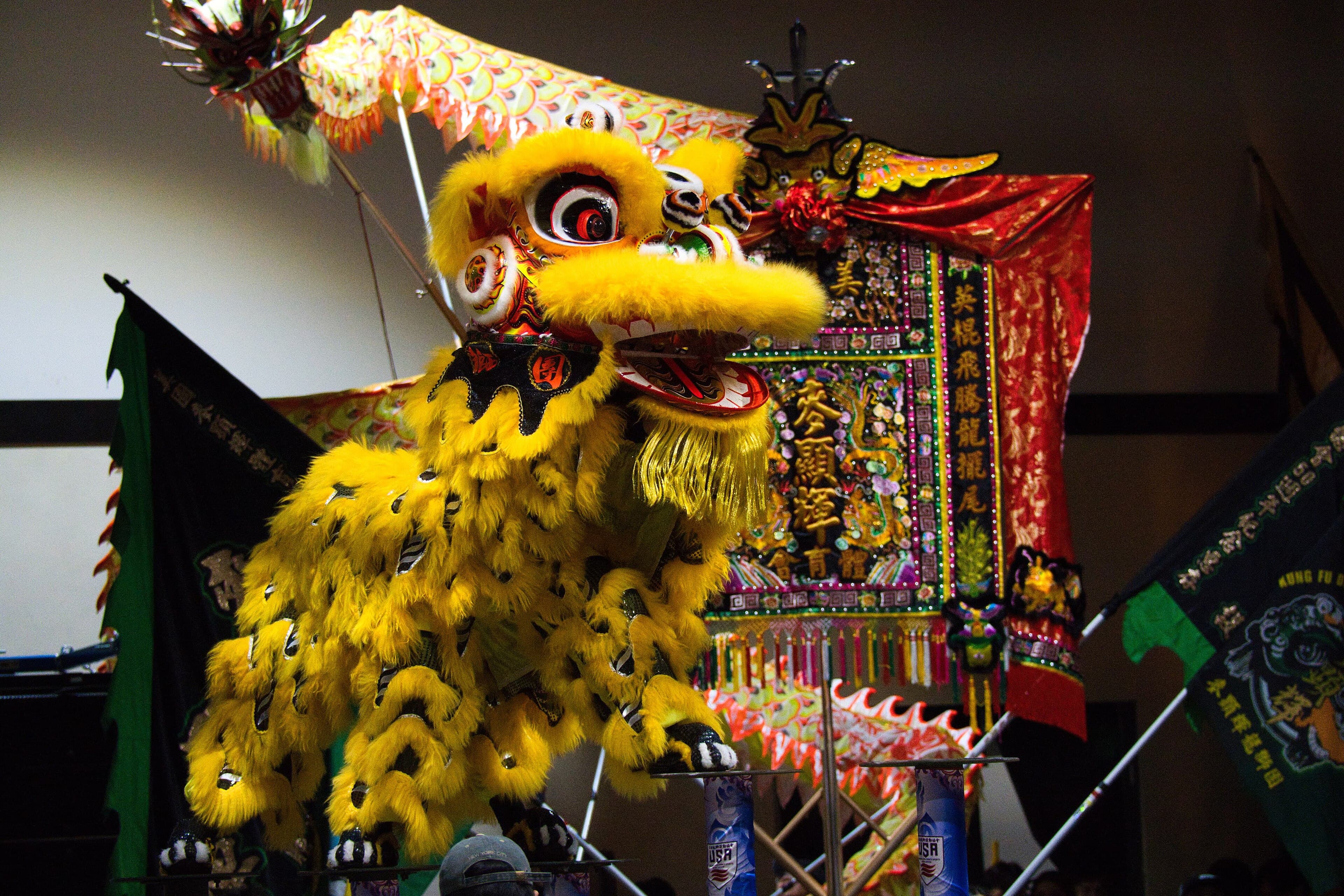
Lion dances are performed at Chinese New Year, at the opening of new shops and restaurants, at festivals and at important celebrations. The lion is believed to bring good luck, scare away bad energy and bless the place where it performs.
The music is just as important as the dance. The drumbeat tells the lion what to do - slow beats mean the lion is resting or playful; fast beats mean it is excited or alert. The performers inside the costume listen to the drum and react. Without the drum, there is no lion dance.
Lion dances often include a piece of lettuce or a red packet hung high up. The lion must reach up and 'eat' the lettuce, then spit the leaves out like a shower of confetti - a symbol of spreading good fortune. This is called 'picking the greens'.
Learning to perform the lion dance is a skill that takes years of training. The two performers must move as one animal, communicating without words. The person operating the head needs strength to hold the heavy costume up, and both performers need balance, agility and rhythm.