
Classroom lesson ยท Persepolis ยท ๐Ÿ‡ฎ๐Ÿ‡ท Iran

Persepolis

The ancient capital built on a giant stone platform

Photo ยท Wikimedia Commons

What is it?

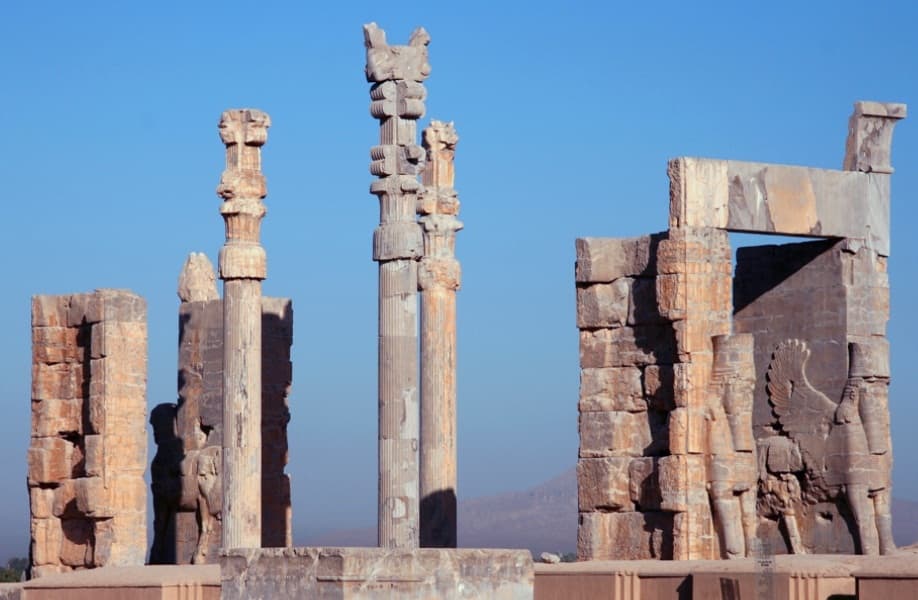
Persepolis was the grand capital of one of the greatest empires the world has ever known, built more than 2,500 years ago in what is now southern Iran. Enormous columns, carved staircases and stone sculptures still stand today, telling the story of a civilisation that stretched from Egypt to India. UNESCO โ€“ the organisation that protects the world's most precious places โ€“ has made it a World Heritage Site.

Tell me more

The city was built on a raised stone platform โ€“ almost like a giant stage โ€“ so that it could be seen for miles across the flat plain. Workers carved enormous staircases up to the platform, wide enough for horses to walk up alongside people. At the top, grand halls with tall cedar-wood columns were used for celebrations and meetings with leaders from all over the world.

The walls and staircases are covered in thousands of carefully carved pictures showing people from many different lands bringing gifts and walking in processions. You can spot their different clothes, hairstyles and animals just by looking carefully at the stone. It is like a comic strip carved in rock, telling stories without a single word.

Persepolis was so large that it took many generations to build. Archaeologists โ€“ people who study ancient places โ€“ have found clay tablets with writing that lists the workers' wages and food rations, which means we know they were paid and fed properly. At the time it was one of the most magnificent cities on Earth.

In the classroom

Walk your class through this in 15 minutes.

Talk together

Discussion prompts

  1. 01If you could carve a picture story on a wall to show visitors what life is like today, what three scenes would you choose?
  2. 02Why do you think people from 23 different nations came to Persepolis? What might they have wanted to share or trade?
  3. 03Why is it important to protect old places like Persepolis so that future children can see them?
Try this

Classroom activity

Create your own 'carved wall' on a strip of paper. Draw three or four panels like a comic strip showing things that are important in your life today โ€“ food, sport, school, celebrations. Imagine a child 2,500 years from now finding it. What would they learn about you?