
Classroom lesson · Wildlife · 🇱🇺 Luxembourg

Kingfisher

A tiny jewel of a bird that dives for fish faster than you can blink

Photo · Wikimedia Commons

What is it?

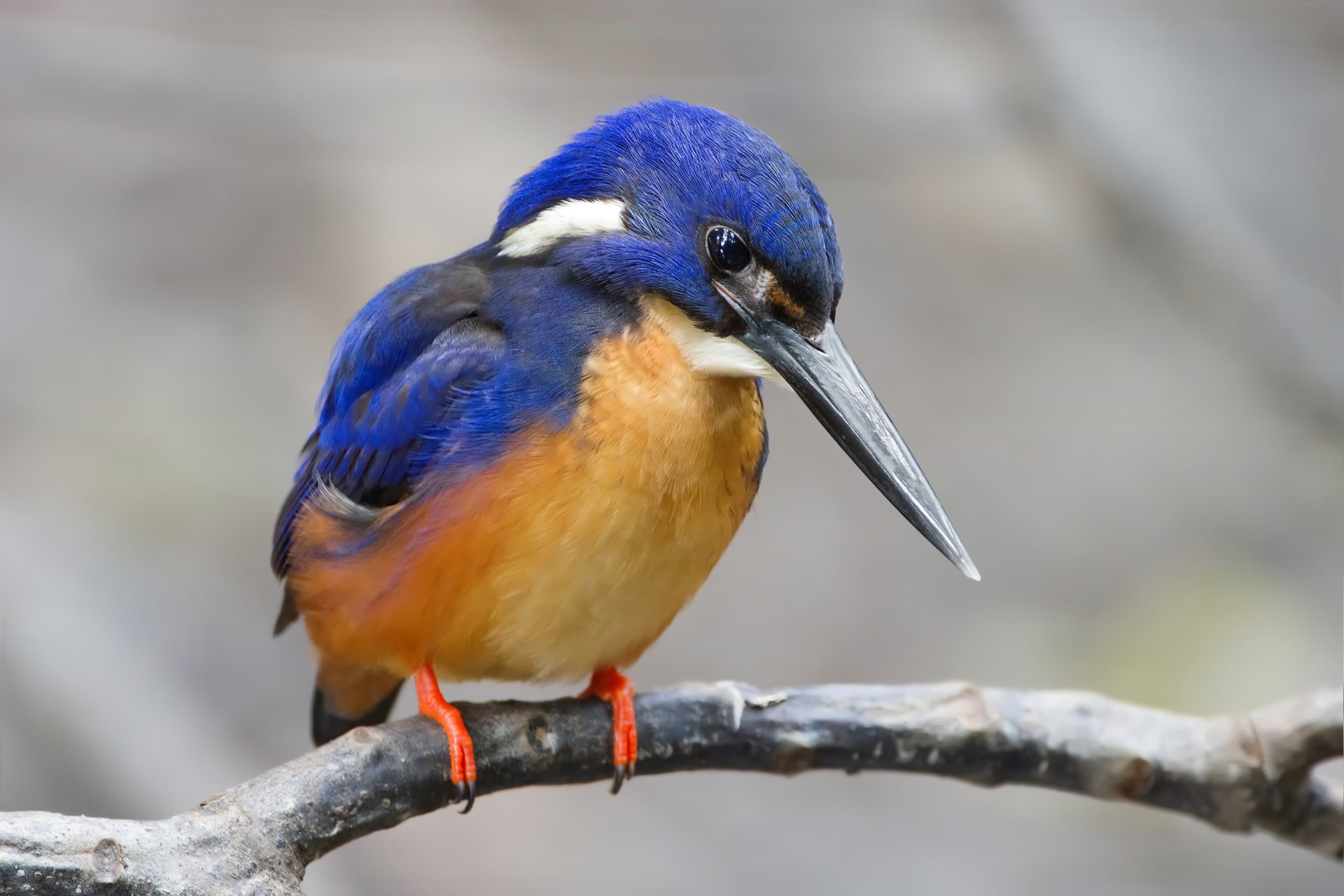
The kingfisher is one of Luxembourg's most dazzling birds. It is roughly the size of a sparrow, but its feathers glow electric blue on top and deep orange beneath — colours so bright that even a quick flash of it flying low over a stream can leave you astonished. Kingfishers live along clear rivers and streams and dive with incredible speed to catch fish.

Tell me more

A kingfisher hunts by perching very still on a branch or a rock above the water, staring down with one eye tilted to spot a fish below the surface. The moment it sees one, it plunges in at up to 40 kilometres per hour, snapping the fish in its dagger-like beak. The whole dive takes less than a second.

Kingfishers are specially adapted for this. Their eyes have two layers of protection so they can see underwater clearly. Their streamlined body and beak cut through the surface with hardly a splash. When they bring a fish back to the perch, they beat it against the branch to stun it before swallowing it whole, always head first.

In Luxembourg, kingfishers live along the Alzette, Sûre, Our and other clear rivers — especially the streams of the Mullerthal. They need clean water with small fish in it, which is why they are a good sign that a river is healthy.

Kingfishers nest in burrows they dig themselves in sandy riverbanks. The tunnel can be 60 centimetres long, ending in a round nesting chamber. Both parents take turns looking after the eggs and bringing fish to the chicks, who can eat their own body weight in fish every day.

In the classroom

Walk your class through this in 15 minutes.

Talk together

Discussion prompts

  1. 01The kingfisher is beautifully coloured but very hard to spot. How can a bird be both bright and well hidden?
  2. 02Kingfishers need clean rivers to survive. What can communities do to keep rivers clean?
  3. 03Imagine you could dive into water at 40 kilometres per hour. What would you need your body to be like?
Try this

Classroom activity

Look up close-up photos of a kingfisher's feathers. Then paint or draw your own 'jewel bird' — an imaginary bird the size of a sparrow but with the most dazzling colours you can imagine. Write five sentences describing what it eats, where it lives and how it hunts.