
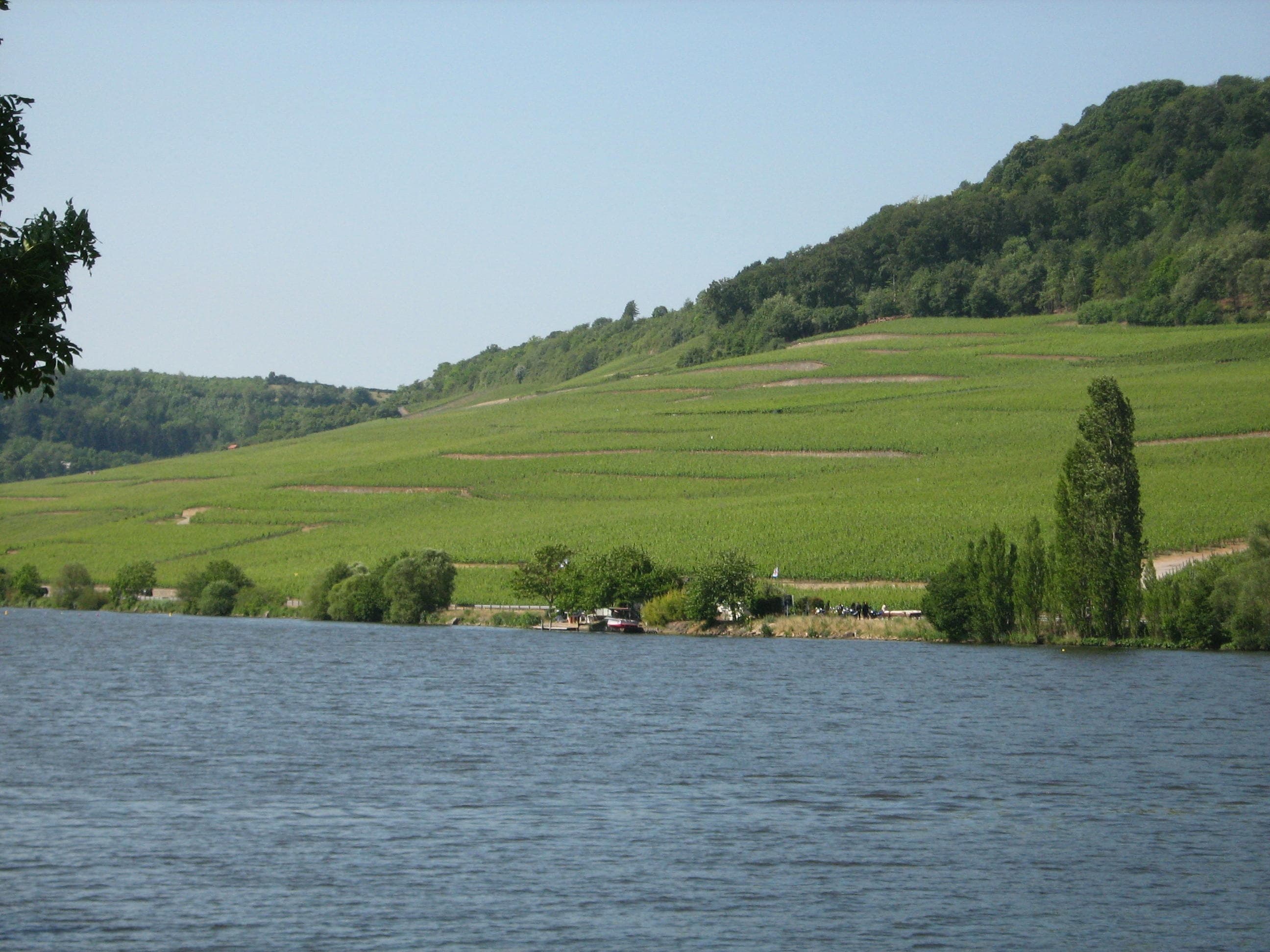
Grapes have been grown in the Moselle valley for more than two thousand years - ever since the Romans, who loved the warm, south-facing slopes. The vines are planted in long rows on terraces cut into the hillside so they catch as much sunshine as possible. From above, the terraces look like giant green staircases climbing the hill.
The river itself is wide and calm here. Cruise boats drift up and down it while cyclists ride the flat paths beside the bank. On sunny weekends the towpaths are full of families on bikes, and the smell of warm grass and grape leaves fills the air.
The villages along the Moselle - places like Remich and Grevenmacher - have open-air markets, riverside cafés and little shops selling local grape juice and sparkling drinks. The region is known for a fizzy white grape juice that children enjoy just as much as adults enjoy the wine.
In autumn, when the grapes are ripe, the whole valley hums with activity. Families head out into the vineyards to pick grapes by hand, filling big baskets. The harvest is called the vendange, and it is a time when neighbours help each other and there is always plenty of food being shared.