
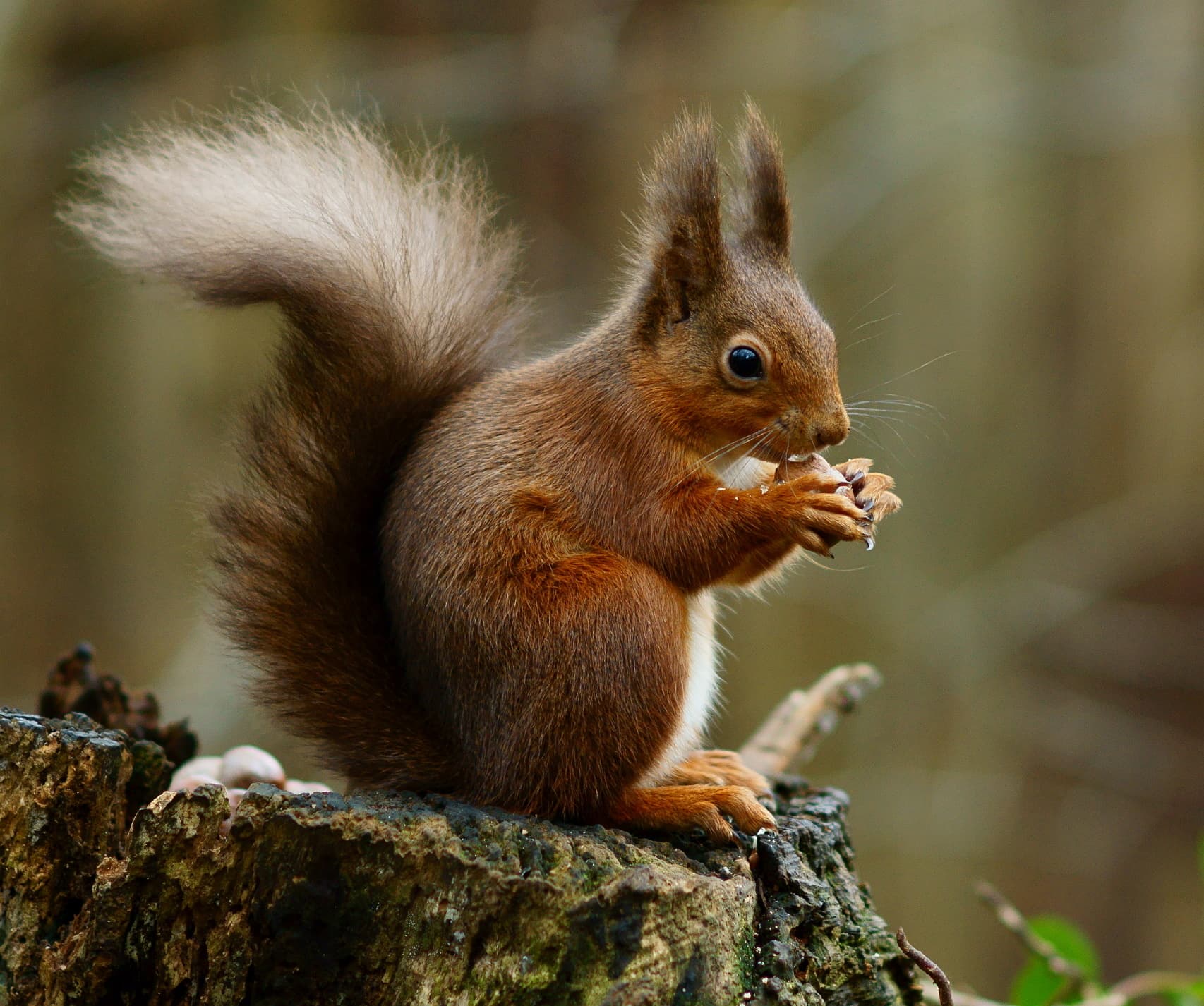
Squirrels are part of a family of animals called rodents - the same group that includes mice, rats and beavers. Their front teeth never stop growing, which is why they need to gnaw on hard things like nuts and bark to keep their teeth the right length. Those strong teeth can crack open a hazelnut in seconds.
In autumn, red squirrels go into a frenzy of collecting. They bury hundreds of nuts, seeds and pine cones in the ground across their territory, planning ahead for winter when food is scarce. Amazingly, they remember where most of their hidden stores are, using landmarks like particular trees and rocks to navigate.
Red squirrels build nests called dreys high up in the branches of trees. A drey looks from below like a messy ball of twigs, but inside it is lined with soft moss, grass and fur - perfectly warm and cosy. Squirrels may have several dreys in their territory and switch between them.
In Luxembourg, red squirrels live in the mixed forests of the Ardennes in the north and in the Mullerthal woodlands. If you sit quietly under a conifer tree and watch, you may hear the sound of nutshells and pine cone scales raining down from above - a sure sign that a squirrel is dining in the canopy overhead.