
Classroom lesson · Wildlife · 🇱🇺 Luxembourg

White Stork

A tall, elegant bird that travels thousands of kilometres every year

Photo · Wikimedia Commons

What is it?

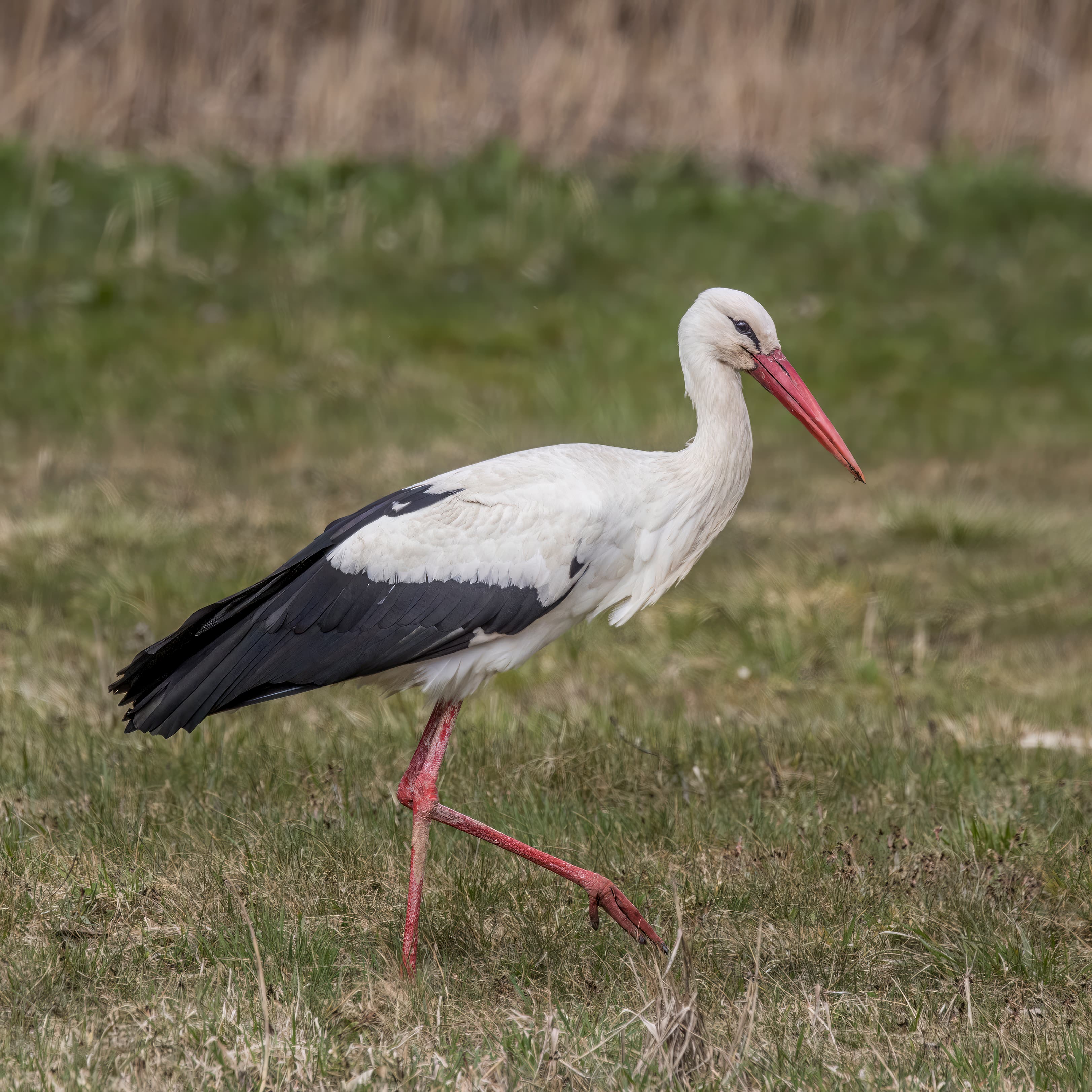
The white stork is one of Europe's most impressive birds: tall, elegant and dressed in crisp white feathers with black wing tips and a long bright-red beak and legs. Every year white storks fly all the way from Africa to Luxembourg and other parts of Europe to raise their chicks, then fly back again. That is a journey of up to 10,000 kilometres each way!

Tell me more

Storks are big birds — with wings spread out they can measure up to two metres from tip to tip. They are expert gliders, using rising columns of warm air called thermals to carry them high into the sky without flapping. A stork on migration barely needs to beat its wings; it just tilts and circles upward.

White storks love meadows, marshes and farmland where they can wade through the grass hunting for frogs, large insects, mice and earthworms. Their long legs mean they can stride through shallow water without getting their body wet, stabbing downward with that impressive red beak.

Storks build enormous nests made of sticks, usually on the tops of tall chimneys, rooftops or special platforms put up for them by people who love to see them. The same nest is used year after year, with the pair adding more sticks each time, until some nests weigh as much as a small car.

In Luxembourg storks were once rare, but thanks to careful conservation work — protecting meadows and putting up nesting platforms — they are slowly coming back. Seeing a stork flying overhead on wide black-and-white wings is a real treat.

In the classroom

Walk your class through this in 15 minutes.

Talk together

Discussion prompts

  1. 01Storks travel 10,000 kilometres twice a year. How long do you think that journey might take? What challenges might they face along the way?
  2. 02People put up special platforms to help storks nest. Why do you think communities want to attract storks?
  3. 03Storks use rising warm air to glide without flapping. What human invention works in a similar way?
Try this

Classroom activity

Plot the stork's migration on a blank map of Europe and Africa. Mark Luxembourg in the north and a point in central Africa in the south, then draw the route the stork might take between them. Add symbols for the things it might see along the way: sea, mountains, desert.