
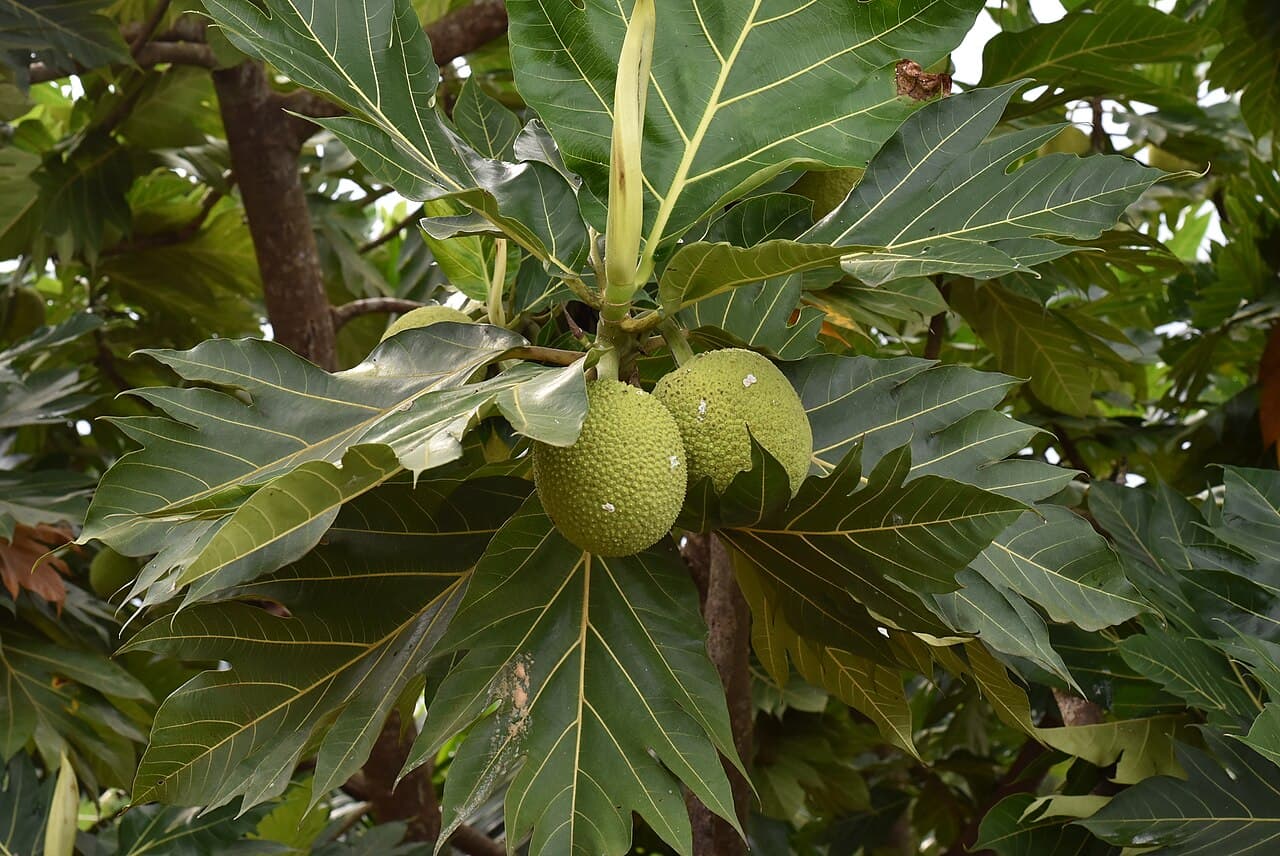
A breadfruit can grow as large as a football and weigh up to four kilograms. The tree produces fruit throughout most of the year, giving families a reliable food source. One tree can produce hundreds of breadfruits in a single year - enough to feed a family for months. The Marshallese word mā is used for both the fruit and the tree itself.
Breadfruit can be cooked in many different ways: roasted over a fire, baked in an earth oven, boiled, or pounded into a paste. One of the most traditional Marshallese methods is to ferment breadfruit - leaving it to mature underground for months or even years. This preserved breadfruit, called bwiro, tastes sour and paste-like and can be stored for a very long time.
Breadfruit is very nutritious. It is full of carbohydrates for energy, and also contains vitamins and minerals. Pacific islanders have long known that it is one of the best foods to grow on a tropical island because the tree needs little care and produces plentifully year after year.
Beyond eating, breadfruit trees are also useful in other ways. The wood is used to build canoes and houses. The sticky sap can seal cracks in boats. Even the large leaves are used - as plates, as wrapping for food cooked in earth ovens, or as material for weaving. Almost no part of the tree is wasted.