
Classroom lesson Β· Wildlife Β· πŸ‡²πŸ‡­ Marshall Islands

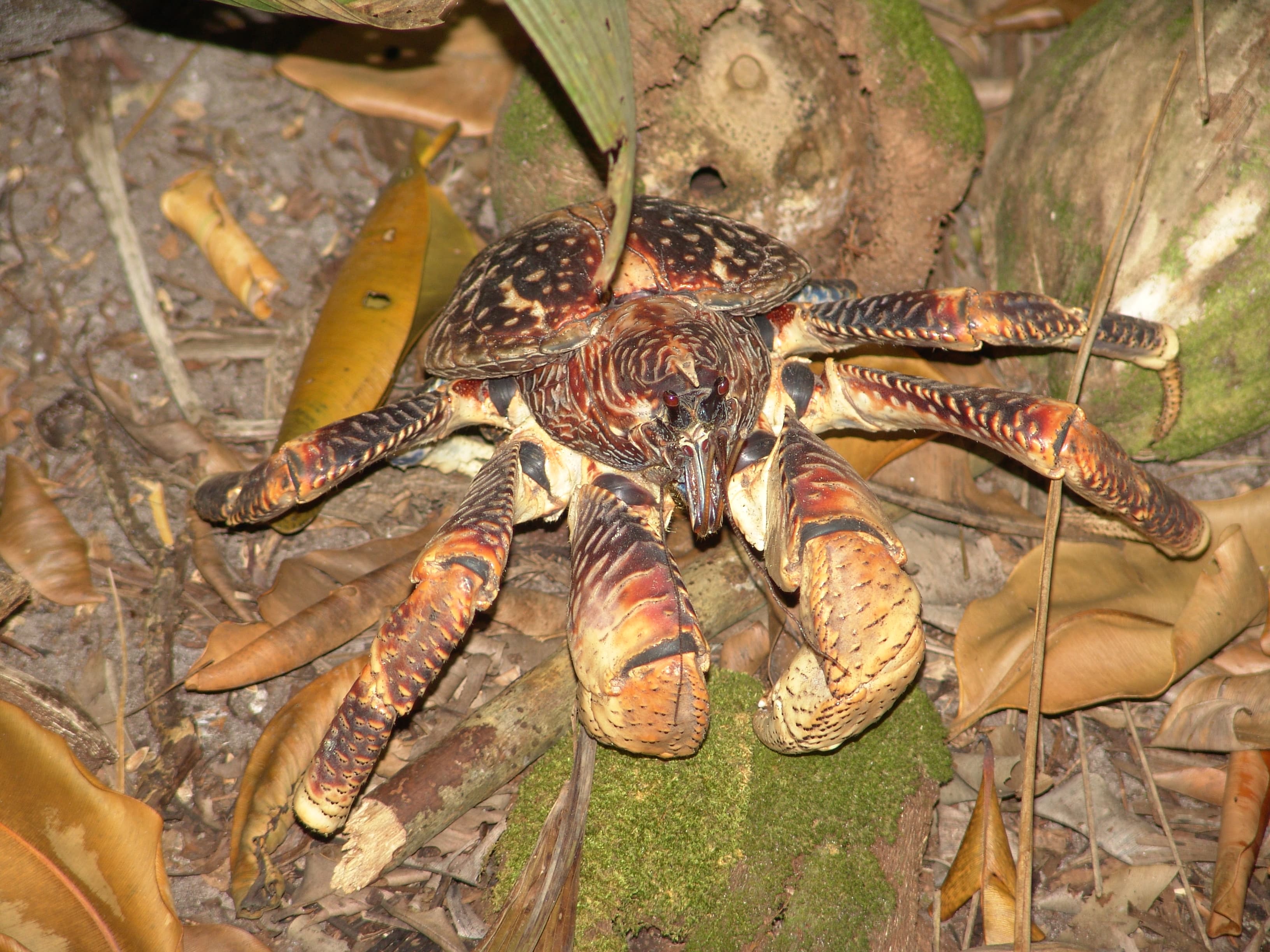
Coconut Crab

The world's biggest land crab – and it really does climb coconut trees

Photo Β· Wikimedia Commons

What is it?

The coconut crab is the largest land crab on Earth. It lives on tropical islands including the Marshall Islands and can grow as big as a football. Its enormous claws are strong enough to crack open a coconut – and yes, it really does climb trees to get them!

Tell me more

Coconut crabs are related to hermit crabs, and young ones do carry small shells on their backs. But as they grow, they outgrow all available shells and their tail hardens into a thick protective plate instead. An adult coconut crab can weigh up to four kilograms and measure nearly a metre from claw to claw tip.

These crabs are impressive climbers. They use their sharp claws to grip palm trunks and can climb several metres up to reach coconuts. Once at the top, they may cut the coconut free or carry pieces down to eat on the ground. Their claws can apply a gripping force stronger than most animals of similar size.

Coconut crabs are mostly active at night, which is why many islanders rarely see them during the day. They shelter in burrows or rocky crevices and emerge after dark to forage for food. As well as coconuts, they eat fallen fruit, seeds and occasionally other small animals.

In the Marshall Islands, coconut crabs have long been part of island life. They are known to be shy creatures that will try to hide when people approach. Because they grow so slowly – a coconut crab can live for 40 years or more – communities take care to look after their populations.

In the classroom

Walk your class through this in 15 minutes.

Talk together

Discussion prompts

  1. 01The coconut crab gets its food by solving a problem – how to open a very hard shell. What other animals are clever problem-solvers when finding food?
  2. 02Why might it be useful for an animal to be active at night instead of during the day?
  3. 03A coconut crab can live for 40 years. How does that compare to other animals you know?
  4. 04If you had claws as strong as a coconut crab, what three things would be easiest to do?
Try this

Classroom activity

Design a 'creature profile' poster for the coconut crab. Include: its size compared to something familiar, its three cleverest survival skills, what it eats, and where it lives. Add a labelled diagram showing its main body parts (claws, legs, tail plate, eyes).