
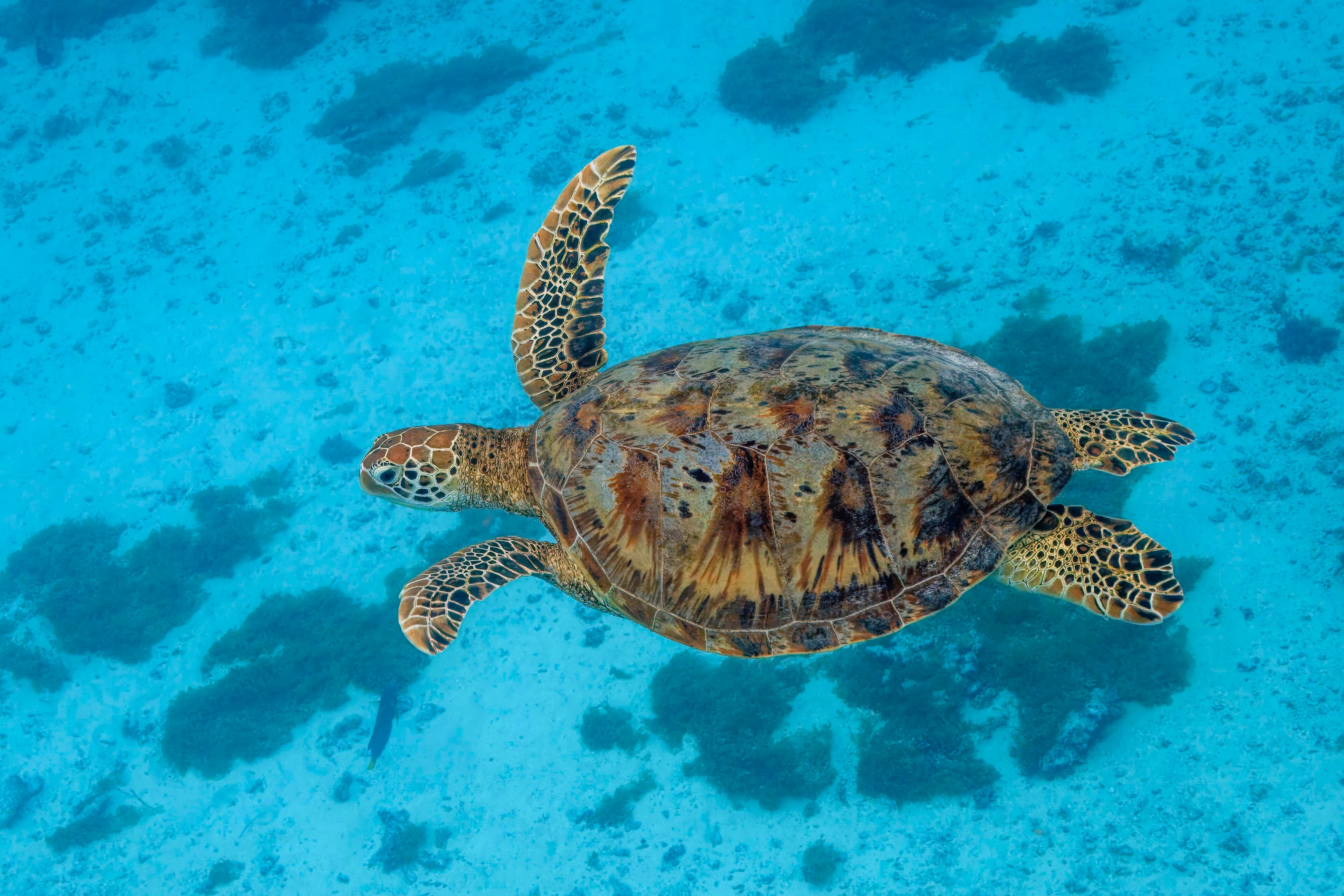
Green sea turtles get their name not from their shell, which is usually brown or olive, but from the greenish colour of the fat under their skin. They can grow to about a metre long and weigh as much as 160 kilograms - heavier than two average adults. In the water they are completely at home, gliding smoothly with their large front flippers like underwater wings.
Female green turtles return to the very same beach where they hatched to lay their own eggs. Scientists think they navigate using the Earth's magnetic field, a kind of built-in compass. A mother turtle digs a hole in the sand with her back flippers, lays up to 200 eggs, covers them up, and then returns to the sea. The eggs hatch on their own about two months later.
In the Marshall Islands, green turtles are seen as special animals. Traditional Marshallese stories include turtles as important characters, and local communities have long understood the importance of not disturbing nesting turtles or their eggs.
Baby turtles are tiny when they hatch - about the size of your hand. They scramble down the beach toward the moonlit sea, using the light reflected on the water to find their way. It is one of the most exciting sights on a Marshall Islands beach.