
Classroom lesson ยท Chamarel Seven Coloured Earths ยท ๐Ÿ‡ฒ๐Ÿ‡บ Mauritius

Chamarel Seven Coloured Earths

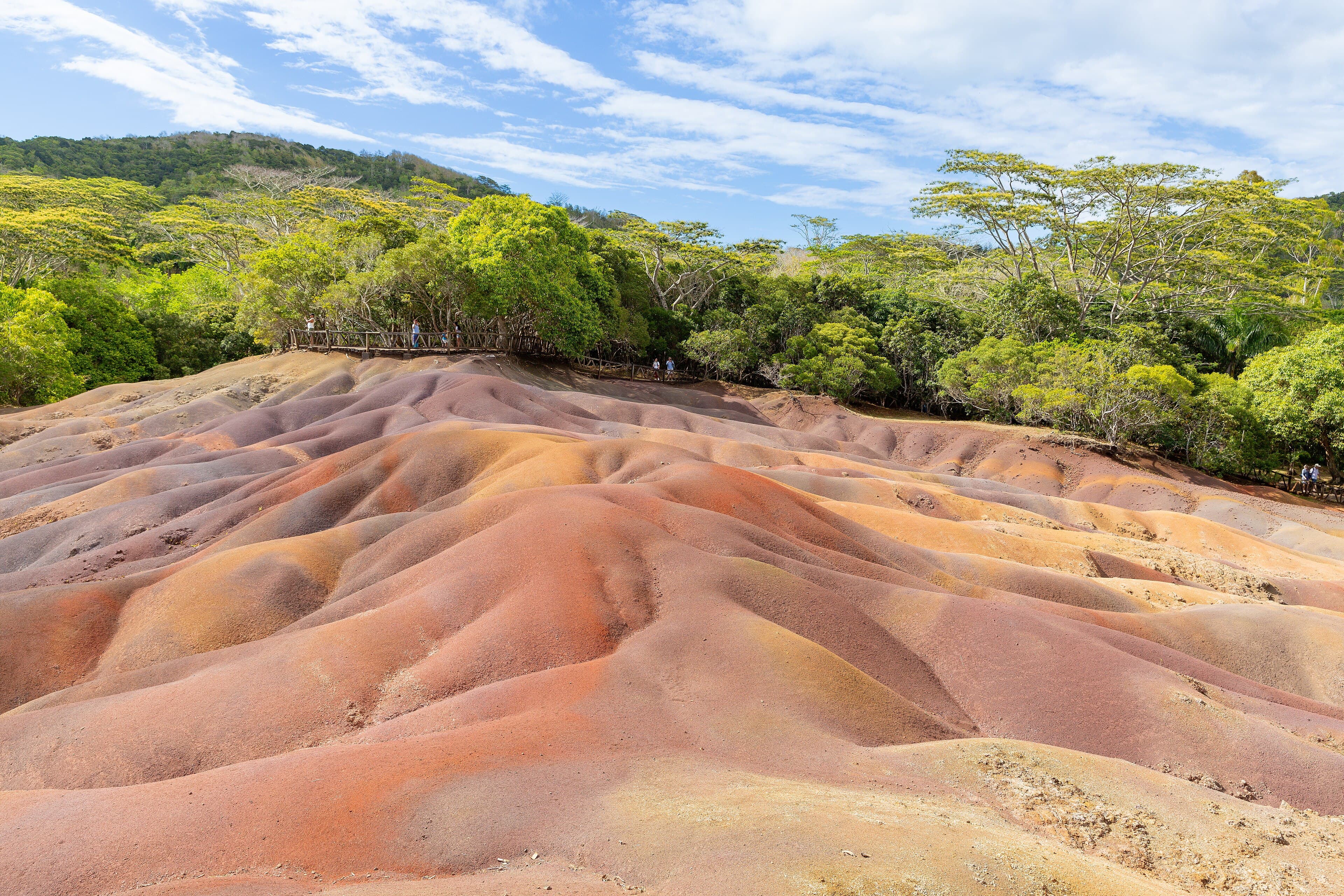
Dunes of sand in seven different natural colours, side by side

Photo ยท Wikimedia Commons

What is it?

At Chamarel in the south of Mauritius, there is a patch of land where the ground comes in seven natural colours โ€” red, brown, violet, green, blue, yellow and purple โ€” all next to each other. These are not painted; the colours come from the rock itself. It is one of the most unusual sights in the world.

Tell me more

The coloured earth formed from cooled lava from ancient volcanoes. Over millions of years, the rock broke down into soil, and different minerals in the rock turned into different colours. The exact shade depends on which minerals are present and how much iron, aluminium or magnesium was in the original lava.

The amazing thing is that even when someone mixes the different coloured sands together, they slowly separate back into their own colours again. Scientists think this happens because the tiny particles of each colour are slightly different sizes, so they naturally settle apart from each other.

The dunes are quite small โ€” only about 75 metres across โ€” but they are stunning. People travel from all over the island and from many other countries just to see them. Nearby is the Chamarel waterfall, one of the tallest waterfalls in Mauritius, dropping into a lush green valley.

In the classroom

Walk your class through this in 15 minutes.

Talk together

Discussion prompts

  1. 01Why might different minerals in rock make different colours? Can you think of other colourful rocks or stones you have seen?
  2. 02What do you think it would feel like to see seven colours in the ground right next to each other?
  3. 03The sands re-separate when mixed. What other things do you know that separate by themselves?
Try this

Classroom activity

Use coloured sand, rice, or powder in small jars. Mix two or three colours together and see what happens over time โ€” do they stay mixed or start to separate? Compare with the Chamarel effect and discuss why particle size might matter.