
Classroom lesson Β· Larvotto Beach Β· πŸ‡²πŸ‡¨ Monaco

Larvotto Beach

Monaco's only public beach, right on the Mediterranean

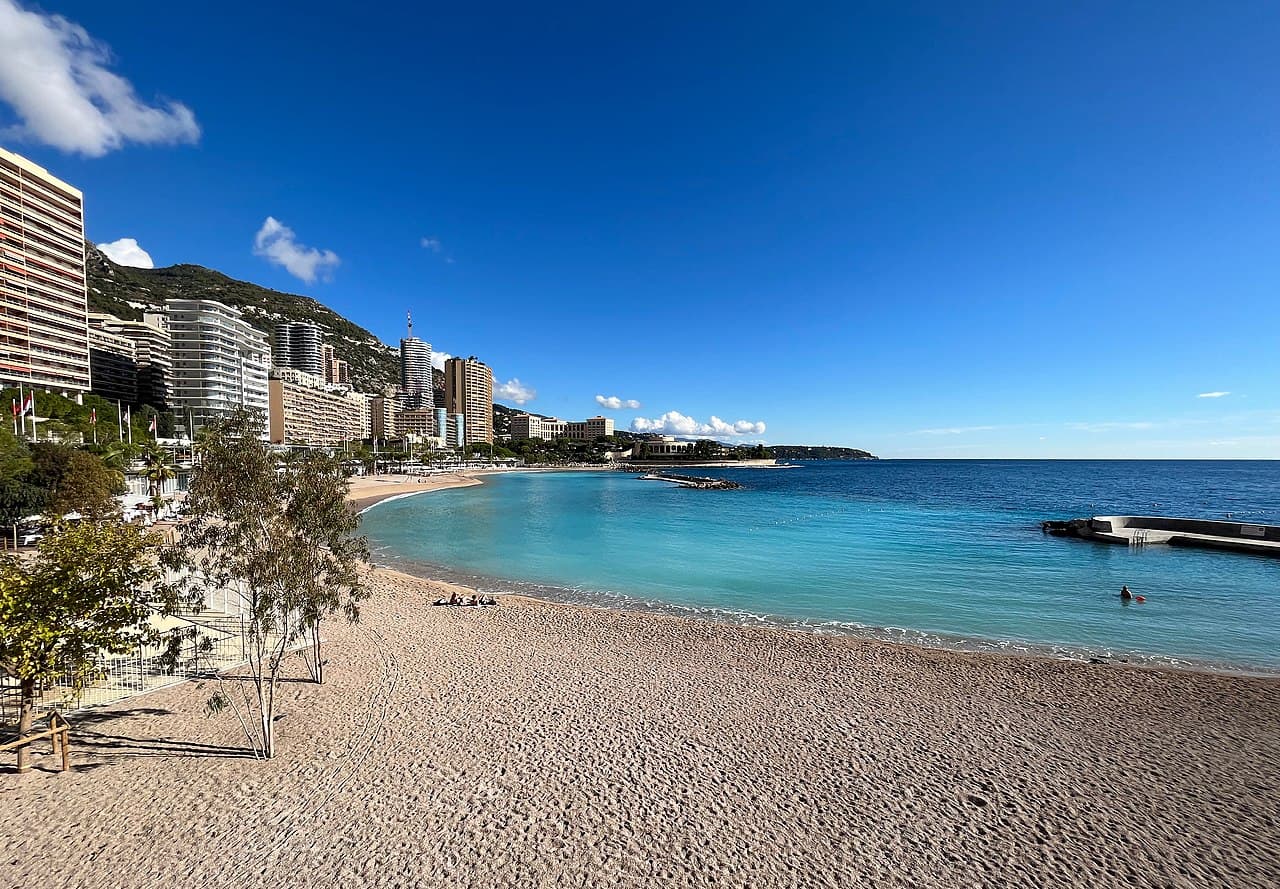
Photo Β· Wikimedia Commons

What is it?

Larvotto Beach is Monaco's only public beach, and it stretches along the eastern edge of the country by the beautiful blue Mediterranean Sea. The beach is made of fine gravel and pebbles rather than sand, which is very typical for beaches in this part of Europe. On a sunny day β€” and there are many sunny days in Monaco β€” the water is a stunning clear blue.

Tell me more

The Mediterranean Sea around Monaco is one of the cleanest stretches of sea in the region. Swimmers and snorkellers can see fish darting around underwater, and the rocks at the edges of the beach are home to sea urchins and little crabs. The sea is warm enough to swim in from May right through to October β€” a much longer season than most European beaches.

Larvotto is a protected marine zone, which means fishing and boating close to the beach are carefully controlled so that sea life can thrive. Scientists from the Oceanographic Museum sometimes study the wildlife in these waters. There is also an artificial reef nearby β€” a structure built underwater specially to give fish and other sea creatures a place to live.

Because Monaco is so small, Larvotto is never very far away from anywhere in the country. Children who grow up in Monaco can walk to the beach in just a few minutes. The beach has a playground and is a popular meeting place for families all through the warm months.

In the classroom

Walk your class through this in 15 minutes.

Talk together

Discussion prompts

  1. 01Larvotto Beach is protected to keep the sea life healthy. How do we protect natural places where you live?
  2. 02The beach is made of pebbles, not sand. How would building a sandcastle on a pebble beach be different from building one on a sandy beach?
  3. 03Monaco's sea is warm enough to swim in for six months of the year. How does the weather where you live affect what you do outside?
Try this

Classroom activity

Research two things you might find in a Mediterranean rock pool (for example, a sea urchin or a hermit crab). Draw one and write three facts about it β€” what it eats, how big it is, and one surprising thing about it.