
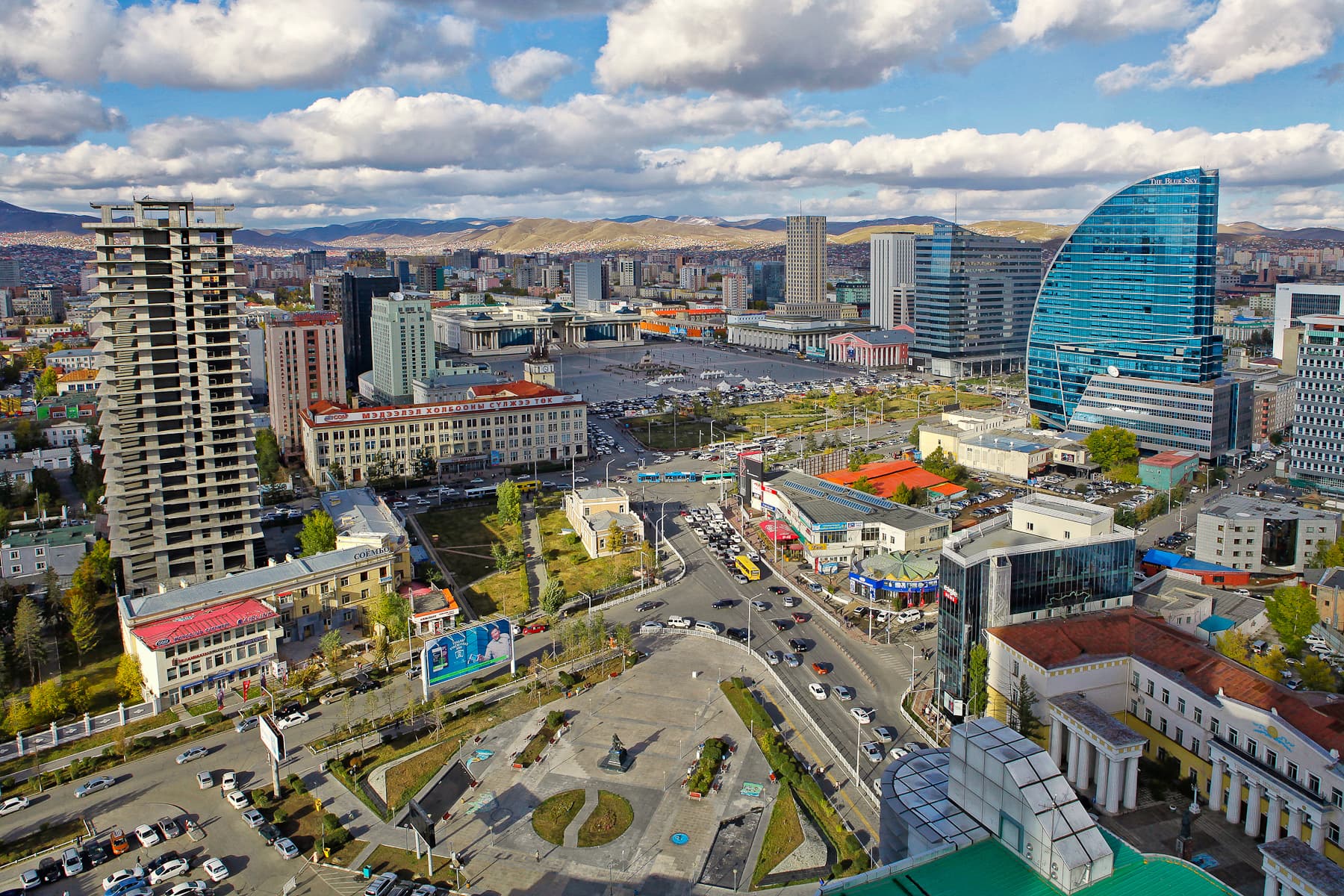
The name Ulaanbaatar means 'Red Hero' in Mongolian. The city is a fascinating mixture of old and new. Shiny glass skyscrapers and wide boulevards sit beside ancient Buddhist monasteries. The central square is named Sukhbaatar Square and is a popular meeting place for locals - people walk dogs, buy ice cream and watch pigeons there just like in any city square.
Around the edges of the city lie the ger districts - huge neighbourhoods where thousands of families live in traditional round gers. Each family fences off a small plot, grows vegetables in summer and heats their ger with a wood or coal stove in winter. It is quite different from apartment living, but it keeps Mongolian traditions alive right at the heart of a modern city.
Ulaanbaatar has great museums, including the Natural History Museum where you can see a full dinosaur skeleton found in the Gobi Desert. The city also has a thriving arts scene - theatres perform traditional opera and throat singing alongside modern music concerts. In winter, Mongolians wrapped in beautiful traditional coats called deels ride the bus right alongside people in jeans and puffer jackets.