
Classroom lesson · Wildlife · 🇳🇷 Nauru

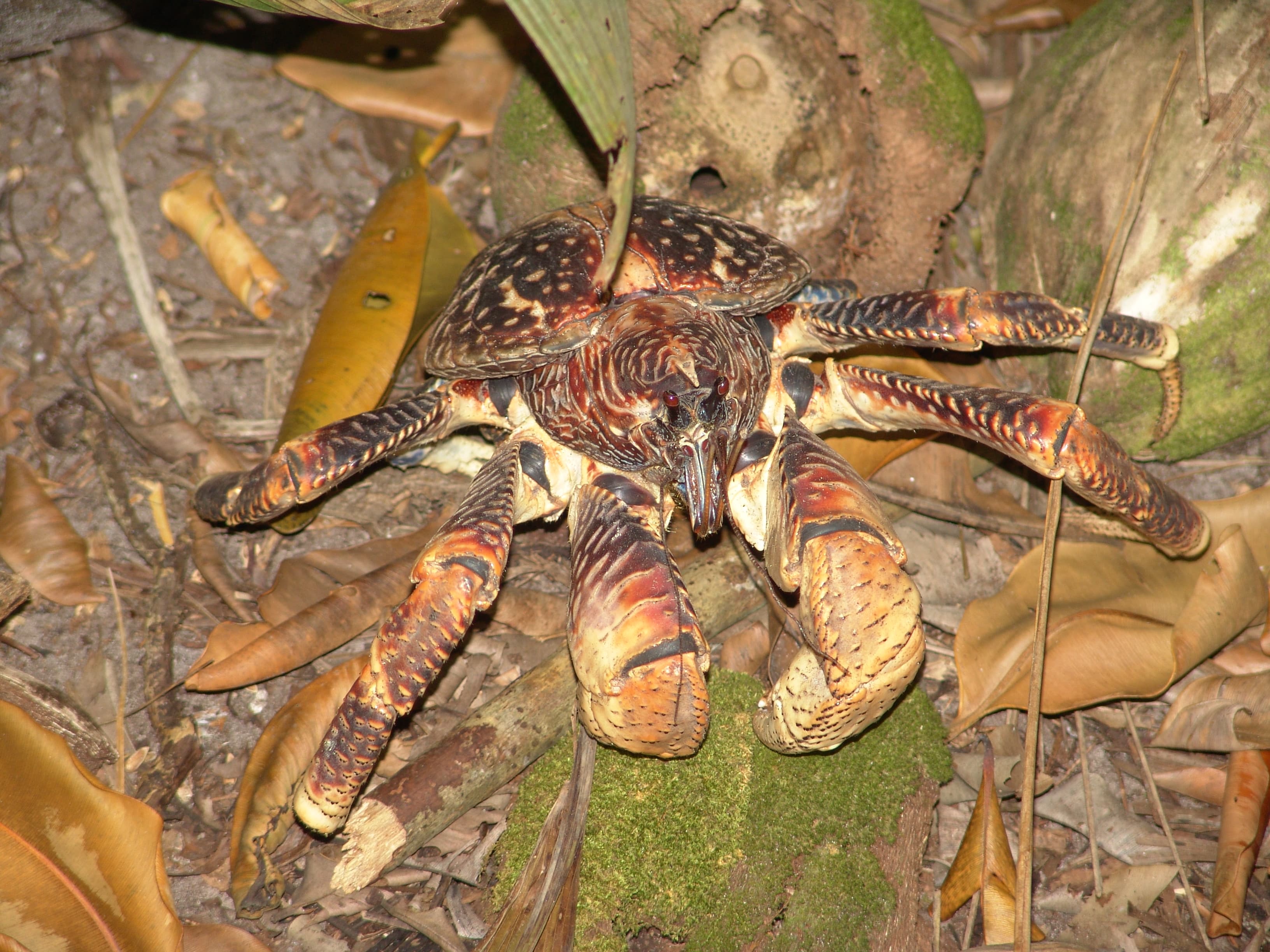
Coconut Crab

The world's largest land invertebrate — and it really climbs coconut trees

Photo · Wikimedia Commons

What is it?

The coconut crab is the largest land-living invertebrate on Earth — an animal without a backbone that can grow as wide as a bicycle wheel from claw tip to claw tip. It really does climb coconut palms to pull down coconuts, crack them open with its enormous claws, and eat the flesh inside. These remarkable animals live on Nauru and other Pacific islands, and spotting one is always an adventure.

Tell me more

Coconut crabs can weigh up to 4 kilograms — about as heavy as a large cat. Their claws are so powerful they can crack open a coconut shell that would take a person a hammer to open. Despite being crabs, they spend most of their lives on land and would actually drown if they stayed underwater for too long.

Young coconut crabs start life in the ocean, but as they grow they move onto land permanently. They dig burrows to hide in during the day and come out at night to search for food. As well as coconuts, they eat fallen fruit, seeds, and even other crabs.

Coconut crabs can live for over 40 years — longer than many people's pet dogs. They grow slowly and moult their hard shell regularly as they get bigger. Their shells can be blue, purple, or orange, making them look like something from a science-fiction film.

In the classroom

Walk your class through this in 15 minutes.

Talk together

Discussion prompts

  1. 01The coconut crab starts life in the sea but grows up on land. Can you think of any other animals that change their habitat as they grow?
  2. 02Its claws are strong enough to crack a coconut. What other animals have body parts that work like tools?
  3. 03If you found a coconut crab in your garden, what would you do? How would you feel?
Try this

Classroom activity

Do a class strength test with different materials: try cracking a walnut, a hazelnut, or a macadamia nut using just your hands. Then use a nutcracker. Talk about the force needed — and imagine a claw strong enough to crack a whole coconut. Draw the coconut crab life cycle: egg in sea, tiny crab on beach, adult crab in a palm tree.