
Classroom lesson · Wildlife · 🇳🇷 Nauru

Green Sea Turtle

Ancient ocean traveller that visits Nauru's coral reefs

Photo · Wikimedia Commons

What is it?

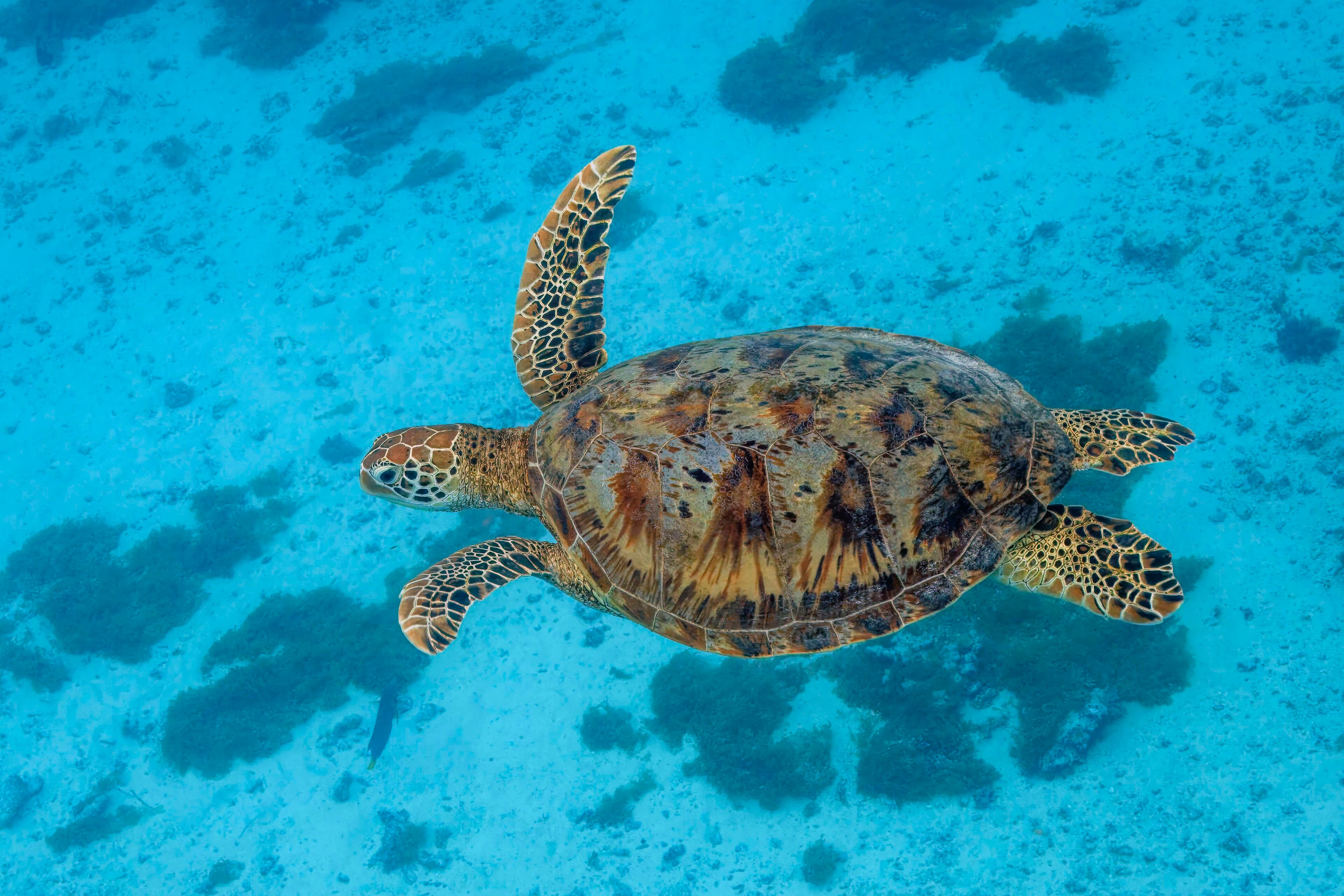
Green sea turtles are one of the largest sea turtles in the world, and they have been swimming the world's oceans for more than 100 million years — long before dinosaurs disappeared. They visit the coral reefs around Nauru to feed on seagrass and algae, gliding through the clear warm water like graceful, slow-moving underwater kites.

Tell me more

A green sea turtle's smooth, oval shell can grow up to 1.5 metres long. Despite their size, they are elegant swimmers, using their long front flippers like wings to 'fly' through the water. They can hold their breath for up to seven hours when resting on the seabed.

Every few years, female green sea turtles travel enormous distances across the ocean to return to the beach where they hatched, to lay their own eggs. Scientists think they find their way using Earth's magnetic field — a kind of built-in compass.

On Nauru, turtles are a respected part of the ocean world. Seeing one glide over the reef is a magical moment for islanders and visitors alike. Their calm, unhurried way of moving through the water is a reminder that the ocean has its own gentle rhythm.

In the classroom

Walk your class through this in 15 minutes.

Talk together

Discussion prompts

  1. 01Green sea turtles return to the beach where they were born. How do you think it feels to come back to the place where you started your life?
  2. 02Turtles have survived for over 100 million years. What do you think has helped them survive for so long?
  3. 03If you could breathe underwater for seven hours, where would you go to explore?
Try this

Classroom activity

On a world map, draw a dotted line showing the journey a green sea turtle might make — from Nauru, across the Pacific, to another feeding ground, and back. How many kilometres do you estimate the journey might be? Compare it to the distance between two places you know.