
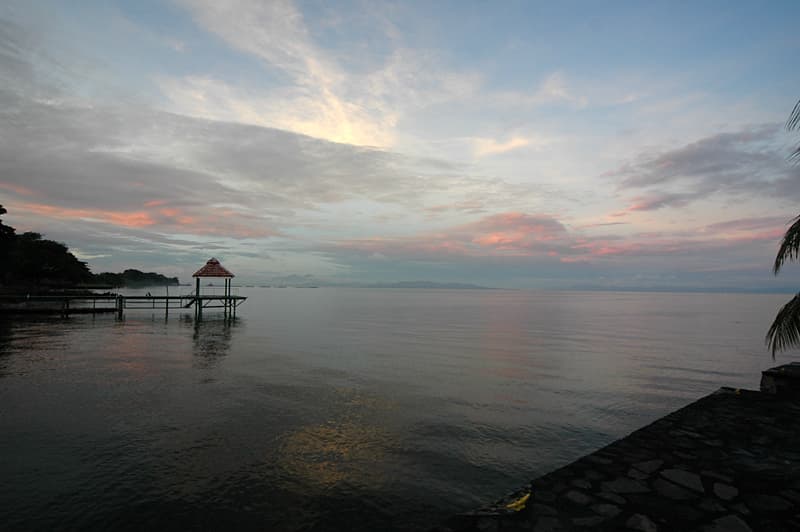
The lake is huge - about 160 kilometres long and 70 kilometres wide. That is bigger than many small countries. It sits in the middle of Nicaragua and is connected to the Caribbean Sea by the San Juan River. Long ago, sharks swam up that river from the ocean and learned to live in the fresh lake water. Scientists think some of them now spend their whole lives in the lake.
The lake is also home to freshwater sawfish, giant tarpon, and hundreds of species of birds. Pelicans, herons, and kingfishers hunt along the shores. On clear days you can see two big volcanoes rising out of the water - they are actually an island called Ometepe, sitting right in the middle of the lake.
Fishing families have lived around the lake for thousands of years. Today children swim and fish near the shores, and ferries cross from one town to another. The local name for the lake is Cocibolca, which comes from an ancient Indigenous language and means 'great sea' - which makes sense when you look at how enormous it is.
Scientists are still studying why bull sharks can switch between salt water and fresh water. Most sharks cannot do this - their bodies need the salt. The Lake Nicaragua sharks are one of the only shark populations in the world that chose a lake as their home.