
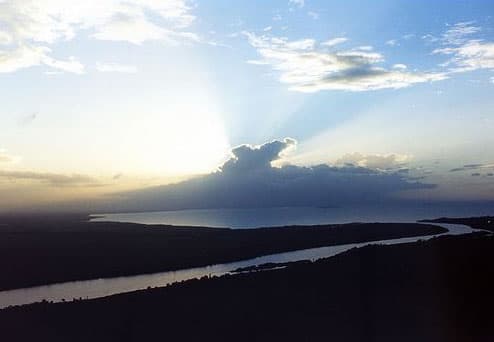
The river has been important to Nicaragua for hundreds of years. Long ago it was used as a route for trading ships to move goods between the lake and the ocean. Today it is mostly used by small wooden boats and wildlife watchers. The forest along the banks is so thick that in many places it forms a tunnel of green over the water.
Wildlife along the San Juan River is spectacular. Green iguanas drape themselves on branches over the water. Caimans (the crocodile family's South and Central American cousin) rest on muddy banks. Great green macaws, toucans, and kingfishers flash past in bursts of colour. Manatees - large, gentle, plant-eating sea mammals - sometimes swim upriver from the coast.
At the mouth of the river on the Caribbean coast sits the town of San Juan del Norte. Almost the only way to reach it is by river boat - there are no roads. The town is tiny and very quiet, surrounded by jungle and sea. Tarpon fish, prized by fishermen, live in the river estuary where fresh and salt water mix.
The river forms the border between Nicaragua and Costa Rica for part of its length. Both countries share the forests along its banks, which are protected as nature reserves. The rainforest here is one of the last large blocks of lowland rainforest left in Central America.