
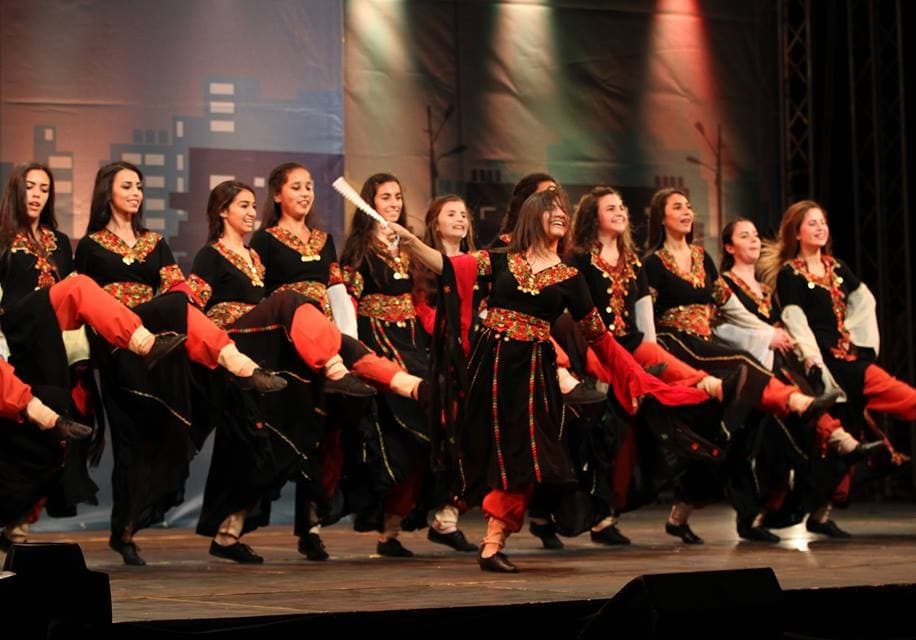
The word 'dabke' comes from an Arabic word meaning 'to stamp the feet' - and that is exactly what dabke is. Dancers begin in a line with arms around each other's shoulders. The leader at one end - called the 'lawweeh' - breaks away from the line and performs extra steps, tricks, and jumps while the rest maintain the rhythm. Being the lead dancer is a great honour.
The music for dabke is fast and energising, usually played on the mijwiz (a double-reed pipe), the tabla drum, and the oud. The beat starts slowly and builds faster and faster until the dancers are stamping and jumping at full speed. Watching a skilled dabke group perform is breathtaking - the coordinated foot stamps sound like thunder on a wooden stage.
Dabke is taught in Palestinian schools and youth clubs as a way of celebrating culture and keeping the tradition alive. At big gatherings, dabke lines can stretch to include dozens or even hundreds of dancers. One of the most memorable sights at a Palestinian wedding is when the whole guest list - grandparents, teenagers, and small children - all join the line together.