
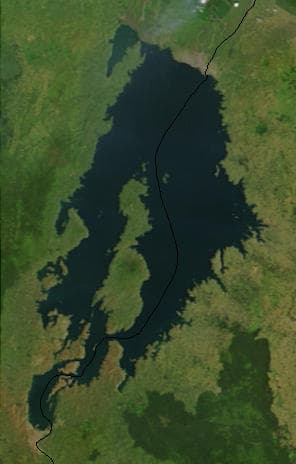
Lake Kivu is about 90 kilometres long and 50 kilometres wide. It sits in a giant crack in the Earth's surface called the Albertine Rift, surrounded by green hills on every side. There are little islands all over the lake, with names like Napoleon Island, Iwawa Island and Tshegera. From a boat, you can spend a whole day sailing between them.
Several Rwandan towns sit on the lake's shore. The biggest is called Rubavu, with a sandy beach and palm trees, and visitors come there to swim in the warm water. Other lakeside towns like Karongi and Rusizi have hills, hot springs and clusters of fishing villages.
Lake Kivu has its own kind of fishing. Long, slim wooden boats - three boats joined together with bamboo poles - go out at night with bright lamps. The lamps attract a small silvery fish called sambaza to the surface, and the fishermen scoop them up in nets. Children on the shore sometimes hear the fishermen singing together as they paddle back home at dawn.
Far below the surface, deep in the lake, there is something very unusual - underwater pockets of gas. Scientists are studying ways to safely use the gas to make electricity for Rwandan homes. It is a quiet, peaceful lake to look at, with a hidden world thousands of metres below.