
Classroom lesson Β· Wildlife Β· πŸ‡ΌπŸ‡Έ Samoa

Coconut Crab

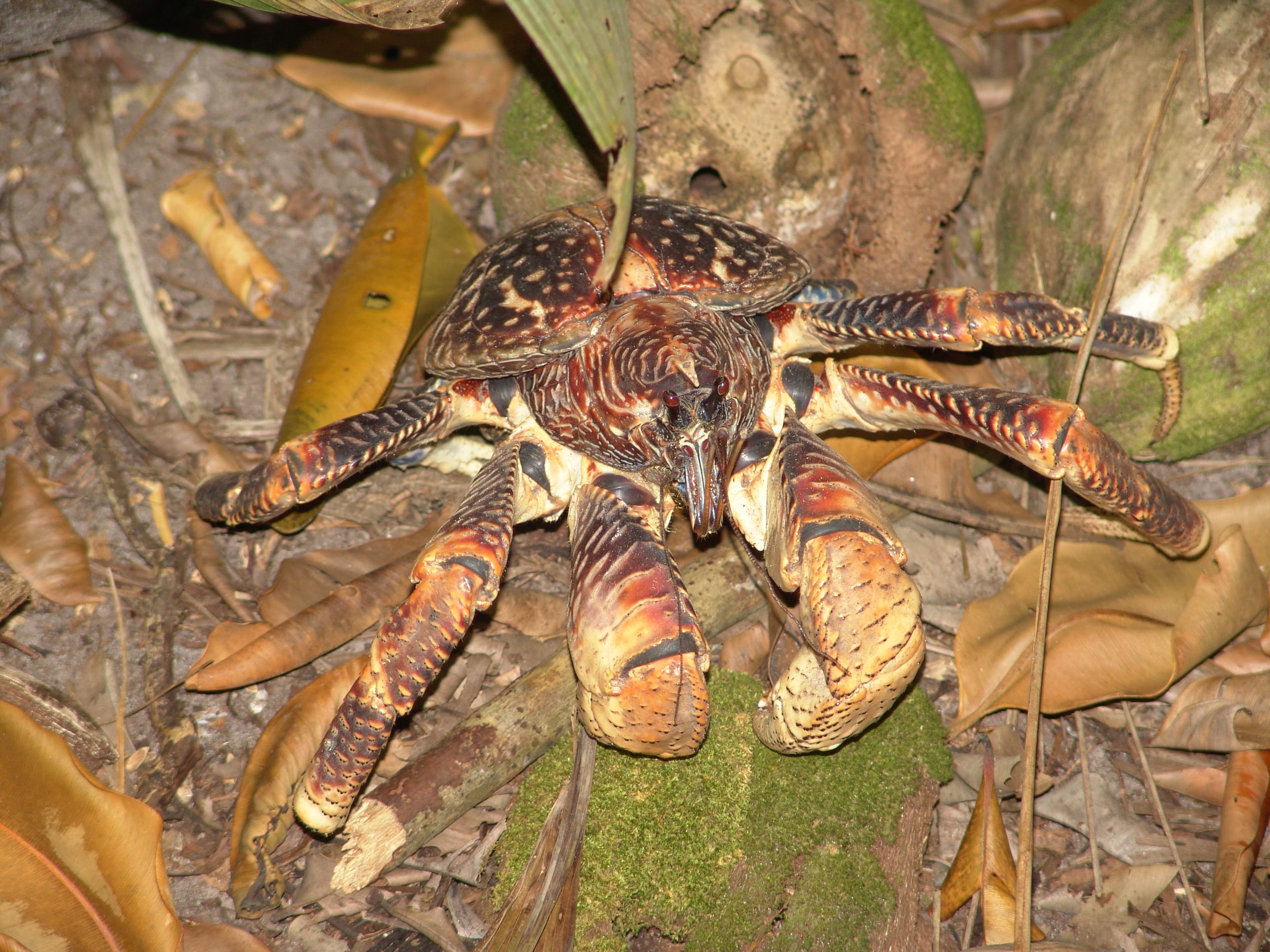
The world's largest land crab β€” it can climb trees!

Photo Β· Wikimedia Commons

What is it?

The coconut crab is the largest land-living arthropod (joint-legged animal) on Earth. It can grow almost one metre from claw to claw and weigh up to four kilograms β€” about the weight of a large bag of potatoes! It lives on tropical islands across the Pacific and Indian Oceans, including Samoa, and it is famous for one extraordinary skill: climbing coconut palms.

Tell me more

Coconut crabs got their name because they can actually crack open coconuts with their enormous claws. Their pincers are so powerful that scientists have measured the grip as one of the strongest of any animal relative to its size. They climb palm trees to reach coconuts, then use their claws to tear through the tough outer husk and crack the shell inside.

Despite looking fearsome, coconut crabs are shy and mostly come out at night. During the day they hide in burrows in the ground or rock crevices. They are not true sea crabs β€” adult coconut crabs cannot breathe underwater and will actually drown if they fall into the ocean, even though they start life as tiny ocean larvae.

In Samoa, coconut crabs are considered a delicacy and are an important part of traditional food culture. They live a very long time β€” possibly up to 60 years β€” and grow slowly. Conservation efforts are underway across the Pacific to make sure populations are not reduced by over-harvesting.

In the classroom

Walk your class through this in 15 minutes.

Talk together

Discussion prompts

  1. 01The coconut crab starts life in the ocean but becomes a land animal. Can you think of other animals that change habitats as they grow?
  2. 02If you had claws powerful enough to crack coconuts, what would you do with that ability?
  3. 03Why might it matter that coconut crabs grow very slowly and live a long time, when people are deciding how many to harvest?
Try this

Classroom activity

Build a factfile card for the coconut crab. Include: size, weight, what it eats, special abilities, where it lives, and one amazing fact you found most surprising. Illustrate it with a detailed drawing, labelling the claws, legs and shell.