
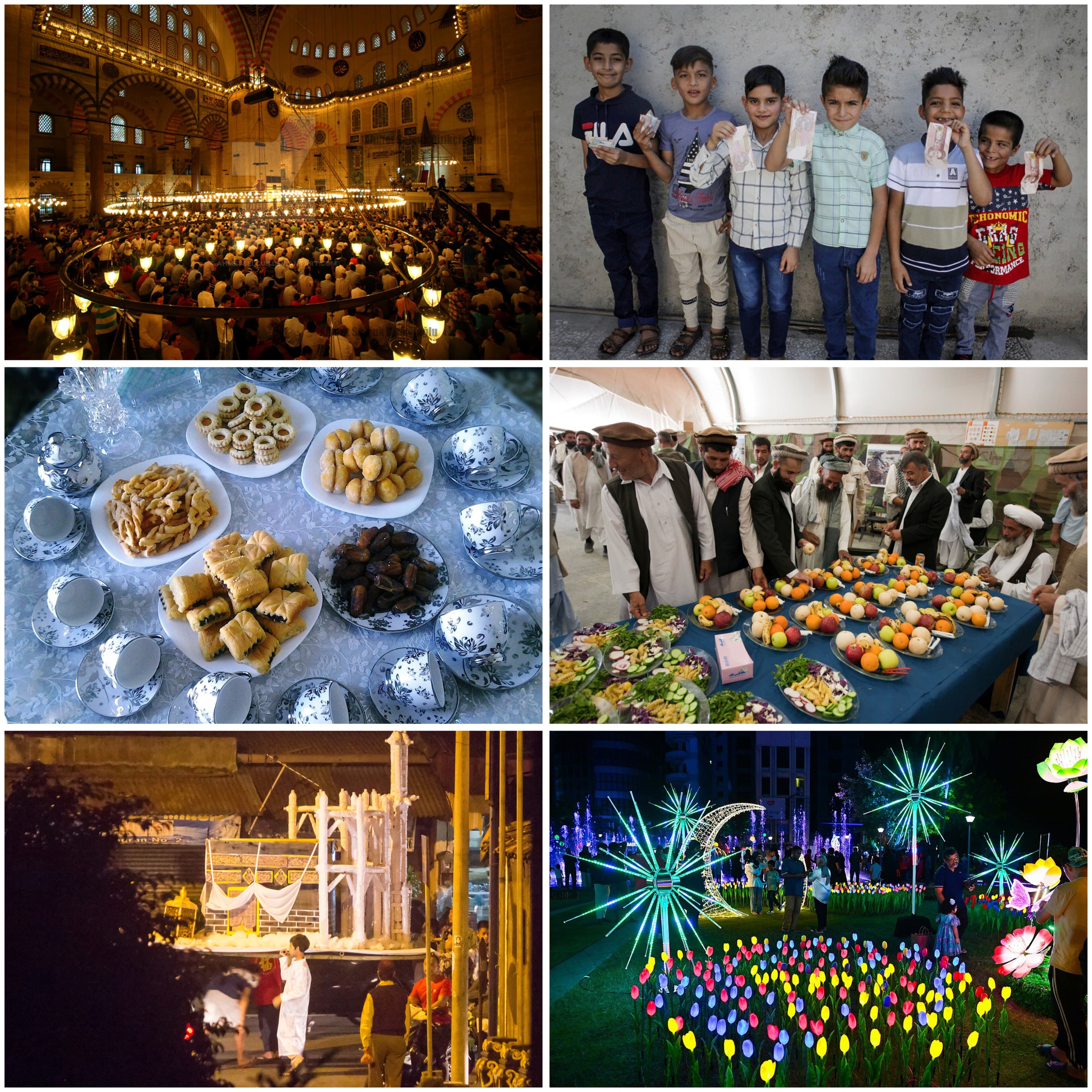
Ramadan lasts 29 or 30 days and falls at a slightly different time each year. (That is because Muslims use a calendar based on the moon, which is shorter than the calendar most of the world uses for school and work.) During Ramadan, the whole rhythm of Saudi life shifts - many schools and shops change their hours, and the busy time of day is the evening, not the middle of the day.
Iftar - breaking the fast at sunset - is a big shared event. Families gather around a long table. The first thing eaten is traditionally a date and a sip of water. Then comes the big meal: warming soups, stews, rice dishes, breads and sweets. Friends visit each other's homes every night. Many cities set up huge free iftar tents where anyone can come and eat.
Young children don't usually fast for the whole day, but lots of them join in for part of it - perhaps until lunchtime - to feel part of the family tradition. Schools and parents make sure kids stay healthy and hydrated.
After Ramadan ends, the three-day festival of Eid al-Fitr begins. Children wake up early, put on new clothes, visit grandparents, receive small gifts of money called 'eidiyah', and eat lots of sweets - especially a soft sugar-dusted dumpling called 'lugaimat'. Families travel, parks fill up, and everyone says 'Eid Mubarak!' (EED moo-BAR-ak) - 'Happy Eid!'