
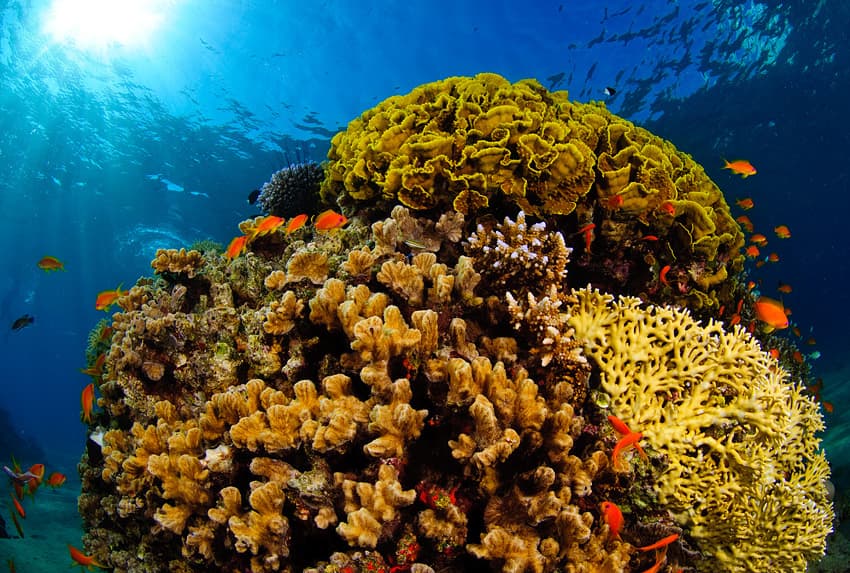
Corals are tiny animals that build tough stone-like skeletons. Over thousands of years, those skeletons stack on top of each other and form reefs. The Red Sea reefs are special because the water is unusually warm and salty, which would normally make corals unhappy. But Red Sea coral has slowly adapted - it can handle the heat much better than coral in other oceans.
Scientists are studying the Red Sea reefs very carefully. Many reefs in the world are suffering as the sea warms up. The Red Sea may give clues about how coral could survive elsewhere - it is sometimes called a 'living laboratory' for the future of coral reefs.
The reefs are home to over 1,000 species of fish. Some, like the Picasso triggerfish, look as if someone has painted them. Others, like the lionfish, have long feathery spines. Big animals visit too - whale sharks (the biggest fish in the world), dolphins, turtles and rays.
Saudi Arabia is creating large protected areas along its Red Sea coast so the reefs stay healthy and only careful, low-impact visits are allowed in many spots. The aim is to keep these reefs colourful for many generations.