
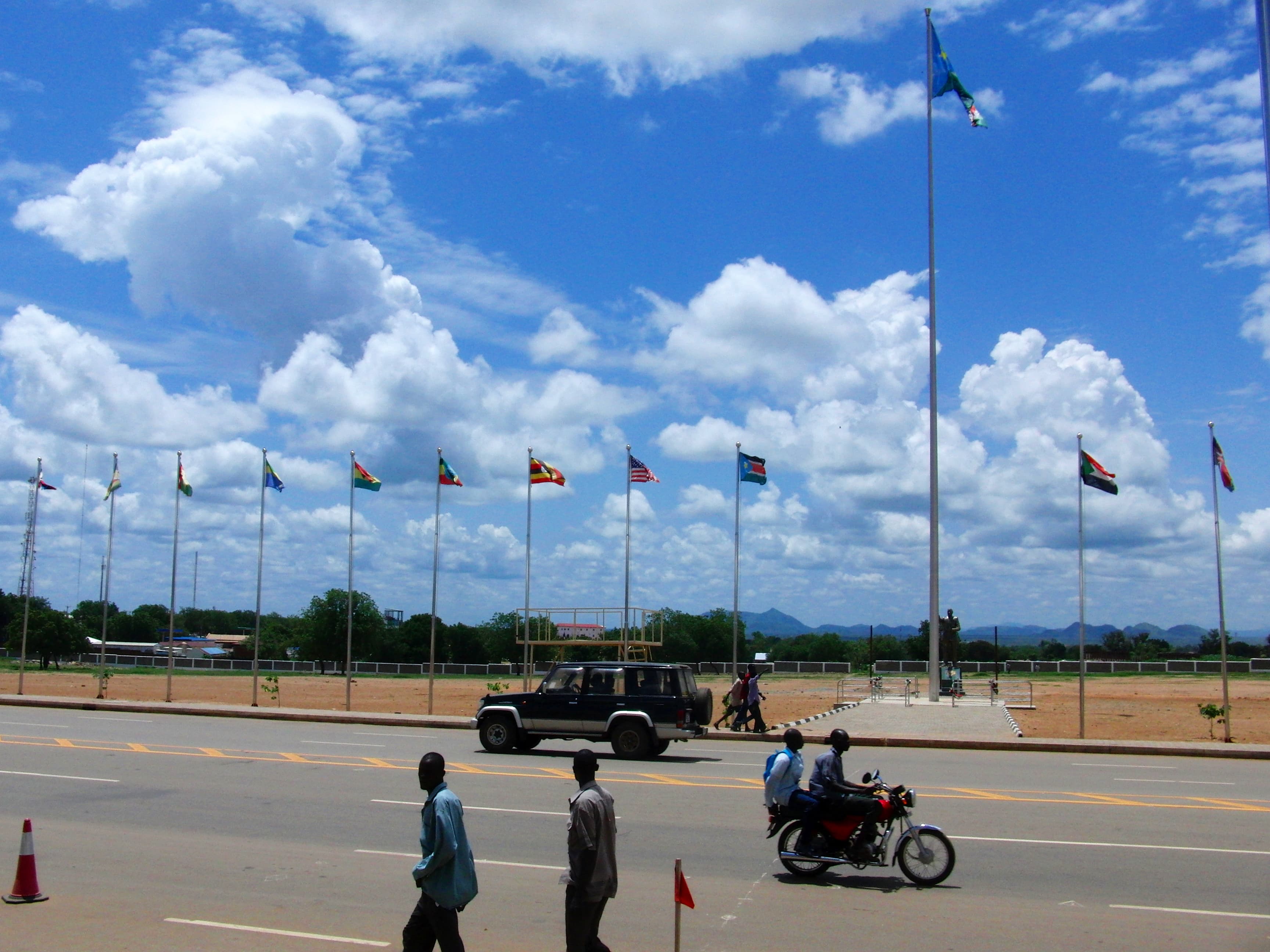
Juba's streets are full of colour and activity. Markets sell mangoes, tomatoes, sorghum grain, and fresh Nile fish. Motorbike taxis - called boda-bodas - zip between the stalls, and roadside tea sellers serve chai in small glasses to workers starting their day.
The city is home to South Sudan's main schools, hospitals, and universities. Young people come from every corner of the country to study and to play football in the open spaces around the city. At weekends, the Nile waterfront is a favourite spot to gather, eat roasted groundnuts, and watch the river flow past.
Many languages are spoken on Juba's streets: Dinka, Nuer, Bari, Zande, Acholi, and Juba Arabic - a lively local mix of Arabic with words from many South Sudanese languages. Children often switch between three or four languages depending on who they are talking to.
Every July, the city fills with music, dancing, and flags to celebrate Independence Day - the birthday of South Sudan as a nation. Families gather in the streets, traditional dancers perform in colourful costumes, and the sound of drums carries across the whole city.