
Classroom lesson ยท Wildlife ยท ๐Ÿ‡น๐Ÿ‡น Trinidad and Tobago

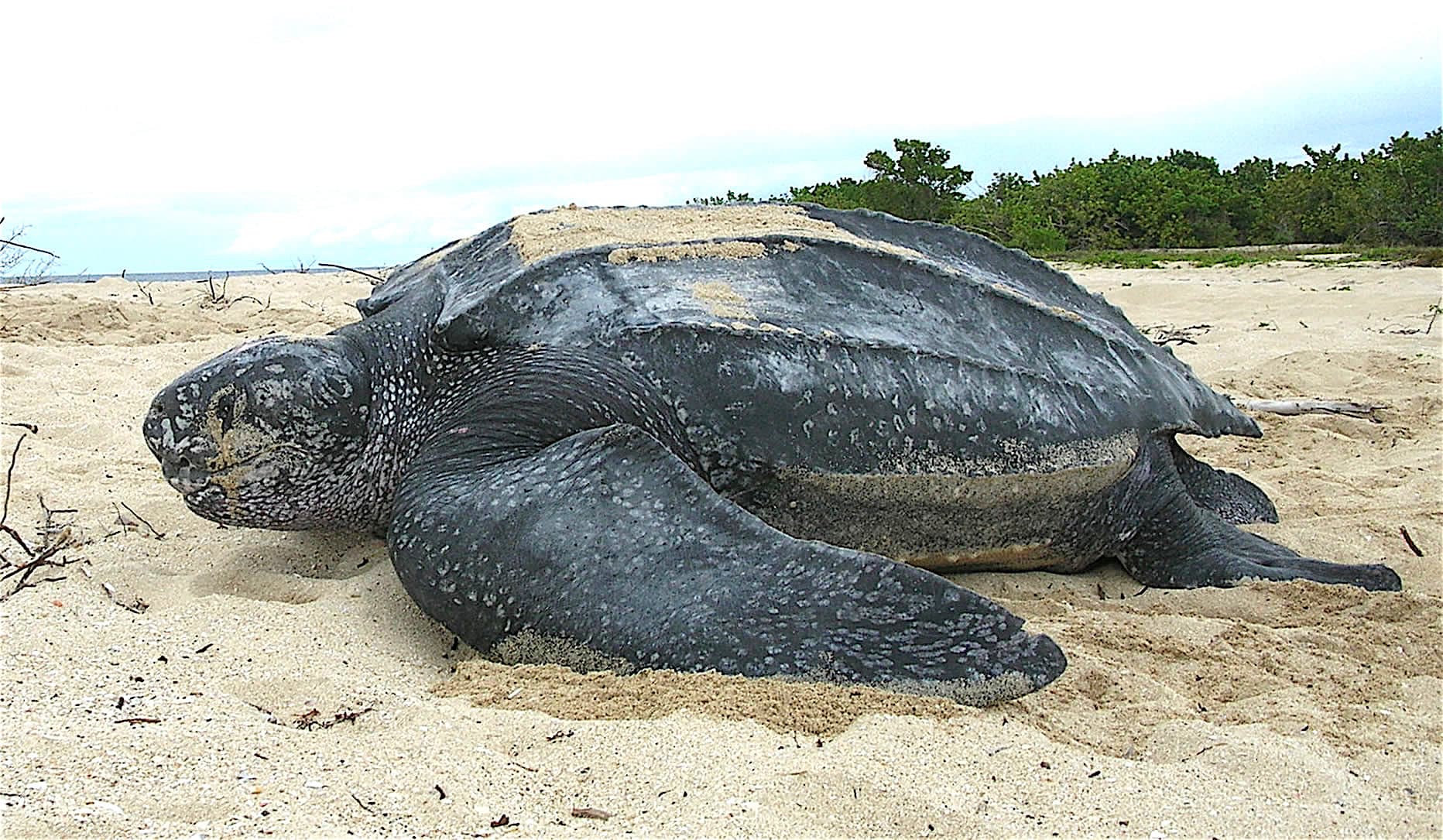
Leatherback Turtle

The world's largest turtle, a gentle giant that visits Trinidad's beaches

Photo ยท Wikimedia Commons

What is it?

The leatherback turtle is the biggest turtle in the world โ€” it can be as long as a car and weigh more than a grand piano. Instead of a hard shell, it has a flexible, rubbery back that feels like leather. Every year, female leatherbacks visit Trinidad's north-east coast, especially the beach at Matura, to lay their eggs.

Tell me more

Leatherback turtles are extraordinary travellers. They swim thousands of kilometres across the ocean โ€” all the way from cold waters near Canada or Europe โ€” to reach the warm sandy beaches of Trinidad, where they were born. They find their way back using Earth's magnetic field, like a living compass.

At Matura Beach, volunteer rangers and guided tour groups watch respectfully from a distance as the turtles come ashore on dark nights. The turtles are very large and very gentle. After laying around 80 eggs in the sand, the mother carefully covers the nest and returns to the sea.

Leatherbacks eat mainly jellyfish. Their mouths are lined with backward-pointing spines that stop slippery jellyfish from escaping. A full-grown leatherback can dive deeper than 1,000 metres โ€” deeper than most submarines โ€” to find its favourite food.

Trinidad is one of the most important nesting sites for leatherback turtles in the entire world. Community groups and conservation rangers work hard to keep the beaches safe for the turtles, making sure they can nest without being disturbed.

In the classroom

Walk your class through this in 15 minutes.

Talk together

Discussion prompts

  1. 01Leatherback turtles travel thousands of kilometres to return to the exact beach where they hatched. How do you think they remember the way?
  2. 02Why might it be important for volunteers to watch the turtles from a respectful distance rather than getting close?
  3. 03The leatherback's soft back is very different from other turtles. Why might flexibility be useful for a deep-diving animal?
Try this

Classroom activity

On a world map (or draw your own outline), mark Trinidad and Tobago. Then draw an arrow showing a leatherback turtle's journey from cold northern waters all the way to Matura Beach. Add labels showing the distance travelled, what the turtle eats along the way, and why it comes back to Trinidad.