
Classroom lesson ยท Wildlife ยท ๐Ÿ‡น๐Ÿ‡น Trinidad and Tobago

Red Howler Monkey

Trinidad's loudest animal โ€” its call carries for kilometres

Photo ยท Wikimedia Commons

What is it?

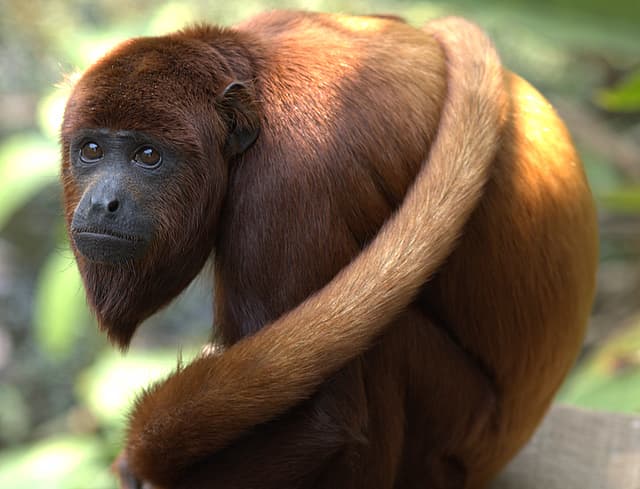
The red howler monkey is one of Trinidad's most exciting rainforest residents. It has thick reddish-orange fur, a long gripping tail, and a call so loud it can be heard three kilometres away. Groups of howlers wake up the forest every morning and evening with their deep, roaring calls โ€” a sound unlike anything else in nature.

Tell me more

Howler monkeys spend almost their entire lives in the treetops, rarely coming down to the ground. Their long prehensile tail works like a fifth hand โ€” they can wrap it around a branch and hang from it, leaving both hands and both feet free to grab fruit and leaves.

The howl comes from a special hollow bone in the throat called the hyoid. Air passes through this chamber and produces that deep, booming sound. In Trinidad's forests, howling troops often call back and forth to each other, announcing where their group is feeding so other groups know not to come too close.

Red howlers eat mainly leaves, fruit, and flowers. Leaves are easy to find but hard to digest, so howlers spend a lot of time resting to save energy. If you spot one in the treetops, it might just be sitting very still โ€” digesting its meal and enjoying the view.

Howler monkeys live in family groups led by one or two adult males. The whole group calls together, which makes the sound even louder and more impressive. Hearing it for the first time in a forest always makes visitors stop and look around in surprise.

In the classroom

Walk your class through this in 15 minutes.

Talk together

Discussion prompts

  1. 01Howler monkeys communicate across the forest by sound. How do you communicate with friends when you cannot see them?
  2. 02The prehensile tail acts like a fifth hand. What extra body part would be most useful for your favourite activity?
  3. 03Red howlers rest a lot because leaves are hard to digest. Can you think of another animal that rests a lot to save energy?
Try this

Classroom activity

In a group, try a 'howler monkey' experiment: stand at one end of the playground or room and try to make a sound that travels as far as possible. Then discuss โ€” what shapes, materials, or body positions make your voice carry further? Draw a diagram of a howler's throat showing the hyoid bone.