
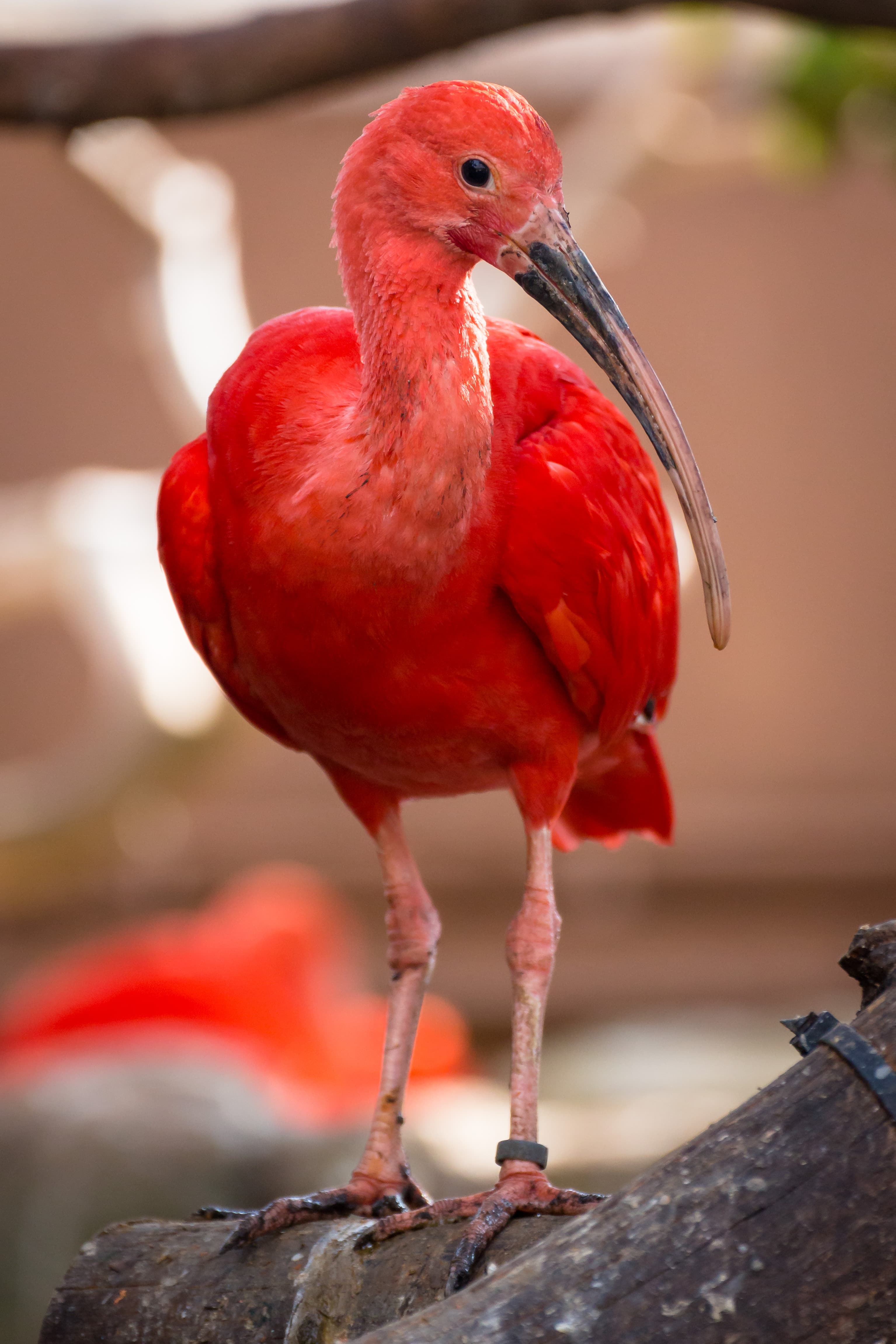
The scarlet ibis gets its amazing red colour from its food. It eats small crabs and other shellfish in the mangrove swamps, and those creatures contain a natural pigment called carotenoid. The bird's body converts this into the vivid red that covers almost every feather - even its legs, bill, and feet.
At the Caroni Bird Sanctuary on Trinidad, boat tours go out in the late afternoon to watch the ibis arrive for the night. Hundreds and then thousands of birds come in waves, landing in the green mangrove trees and transforming them into clusters of bright red. It looks like the trees are on fire.
The scarlet ibis uses its long, curved bill to probe into the mud and shallow water, searching for crabs, shrimps, and small fish. It walks slowly and deliberately, tilting its head and feeling for movement with that sensitive curved beak.
In Trinidad and Tobago, the scarlet ibis appears on the national coat of arms alongside the cocrico - the national bird of Tobago. Seeing both birds together is considered very good fortune. The ibis is a protected species, which means it is looked after carefully by law.