
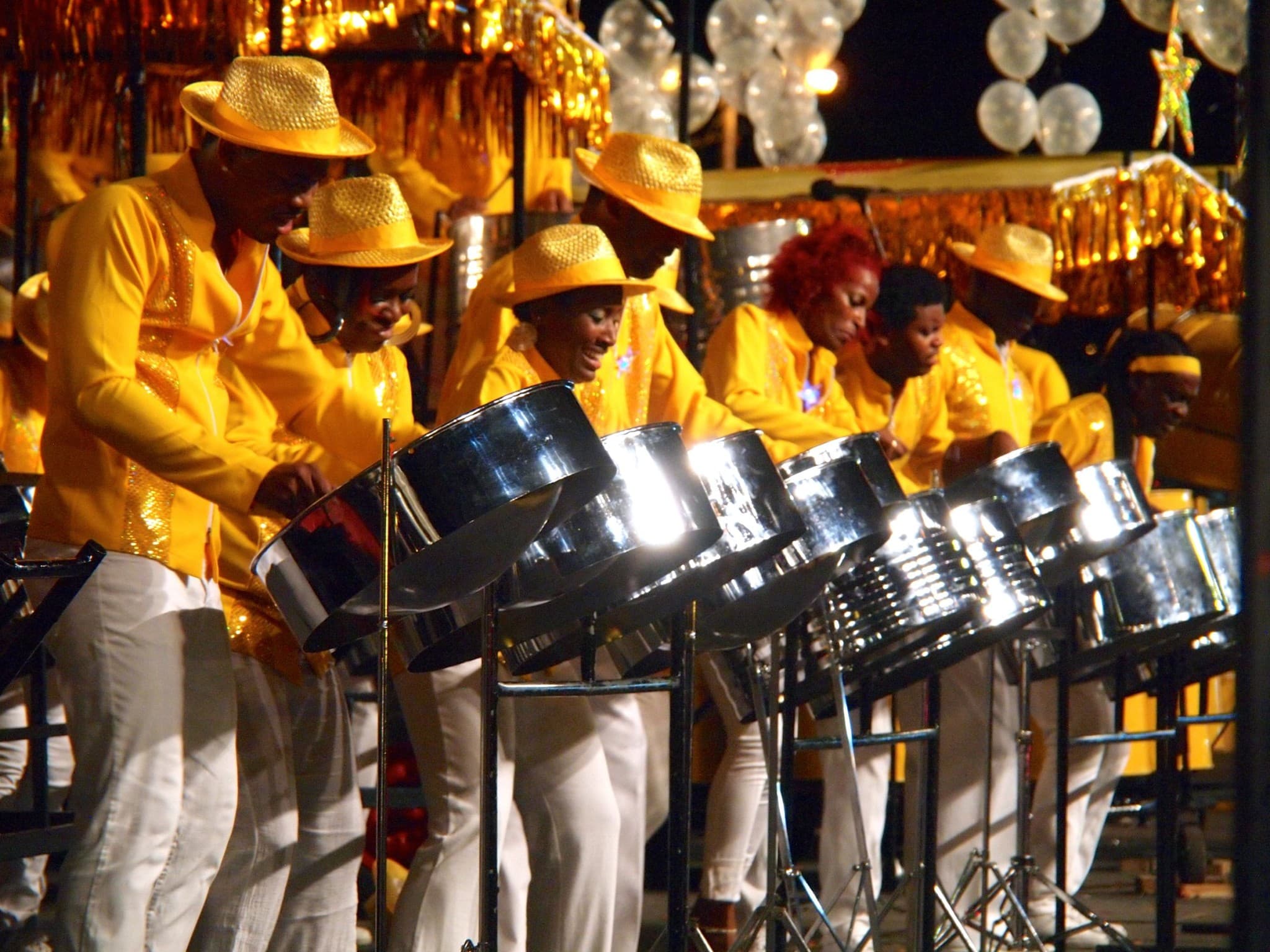
Steelpan music began in the yards and streets of Trinidad, developed by musicians experimenting with metal containers. The makers discovered that by tuning different sections of a steel drum lid to specific notes, they could play full melodies. Over decades the instrument was refined until it could cover the full musical scale.
Different sizes of pan play different ranges of notes, just like different instruments in an orchestra. The smallest pans, called 'tenor pans' or 'lead pans', play the highest notes and carry the melody. Larger pans play the mid-range and bass notes, filling out the harmony and rhythm.
In Trinidad, steelpan orchestras are called 'steel bands' or 'pan sides'. They compete in an annual championship called Panorama, which draws enormous crowds and is one of the most exciting musical events in the Caribbean. Some bands have dozens of players - all playing different sizes of pan.
Today, steelpan is taught in schools across Trinidad and Tobago and played in orchestras around the world. The instrument is recognised internationally as a uniquely Caribbean invention and a proud symbol of Trinidad's creative spirit. When you hear one, there is nothing else quite like its clear, ringing, bell-like tone.