
Classroom lesson ยท Wildlife ยท ๐Ÿ‡น๐Ÿ‡ป Tuvalu

Green Sea Turtle

A gentle ocean traveller that nests on Tuvalu's beaches

Photo ยท Wikimedia Commons

What is it?

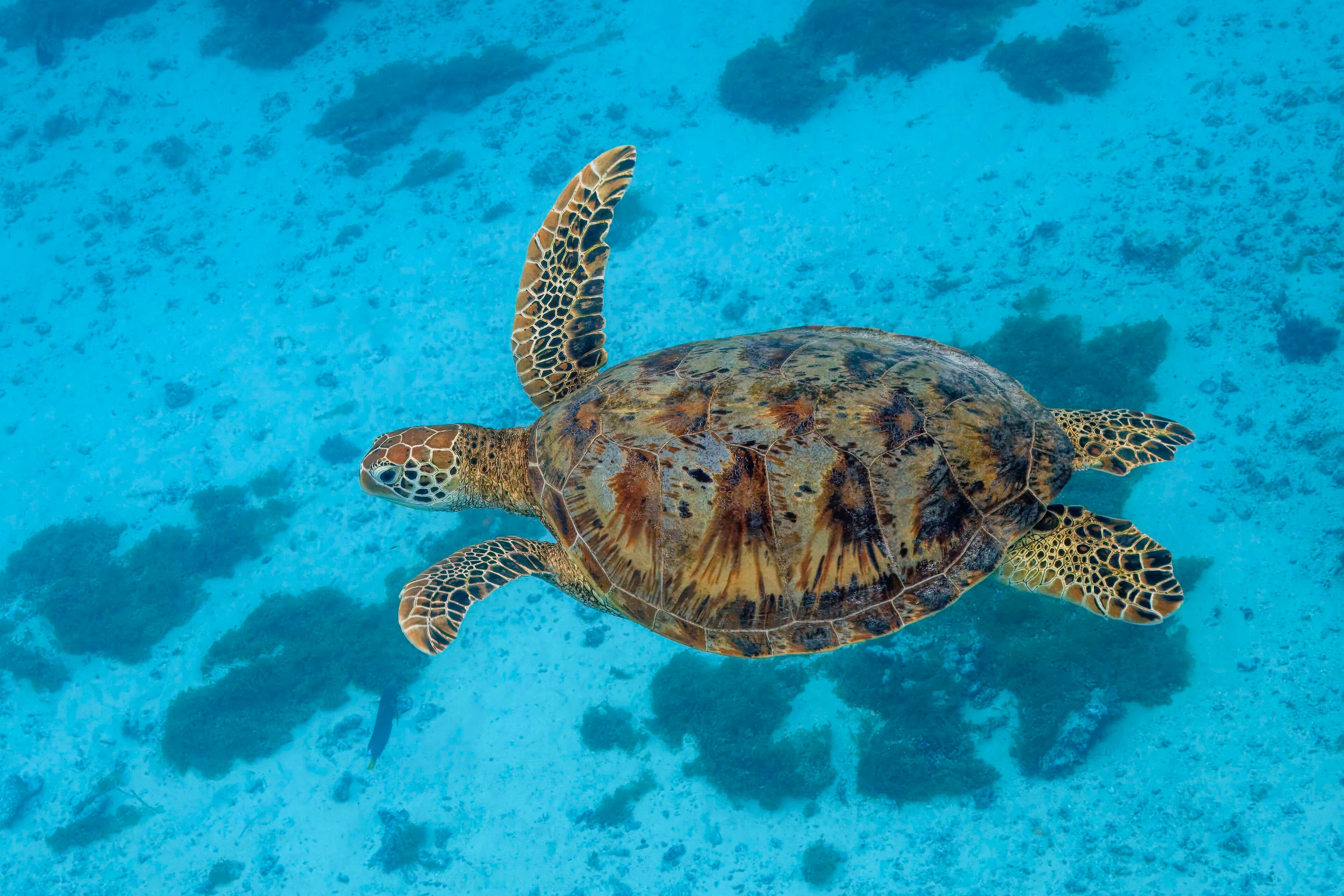
The green sea turtle is one of the largest turtles in the world, and it visits Tuvalu's sandy beaches every year to lay its eggs. These gentle giants spend almost their whole lives in the ocean, gliding through clear water and munching on sea grass. They can live for more than 80 years โ€” older than most grandparents!

Tell me more

Green sea turtles get their name not from the colour of their shell โ€” which is usually brown or olive โ€” but from the green-tinged fat beneath it, coloured by all the sea grass they eat. Their front flippers work like wings, letting them 'fly' through the water with beautiful, slow strokes. Watching one underwater feels a little like watching a bird in slow motion.

Female green turtles return to the same beach where they hatched in order to lay their own eggs โ€” sometimes swimming thousands of kilometres across the ocean to get there. On Tuvalu, they climb onto the quiet beach at night, dig a nest in the sand with their back flippers, and lay around 100 eggs the size of ping-pong balls. Then they head back to the sea.

Baby turtles hatch about two months later. They dig themselves out of the sand and rush to the ocean together. The people of Tuvalu consider seeing baby turtles hatch a very special event. The Funafuti Conservation Area protects the nesting beaches, giving these ancient animals a safe place to carry on their long journey.

In the classroom

Walk your class through this in 15 minutes.

Talk together

Discussion prompts

  1. 01Green turtles travel thousands of kilometres to return to their birth beach. What would it be like to navigate across the ocean with no map or phone?
  2. 02The turtles eat sea grass, which helps keep the ocean floor healthy. Can you think of other animals that help keep their habitat tidy?
  3. 03The community protects the nesting beaches. Why might local people be the best guardians of a local animal?
Try this

Classroom activity

Draw the life cycle of a green sea turtle in four stages: (1) eggs in the sand, (2) hatchling rushing to the sea, (3) young turtle swimming in the ocean, (4) adult returning to lay eggs. Add arrows between each stage and one interesting fact beside each one.