
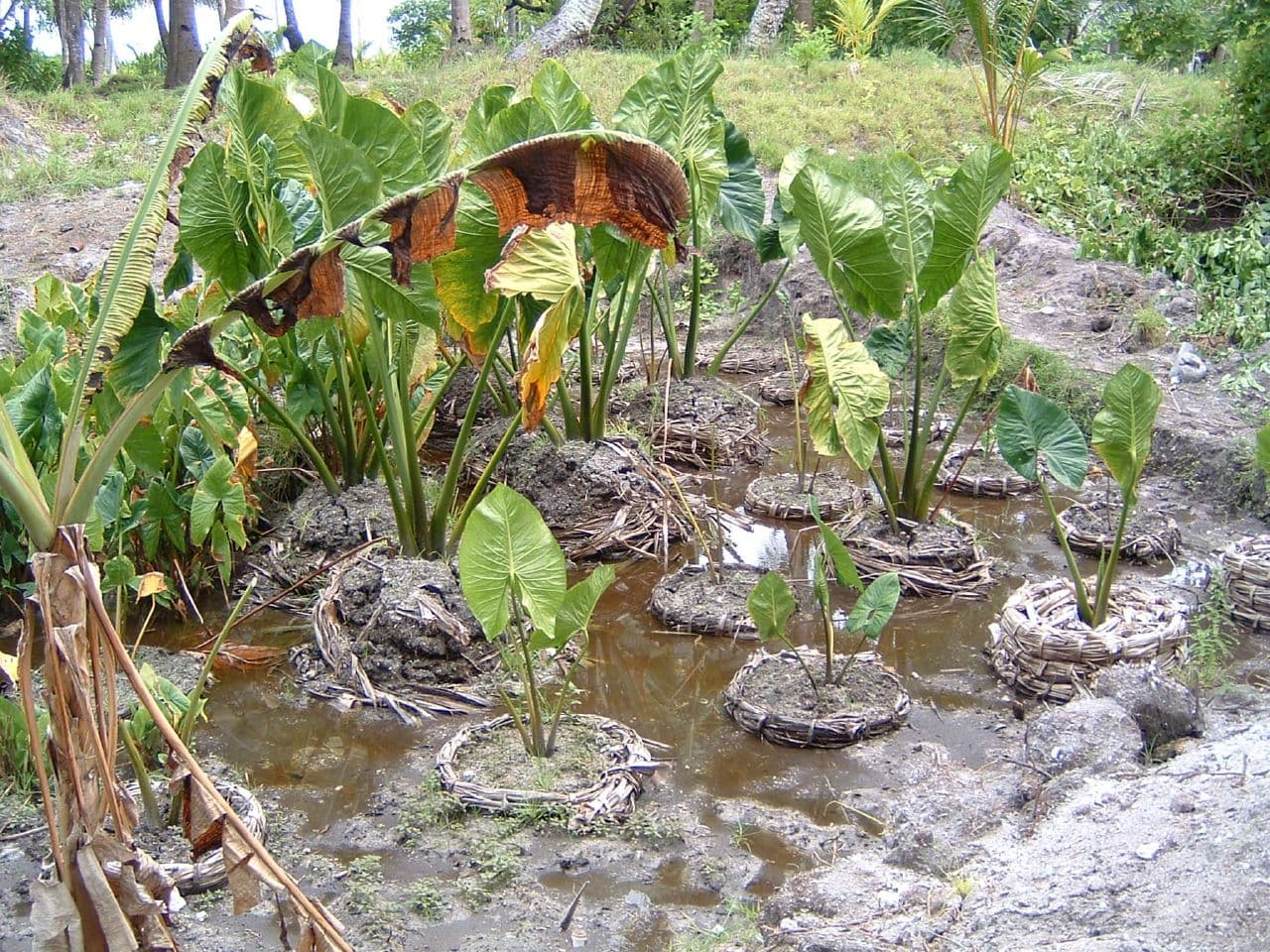
Growing pulaka on a tiny coral island is a clever achievement. Coral islands do not have deep rich soil, so the island's people dug large sunken pits - sometimes several metres deep - and filled them with composted material to build up a moist, fertile soil where the taro could grow. These pits are called taro patches and each family often tends their own.
The pulaka plant has huge heart-shaped leaves on long stalks that can reach well above a person's head. Beneath the ground, the corm (the thick root base) slowly swells over two or three years until it is ready to harvest. A fully grown pulaka corm can weigh as much as a large watermelon. The leaves can also be eaten, cooked like spinach.
Traditionally, pulaka was the most important food in Tuvalu, eaten at almost every big celebration and shared between families. Today it is still grown and enjoyed, often served alongside fish, rice, and coconut-based dishes. Keeping the traditional pulaka pits going is a point of pride - it connects people to the skills their ancestors used to thrive on these remote islands.