
Classroom lesson ยท Wildlife ยท ๐Ÿ‡ป๐Ÿ‡บ Vanuatu

Coconut Crab

The largest land crab on Earth โ€” and it climbs trees

Photo ยท Wikimedia Commons

What is it?

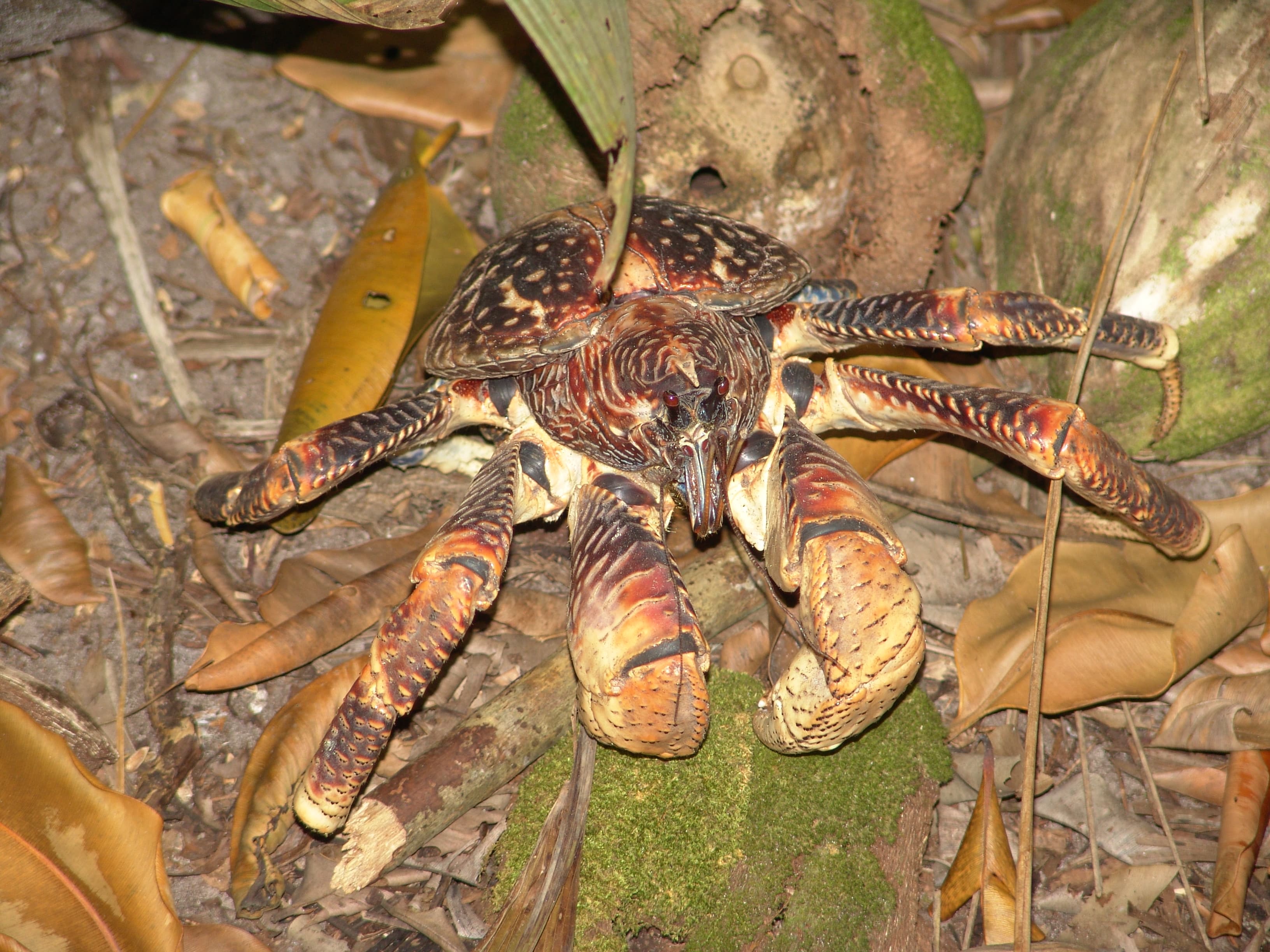
The coconut crab is the biggest land-living crab on the planet. It can grow as wide as a dinner plate, weigh as much as a small cat, and โ€” most impressively โ€” climb straight up a coconut palm tree to get to the fruit at the top. Despite its size it is completely harmless to people and lives quietly in burrows in the forest.

Tell me more

Coconut crabs are a type of hermit crab that outgrew needing a shell. When they are tiny, young coconut crabs carry small shells for protection, just like their relatives. But as they grow โ€” and they can live for more than 40 years โ€” they become too large for any shell and instead grow a tough, armoured exoskeleton of their own.

Their claws are extraordinarily strong โ€” strong enough to crack open a coconut, which is how they got their name. They grip the husk with one claw, peel it back strip by strip, then crack the hard inner shell to reach the white flesh inside. This takes patience, but coconut crabs are very determined eaters.

Climbing is one of their superpowers. Their hooked legs grip tree bark perfectly, and they have been seen ascending trunks six metres tall or more. They come down headfirst โ€” something most animals cannot manage. At night they scavenge the forest floor for fallen fruit, seeds and other food.

In Vanuatu, coconut crabs are considered a special creature and are an important part of local food and cultural heritage. Communities take care to make sure their numbers stay healthy. On some islands they are very common, and seeing one ambling across the forest floor at night is a memorable experience for any visitor.

In the classroom

Walk your class through this in 15 minutes.

Talk together

Discussion prompts

  1. 01A coconut crab's claws can crack a coconut โ€” one of the hardest natural objects there is. Can you think of other animals with a special tool for getting their food?
  2. 02Coconut crabs live for more than 40 years. How do you think their life might be different from an animal that only lives for one or two years?
  3. 03Why might it be important for communities to protect animals like the coconut crab so their numbers stay healthy?
Try this

Classroom activity

Test the strength of a coconut (or a walnut) by trying to break it different ways without tools, then with a nutcracker. Measure how much force you need. Draw and label a coconut crab's claw, showing which part does the gripping and which part does the cracking.