
Classroom lesson ยท Wildlife ยท ๐Ÿ‡ป๐Ÿ‡บ Vanuatu

Dugong

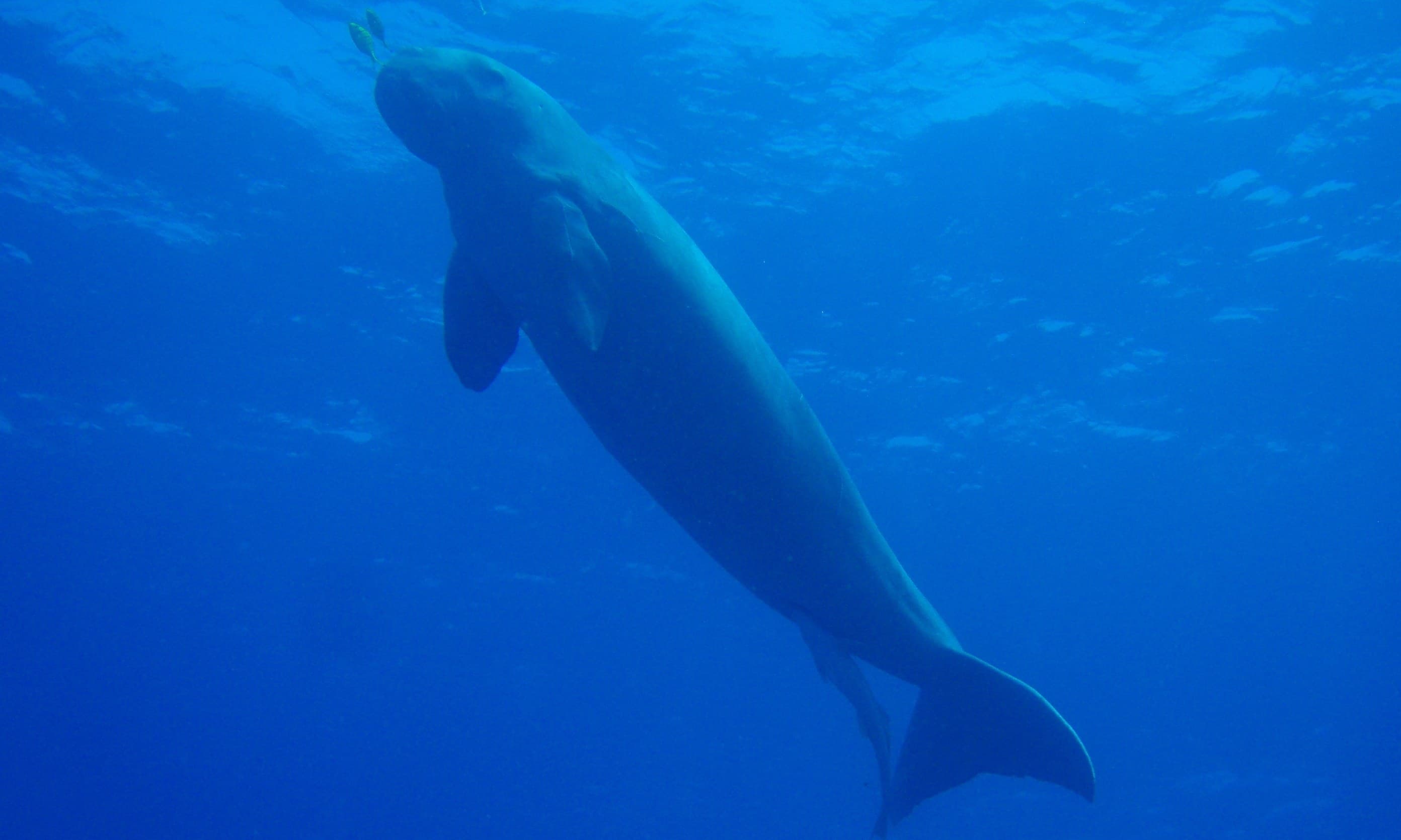
A gentle sea mammal that grazes on underwater grass

Photo ยท Wikimedia Commons

What is it?

The dugong is a large, gentle sea mammal that lives in the warm shallow waters around Vanuatu. It is a cousin of the elephant โ€” yes, really! โ€” and breathes air, just like you do. Dugongs spend their days slowly grazing on underwater meadows of seagrass, earning them the nickname 'sea cow'.

Tell me more

Dugongs look a little like a cross between a seal and a whale. They have a round, whiskered snout built perfectly for rooting around in the seabed, a broad flat tail (called a fluke) for steering, and two small flippers for slow, graceful movement. Adults can reach about three metres long โ€” roughly the length of a small car.

Seagrass meadows are their favourite feeding grounds. Dugongs grub along the bottom, pulling up entire grass plants โ€” roots and all โ€” and leaving clear feeding tracks across the sandy seabed that scientists use to track where the animals have been. A single dugong can eat up to 40 kg of seagrass every day.

Like all mammals, dugongs must come to the surface to breathe. They usually surface every one to six minutes, taking a quick breath through nostrils on the very top of their snout, then slipping silently back below. They can hold their breath much longer if they are resting quietly on the seabed.

Vanuatu's warm, sheltered bays and healthy seagrass meadows make excellent dugong habitat. Local communities have traditionally known and respected dugongs for centuries, and today they are a special sight for anyone lucky enough to be in the right bay at the right time โ€” often spotted from traditional canoes or small boats.

In the classroom

Walk your class through this in 15 minutes.

Talk together

Discussion prompts

  1. 01Dugongs are called 'sea cows' because they graze on grass underwater, just like cows graze on land. What other sea animals remind you of land animals โ€” and why?
  2. 02Dugongs and elephants share a common ancestor. How do scientists work out that two animals are related when they look so different?
  3. 03Why are seagrass meadows important โ€” not just for dugongs but for the whole ocean?
Try this

Classroom activity

Draw a side-by-side comparison of a dugong and an elephant. Label five body parts on each animal and draw a line between any parts that do the same job (e.g. trunk / snout, ear / flipper position, tail / nothing). Discuss what the shared features tell us about how they might be related.