
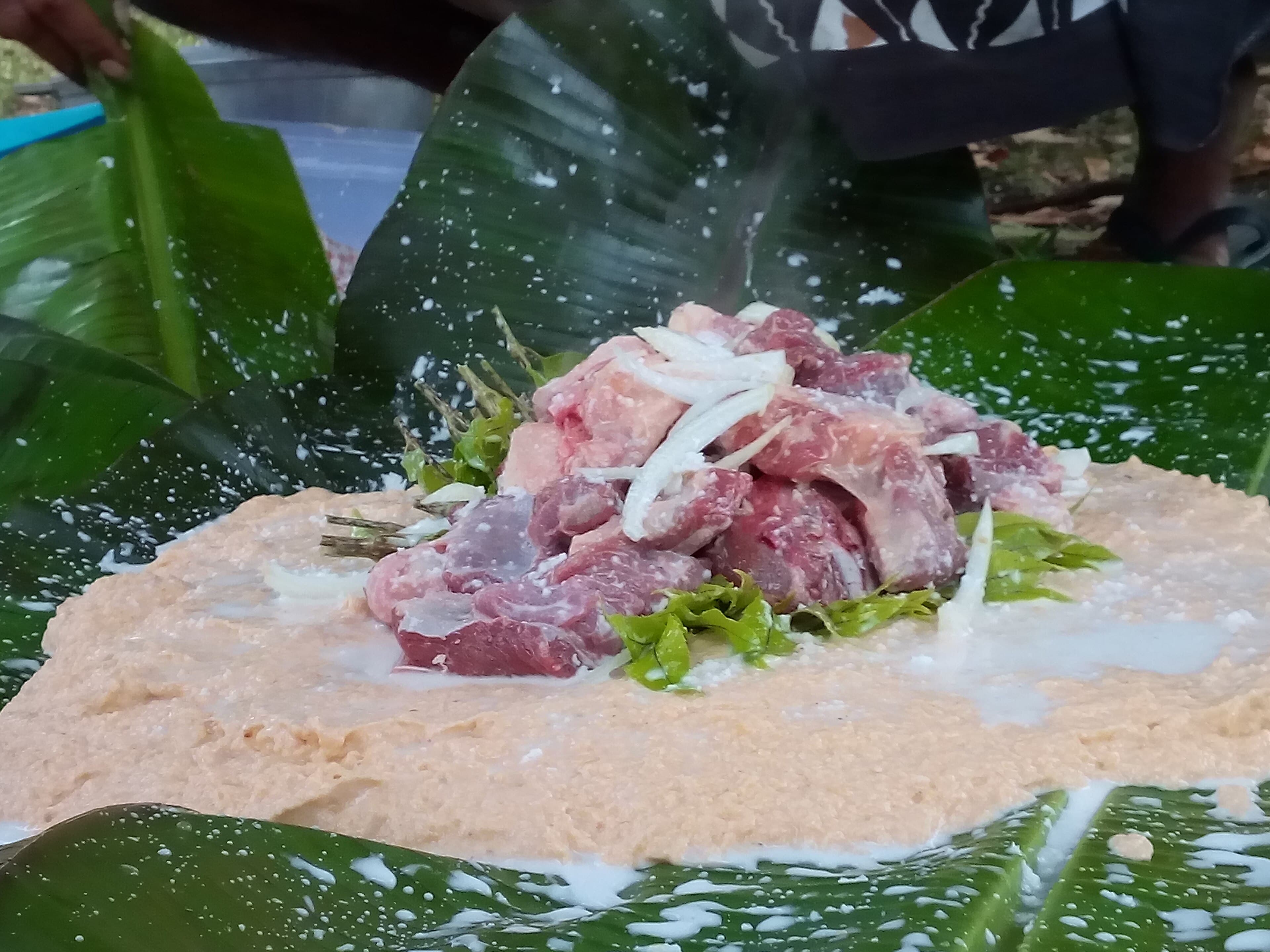
The cooking method is ancient and ingenious. Large flat stones are heated in a fire until they are very hot, then the wrapped banana-leaf parcels are laid on top and more hot stones are piled over them. The banana leaves trap the heat and steam inside, cooking the mixture gently and evenly - a bit like a natural oven or a pressure cooker made from leaves.
Every island in Vanuatu has its own version. On some islands, fish or chicken is mixed into the paste before wrapping. On others it stays purely vegetarian. The type of root vegetable changes too - taro lap lap tastes earthier and denser, while sweet potato lap lap is lighter and slightly sweet. Comparing versions from different islands is a bit like comparing different styles of bread from different countries.
Coconut cream is the key ingredient that makes lap lap special. The thick, sweet milk squeezed from grated coconut flesh soaks into the grated root vegetable paste and keeps it moist during cooking. The final texture is somewhere between a steamed pudding and a thick cake - soft, slightly sticky and deeply satisfying.
Lap lap is often made for celebrations and community gatherings. Preparing it together - grating, mixing, wrapping and tending the fire - is a social activity that brings families and neighbours together. Sharing food cooked this way carries deep meaning in ni-Vanuatu culture.